WUDANG TAIJIQUAN · 武当太极拳

Part the Wild Horse's Mane (Yema Fenzong) & Diagonal Flying (Xiefeishi): Diagonal Splitting (Lie-Peng) and Shoulder-Back Expansion in Wudang Taijiquan 野马分鬃与斜飞势:武当太极拳的抱球换步、掤挒分展与肩靠合一要法

A comparative technical guide to Yema Fenzong (野马分鬃) and Xiefeishi (斜飞势) in traditional Wudang Taijiquan, detailing Embracing the Sphere transitions, Peng-Lie forearm shearing, and Lie-Kao diagonal wedge mechanics.


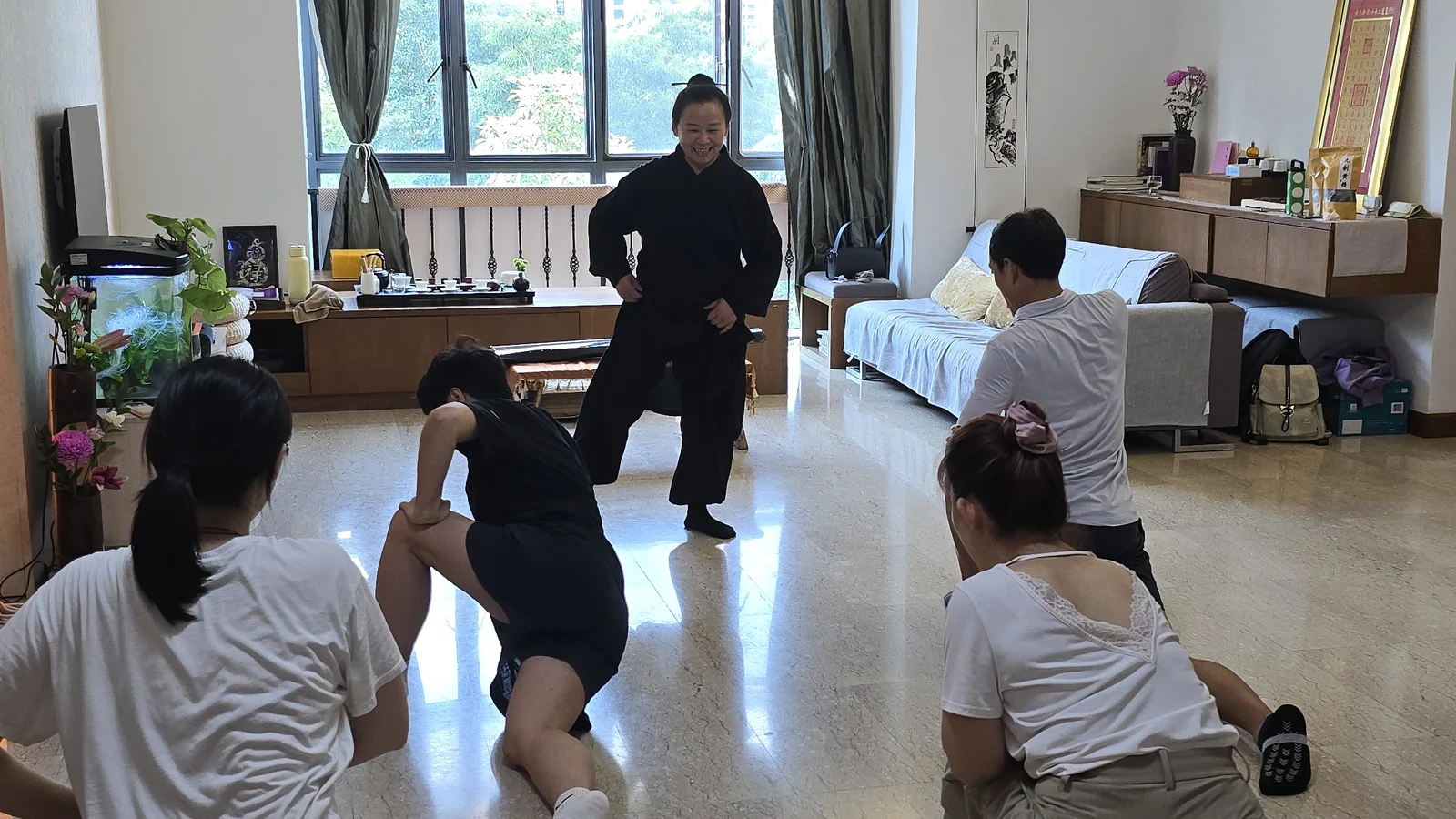
A Wudang taijiquan lesson in a sunlit room: students seen from behind kneel into deep lunges to open the hips while a teacher in black Taoist-style clothing stands in a wide stance, smiling, with an ink-painting scroll on the wall behind.

Two Expressions of Diagonal Splitting in the Wudang Frame

In traditional Wudang Taijiquan, 'Part the Wild Horse's Mane' (Yema Fenzong, 野马分鬃) and 'Diagonal Flying' (Xiefeishi, 斜飞势) are closely related postures that train the body to slip inside an opponent's guard and split their structure along a diagonal line. Both begin from 'Embracing the Sphere' (Baoqiu, 抱球—holding one palm above and one below at the flank), both step into a bow stance (The Five Phases of Stepping: Wuxingbu), and both separate the two hands diagonally like parting the thick mane of a galloping horse or spreading the wings of a soaring bird. Together they illustrate Tao Te Ching Chapter 57's interplay of Zheng (upright central axis) and Qi (unexpected diagonal variation), as well as the practical application of the Four Corner Energies: Cai, Lie, Zhou, and Kao.

Yema Fenzong (野马分鬃): Alternating Left-Right Progression and Peng-Lie Forearm Arc

Typically performed in sets of three alternating left-and-right advances, Yema Fenzong threads the bottom hand of the embraced sphere diagonally upward from the abdomen past the opposite forearm while the top hand simultaneously presses downward beside the hip. At completion in the bow stance, the lead hand rests at shoulder or eye height with the palm facing obliquely upward-inward and the elbow softly sunk, while the rear palm anchors beside the rear thigh with the palm facing down. The primary energy here combines buoyant Ward-Off (Peng, 掤, see Grasping the Sparrow's Tail (Lanquewei)) with rotational Splitting (Lie, 挒): the lead forearm slips beneath the partner's armpit or arm and rotates outward to uproot their balance.

Part the Wild Horse's Mane (Yema Fenzong) & Diagonal Flying (Xiefeishi): Diagonal Splitting (Lie-Peng) and Shoulder-Back Expansion in Wudang Taijiquan

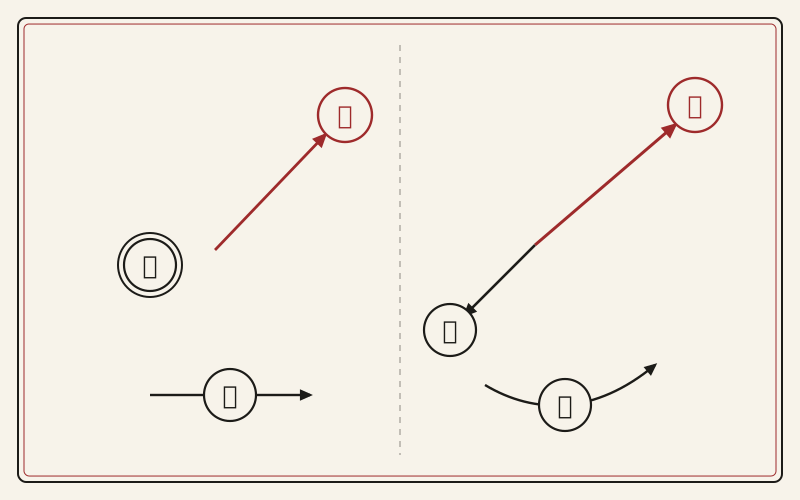
Biomechanical comparison of Yema Fenzong (Part the Wild Horse's Mane) and Xiefeishi (Diagonal Flying): ① Embracing the Sphere (Baoqiu) over the supporting hip to store rotational potential, ② Stepping into a diagonal Bow Stance (Gongbu) as the waist turns forward, ③ Yema Fenzong: lead forearm spiraling diagonally forward-upward in Peng-Lie while the rear palm presses downward beside the hip, ④ Deep corner pivot and wide diagonal step for Xiefeishi, ⑤ Xiefeishi: uniting shoulder, back, and outward-opening forearm in a long diagonal Lie-Kao wedge like a soaring bird's wing, and ⑥ Counter-balancing rear palm anchoring the lower gate to preserve Zhongding.

Xiefeishi (斜飞势): Deep Corner Pivot and Lie-Kao Shoulder-Back Wedge

While Yema Fenzong advances along a relatively narrow thirty-degree alternating corridor, Xiefeishi (Diagonal Flying) executes a wide corner change—often pivoting one hundred thirty-five degrees from a compact gathering posture to step deep behind the partner's lead leg. As the bow stance settles toward the diagonal corner, the entire side of the torso, shoulder, and outward-sweeping arm expand together like a bird banking into the wind. Whereas Yema Fenzong emphasizes the supple outer-and-middle gate of the forearm (Peng-Lie), Xiefeishi integrates the inner gate of the shoulder and upper back (Kao, 靠) with a wide diagonal split (Lie, 挒).

Keeping the Rear Hand Active: The Secret of Diagonal Counterbalance

In the courtyard instruction of Wudang Mountain and our Start Here curriculum (grounded in the treatises of Taoist & Martial Classics), the most common error in both Yema Fenzong and Xiefeishi is focusing entirely on the rising front hand while letting the rear hand go dead at the hip. In authentic internal mechanics, the downward-and-backward Cai-An (采按) pull of the rear hand is the exact counterweight that powers the upward-and-forward arc of the front arm—creating an unbroken diagonal line of tension through the waist without leaning the spine.

Seeker’s Q&A · Frequently Asked Questions

What is the key structural alignment in Part the Wild Horse's Mane (Yema Fenzong) & Diagonal Flying (Xiefeishi)?

A comparative technical guide to Yema Fenzong (野马分鬃) and Xiefeishi (斜飞势) in traditional Wudang Taijiquan, detailing Embracing the Sphere transitions, Peng-Lie forearm shearing, and Lie-Kao diagonal wedge mechanics.
