WUDANG TAIJIQUAN · 武当太极拳

Cross Hands (Shizishou) & Closing Taiji (Shoushi): Gathering the Sphere and Returning Taiji to Wuji in Wudang Taijiquan 十字手与收势(合太极归无极):武当太极拳的混元抱球、引气归元与圆满收功详解

A comprehensive guide to the closing postures of traditional Wudang Taijiquan—Cross Hands (十字手) and Closing Posture (收势 / 合太极)—detailing spherical Peng gathering, Dantian breath settling, and the transition from Taiji back to Wuji.


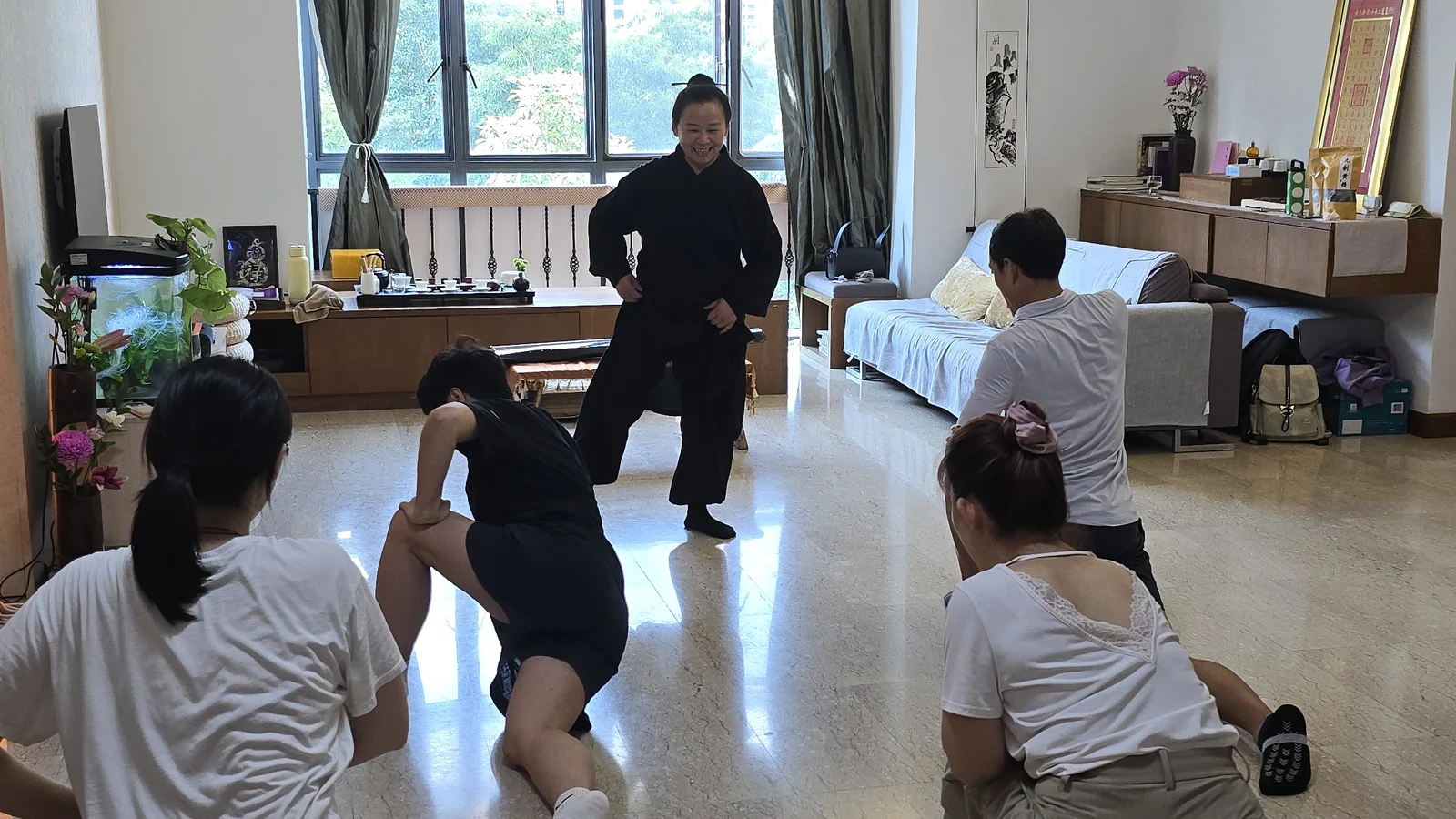
A Wudang taijiquan lesson in a sunlit room: students seen from behind kneel into deep lunges to open the hips while a teacher in black Taoist-style clothing stands in a wide stance, smiling, with an ink-painting scroll on the wall behind.

Why the End of the Form Is as Important as the Opening

In traditional Wudang Taijiquan and Wang Zongyue's Taijiquan Lun (太极拳论, studied under Taoist & Martial Classics), a form begins when stillness (Wuji, 无极) stirs into differentiated movement (Taiji, 太极), and it completes its cycle only when differentiated movement gathers back into stillness (He Taiji Gui Wuji, 合太极归无极). Following the late-form athleticism of Turn Body to Sweep the Lotus and Bend the Bow to Shoot the Tiger and the final low-to-high exchanges, the sequence arrives at its closing pair: 'Cross Hands' (Shizishou, 十字手) and 'Closing Posture' (Shoushi, 收势). Just as Tao Te Ching Chapter 81 concludes the eighty-one chapters by returning to plain, uncontentious simplicity, Shizishou and Shoushi collect the mobilized Qi from the four limbs back into the central core.

Shizishou (十字手): Embracing the Sphere in a Parallel Stance

Transitioning into Shizishou, the practitioner shifts the weight, hooks and aligns the feet into a symmetric shoulder-width parallel stance, and scoops both open palms from below outward and upward in a generous circle until the wrists cross in front of the chest (at the height of Tanzhong, 膻中, CV-17, with palms facing inward toward the torso). Unlike Step Up to Seven Stars (Shangbu Qixing)—which crosses hollow fists in an empty stance with palms facing outward to intercept along the high line—Shizishou crosses open palms facing the chest in a balanced horse/parallel stance to gather and embrace full-body Ward-Off energy (Hunyuan Pengjin, 混元掤劲) inward.

Cross Hands (Shizishou) & Closing Taiji (Shoushi): Gathering the Sphere and Returning Taiji to Wuji in Wudang Taijiquan

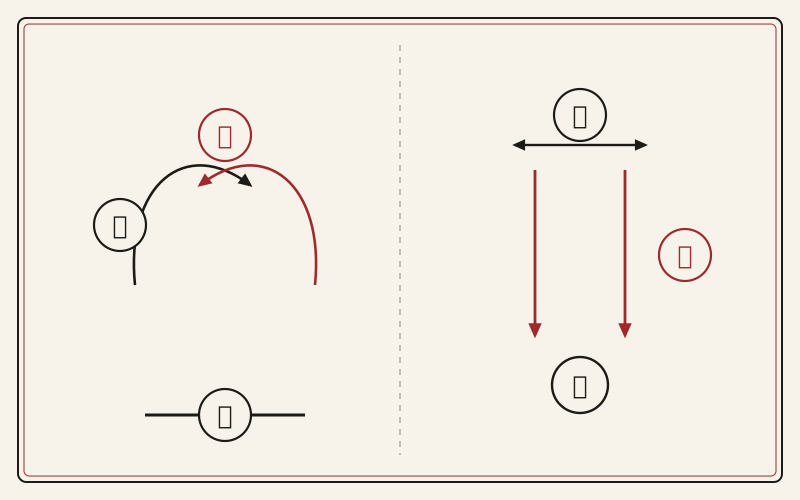
Biomechanical sequence of Shizishou (Cross Hands) and Shoushi / He Taiji (Closing Taiji Returning to Wuji): ① Parallel shoulder-width stance (Kaibu) with even root through both Yongquan points, ② Bottom-up circular gathering of both arms embracing the sphere into Cross Hands (Shizishou) in front of the chest, ③ Scapular rounding (Hanxiong Babei) supporting the crossed wrists, ④ Uncrossing the wrists and turning the palms downward on a slow exhalation, ⑤ Pressing the palms gently down past the chest and abdomen to guide Qi into the lower Dantian (Shoushi / He Taiji), and ⑥ Quiet standing in Wuji equilibrium (Zhongding) before stepping feet together.

Shoushi (收势 / 合太极): Sinking Qi from the Crown to Yongquan

From the rounded embrace of Shizishou, the practitioner inhales gently as the wrists uncross and open to shoulder width with the palms turning downward. On a long, unhurried exhalation, both palms press slowly downward past the chest, solar plexus, and lower abdomen until the hands come to rest naturally beside the thighs. As the palms descend, attention scans downward inside the body—releasing any residual warmth or tension from the temples, neck, shoulders, and ribs down through the hips and knees into the soles of the feet (Yongquan, 涌泉, KI-1) and the lower Dantian.

Three Quiet Breaths in Wuji Before Stepping Out

In the transmission of Wudang Mountain and our Start Here curriculum, teachers emphasize the rule: 'After finishing the form, do not scatter the spirit immediately' (收势勿匆忙散神). Once the left foot draws calmly beside the right foot (or remains in natural parallel stance), stand quietly for at least three to six natural breaths with the crown suspended, the tongue touching the palate, and the mind resting in the lower abdomen before walking away. This brief stillness seals the benefits of the entire practice.

Seeker’s Q&A · Frequently Asked Questions

What is the key structural alignment in Cross Hands (Shizishou) & Closing Taiji (Shoushi)?

A comprehensive guide to the closing postures of traditional Wudang Taijiquan—Cross Hands (十字手) and Closing Posture (收势 / 合太极)—detailing spherical Peng gathering, Dantian breath settling, and the transition from Taiji back to Wuji.
