WUDANG TAIJIQUAN · 武当太极拳

Single Whip (Danbian) and Cloud Hands (Yunshou) in Wudang Taijiquan: Hook-Hand Structure, Waist Axis and Small-Space Practice 武当太极拳“单鞭”与“云手”详解:勾手结构、腰轴开合与小场地单操法

Why traditional teachers pair Single Whip’s horizontal expansion with Cloud Hands’ continuous spiral transitions—and how the five-finger Hook Hand connects wrist, elbow, and upper back.

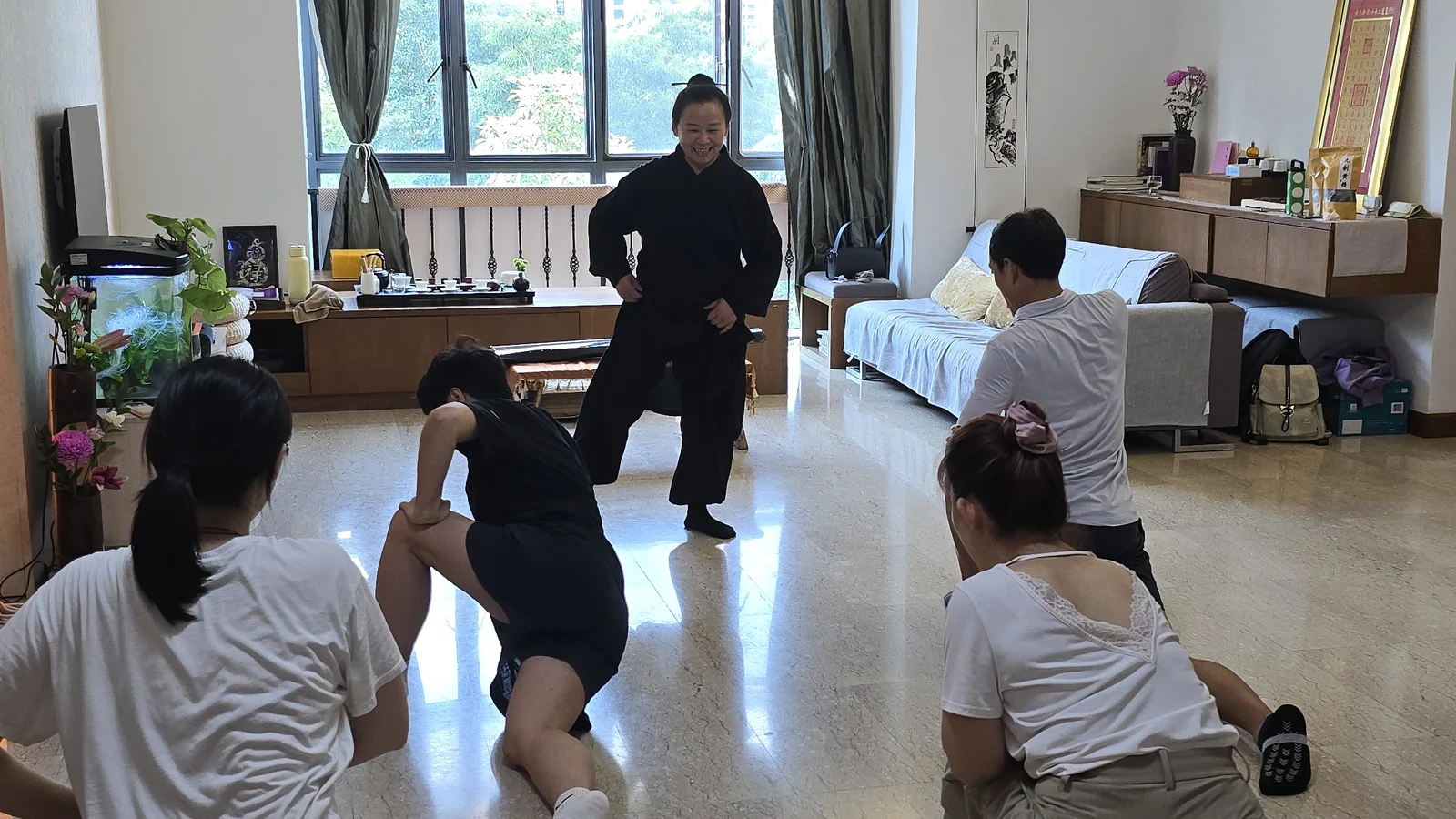
A Wudang taijiquan lesson in a sunlit room: students seen from behind kneel into deep lunges to open the hips while a teacher in black Taoist-style clothing stands in a wide stance, smiling, with an ink-painting scroll on the wall behind.

Every student of Wudang Taijiquan quickly notices that two postures appear again and again as the structural backbone of the form: “Single Whip” (单鞭, Danbian) and “Wave Hands Like Clouds” (云手, Yunshou). In fact, a saying often repeated in traditional courtyards notes that if your room is too small to step through a full routine, practising Single Whip and Cloud Hands back and forth contains the entire grammar of internal martial arts.

Why do these two postures complement each other so completely? Because Single Whip trains the clearest horizontal expansion and settled frame (定势之开展), while Cloud Hands trains the clearest continuous spiral transition (Chansijin) and weight shifting (Distinguishing Empty and Full).

1. Anatomy of “Single Whip” (单鞭): A Bow Drawn Across the Upper Back

At first glance, Single Whip looks like a wide stance with one hand stretched forward and the other held behind in a beak-like hook. When performed with only external imitation, the shoulders shrug, the chest puffs out, and the rear arm feels disconnected from the front palm. In authentic Wudang mechanics (The Six Harmonies), Single Whip is an elastic bow curved across your spine:

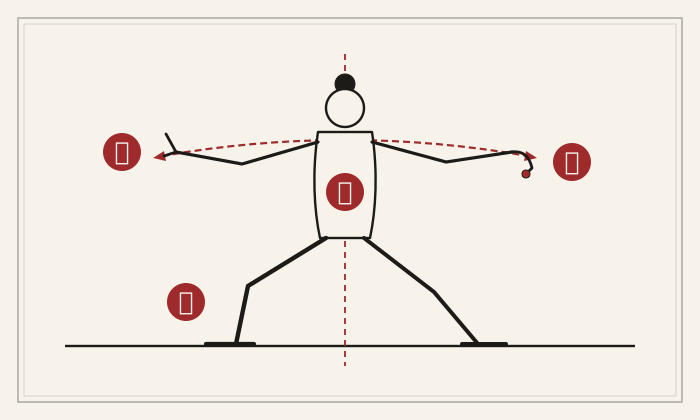
Classical ink-and-cinnabar diagram of Wudang Taijiquan Single Whip (Danbian) showing the rooted bow stance and aligned knee, the central spine axis and open shoulder-blade arc, the rear five-finger hook hand with sunk wrist, and the front ward-off palm

The four structural keys of Wudang Single Whip (单鞭 · 开中有合): uniting bow stance, spine pivot, rear hook hand, and front palm into one elastic bow.

  1. Rooted Bow Stance & Parallel Tracks (川字弓步 · 膝随脚尖): 60–70% of weight settles into the front leg on shoulder-width rails (Cat-Walking) while the rear heel presses gently into the flagstones
  2. Central Spine Pivot & Open Shoulder Blades (中定立轴 · 含胸拔背): the spine stands vertical while the space between the shoulder blades widens like a drawn bow (Chenjian Zhuizhou & Hanxiong Babei)
  3. Rear Five-Finger Hook Hand (五指撮勾 · 腕松肘沉): thumb and four fingertips gather lightly like a crane’s beak with the wrist relaxed and arched—acting as a structural counterweight that anchors the rear horizon
  4. Front Ward-Off & Settling Palm (前掌掤按 · 神贯虎口): the leading palm unfurls from the waist (Peng and An), with calm gaze looking past the index knuckle

Why Gather All Five Fingertips in the “Hook Hand” (勾手)?

Beginners often pinch their fingers tightly into a stiff claw or bend the wrist at an acute, strained angle. In Wudang tradition, the Hook Hand (勾手, also called 刁手) has three subtle functions:

  • Unifying the Three Hand Meridians: Lightly touching the pads of the thumb, index, middle, ring, and little fingers together (as if holding a pinch of tea leaves without crushing them) gently connects the yin and yang meridians at the fingertips.
  • Revealing the Top of the Wrist (亮腕) Without Stiffness: Letting the gathered fingertips hang naturally downward while the top of the wrist arches softly keeps the carpal tunnel open and the elbow heavy.
  • Two-Way Horizon Balance: Because the rear hook hand stays alive and gently anchored behind-and-sideways, the front palm can extend forward without pulling your spine off its central pivot (Tao Te Ching (Dao De Jing) Chapter 2: “front and back follow each other,” 前后相随).

2. How “Cloud Hands” (云手) Bridges One Single Whip to the Next

If Single Whip is the pause where a wave crests and settles, Cloud Hands (云手, Yunshou) is the rolling ocean swell that carries you smoothly across the floor:

  • As you transition out of Single Whip into Cloud Hands, the rear hook hand softly releases its five fingers and scoops downward past the abdomen in an inward spiral (Shun Chan), while the front palm turns outward (Ni Chan) as weight shifts into the other leg.
  • Over three or five side-steps (左顾、右盼 in the Five Steps), your arms trace two alternating vertical-and-horizontal circles driven entirely by the waist and hip creases (kua), before gathering once more into a hook hand and stepping out into a fresh Single Whip.

3. A 10-Minute Small-Space “Single Whip ↔ Cloud Hands” Loop

Even if you only have a two-metre strip of floor in an apartment or office, you can train a complete internal martial workout in ten minutes:

  1. Warm up the joints with two minutes of Wuji and Hunyuan standing paired with Natural Abdominal Breathing.
  2. From “Grasp the Sparrow’s Tail” (揽雀尾), turn the waist right, gather the right hand into a light five-finger hook, step out with the left Cat-Step, and settle into Left Single Whip for three calm breaths.
  3. Release the hook hand and glide rightward through three slow cycles of Cloud Hands, keeping your head at a level height and knees aligned with your toes.
  4. At the right end of your space, form a left hook hand and step into Right Single Whip, then glide back to the left with Cloud Hands. Repeat for ten minutes, maintaining a Mirror-Like Mind.
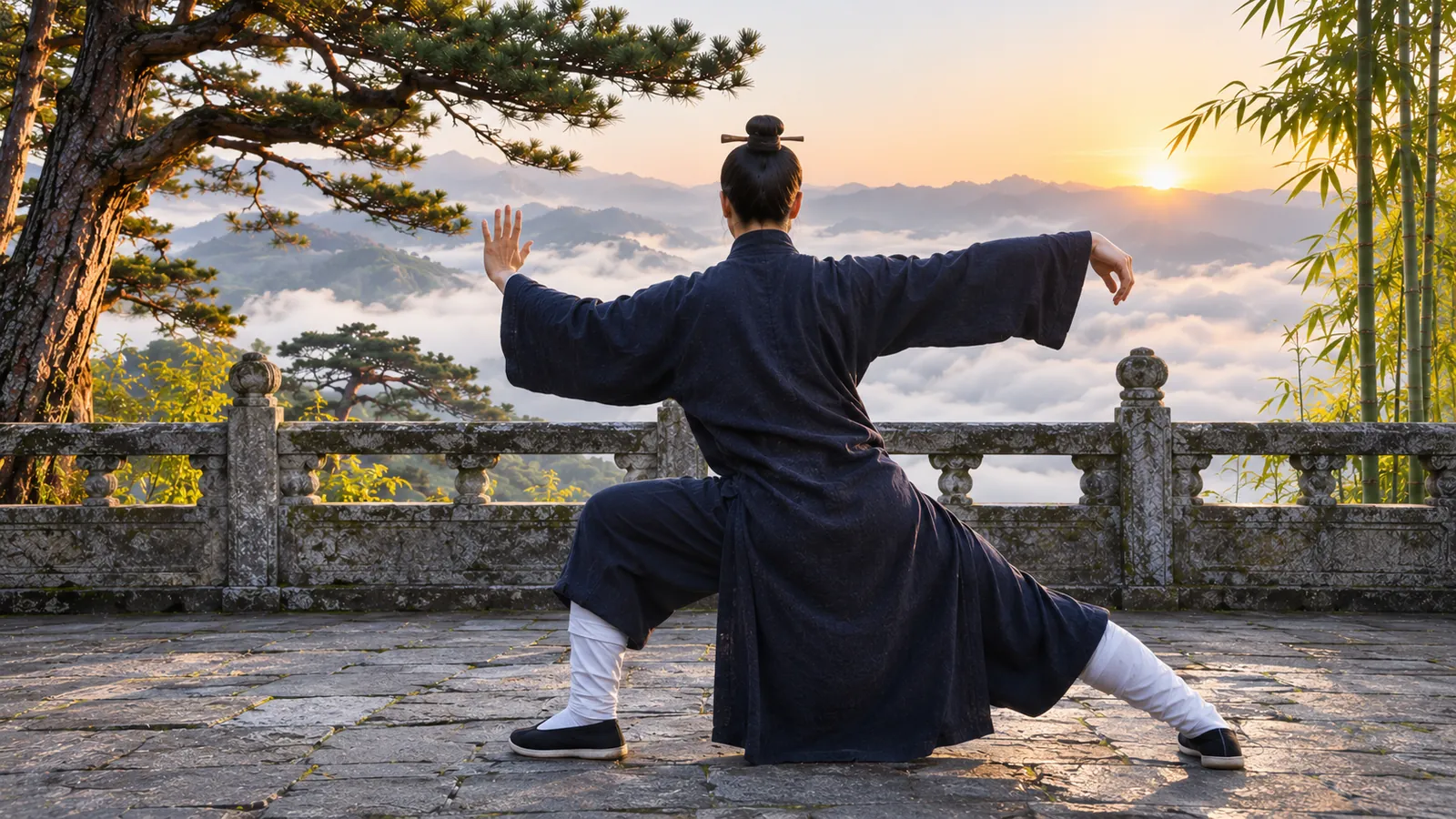
A practitioner in dark indigo Taoist robes and white cotton leg wraps seen from behind in an expansive Wudang Taijiquan Single Whip (Danbian) stance on a stone mountain terrace above morning clouds.

Single Whip (Danbian) at dawn: the five-finger hook hand and leading palm form a single elastic bow across the relaxed upper back.

4. Training Between Wudang Mountain and Singapore

Connecting the living martial heritage near Wudang Mountain’s UNESCO World Heritage ancient Taoist temples with our regular classes in Singapore, Wudang.Org teaches students how to refine every posture from solo alignment to cooperative Push Hands. Begin with Wudang Tai Chi for Beginners, map your study path on Start Here, or join our Singapore Tai Chi Retreat Camp.

Safety note: Keep the hook wrist softly rounded rather than sharply bent, and step at a comfortable stance width and height that causes zero knee strain; traditional martial training does not replace medical care.

Seeker’s Q&A · Frequently Asked Questions

How should the five-finger Hook Hand (Goushou 勾手) be formed in Wudang Single Whip?

Bring the pads of the thumb and the other four fingers lightly together as if holding a pinch of tea leaves, let the fingertips point naturally downward, and keep the wrist gently arched and the elbow sunk—never clenching tightly or bending the wrist at a sharp angle.


Why do traditional teachers pair Single Whip (Danbian) with Cloud Hands (Yunshou) for small-space training?

Because Single Whip trains open bow-stance rooting and horizontal upper-back expansion, while Cloud Hands trains continuous spiral arm-waist coordination and side-stepping weight transfer—together covering the core mechanics of the entire form in just two metres of floor space.

Should beginners practise both Left and Right Single Whip?

Yes. Although many traditional routines feature Left Single Whip more frequently, alternating Left and Right Single Whip via Cloud Hands in solo drills balances hip mobility, leg strength, and shoulder alignment on both sides.
