WUDANG TAIJIQUAN · 武当太极拳

Repulse the Monkey (倒卷肱 Daojuanhong) in Wudang Taijiquan: Parallel Retreat Stepping, Forearm Spiral Folding, and Advancing Through Retreat 武当太极拳“倒卷肱”精解:退步川字弧形轨、前臂螺旋卷折与“以退为进”的太极枢机

How to step backward without losing your root or crossing into a tightrope stance, coordinating waist rotation with forearm coiling (Juan Gong) to dissolve incoming force.

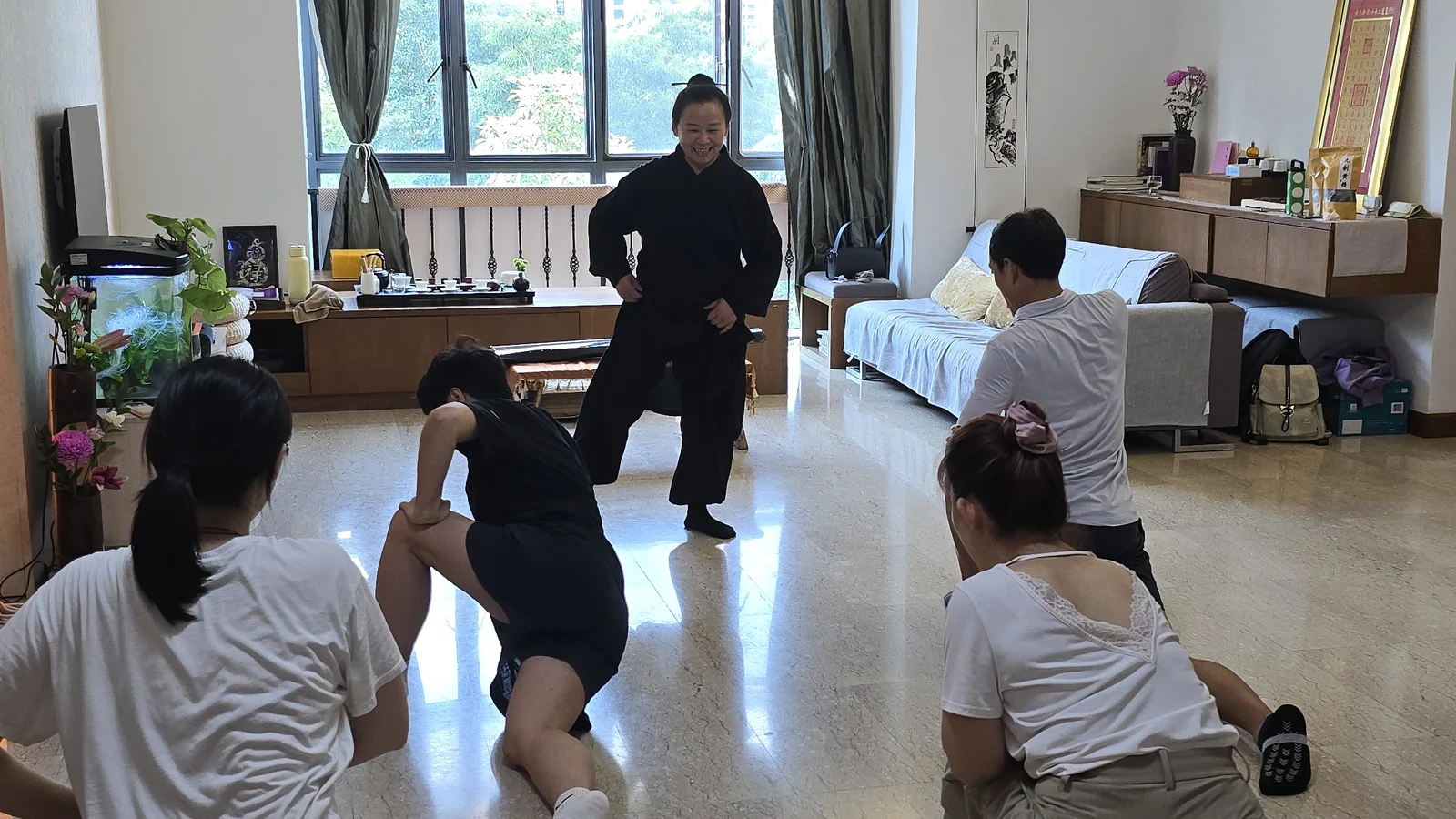
A Wudang taijiquan lesson in a sunlit room: students seen from behind kneel into deep lunges to open the hips while a teacher in black Taoist-style clothing stands in a wide stance, smiling, with an ink-painting scroll on the wall behind.

Often translated as "Repulse the Monkey" (Dao Nian Hou 倒辇猴), the classical name Daojuanhong (倒卷肱) literally means "Reversing and Rolling Back the Forearm/Upper Arm." It is the quintessential retreat-stepping posture in Wudang Taijiquan, embodying the Taoist principle of Yi Tui Wei Jin (以退为进, advancing by means of retreating). This guide details the crescent retreat footwork that preserves shoulder-width stability, the supination-pronation forearm spiral, and the opposing pull-push alignment between the rear hip and front palm.

1. Classical Meaning of Daojuanhong (倒卷肱): Rolling Back the Arm vs. Chasing the Monkey

In traditional Wudang and classical Taijiquan manuals, this posture bears two complementary names:

  1. Daojuanhong (倒卷肱 — Reversing and Coiling the Forearm): Gong (肱) refers anatomically to the forearm and upper arm segment between the elbow and wrist/shoulder; Juan (卷) means to roll up a scroll through spiral rotation; Dao (倒) means reversing or retreating. Rather than stiffly shoving backward, the practitioner coils the extended front forearm inward through supination while the rear arm folds past the ear and extends forward.
  2. Dao Nian Hou (倒辇猴 — Repulsing / Leading the Agile Monkey): A vivid pedagogical image describing nimble, unhurried backward stepping that draws an overly aggressive opponent into emptiness while keeping one's own center calm and upright.

Philosophically, Daojuanhong is the direct somatic expression of Tao Te Ching Chapter 41 (Advancing in the Tao Seems Like Retreating — Jin Dao Ruo Tui) and Chapter 69 (Dare Not Play the Host, Rather Play the Guest — Bu Gan Wei Zhu Er Wei Ke). In Daojuanhong, retreating is never passive flight; it is Yi Tui Wei Jin (以退为进)—yielding space along the frontline so that the opponent's committed momentum overextends into our rotational waist axis.

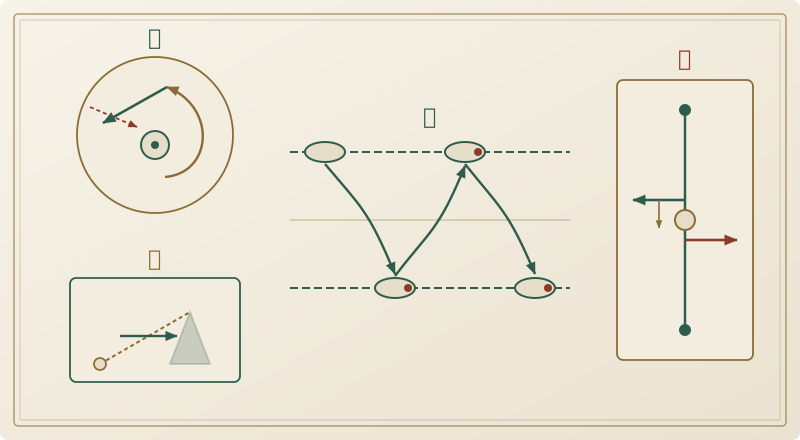
Classical Wudang Taijiquan biomechanical diagram for Daojuanhong showing shoulder-width parallel retreat stepping tracks and forearm coiling
Figure 1 — Biomechanical Mechanics of Wudang Daojuanhong (倒卷肱): ① Dual-arm spiral folding: the front palm supinates to absorb and redirect while the rear hand coils past the ear; ② Parallel shoulder-width retreat rails (Chuanzi 川字 track): each retreating foot sweeps in a gentle inward crescent near the standing ankle before stepping out to its own shoulder-width rail, landing ball-first (red dot); ③ Kwa folding and full weight rooting on the standing leg before lifting the retreating foot; ④ Vertical plumb spine (Xu Ling Ding Jin) with opposing horizontal release (front palm extending vs. rear hand drawing to the hip).

2. Step-by-Step Biomechanical Breakdown

Whether transitioning out of White Crane Spreads Its Wings (Baihe Liangchi) or Needle at Sea Bottom (Haidizhen 海底针) and Fan Through the Back (Shan Tongbei), each repetition of Daojuanhong unfolds in four synchronized phases:

Phase Lower-Body & Kwa Action Upper-Body & Spiral Arm Action Internal Intention (Yi 意) & Breath
1. Folding the Kwa & Turning the Waist Sink firmly into the supporting front leg; fold the supporting inguinal crease (Kwa 胯) as the waist turns 45° toward the rear side The lead palm rotates palm-up (supination, Yangzhang 仰掌) while the rear hand draws down past the hip and arcs upward behind the ear Inhale gently; "listen" (Ting Jin 听劲) to incoming pressure on the lead forearm without resisting
2. Crescent Gathering & Ball-First Touch Lift the unloaded foot cleanly (no dragging); sweep it lightly past the supporting ankle along an inward arc and extend backward to its own shoulder-width track, touching down with the ball of the foot (Qianjiaozhang 前脚掌) first The rear hand rises to ear level with a soft, rounded elbow (Ti Hu 提壶), fingers pointing obliquely toward the lead wrist Maintain Xu Ling Ding Jin (empty, lively crown); keep 80%+ weight on the front leg until the rear ball of the foot tests the ground
3. Shifting Back & Lowering the Heel Gradually pour weight backward from the ball of the rear foot into the full sole and heel; allow the newly emptied front foot to pivot straight ahead on its ball or heel As the waist turns back toward the front centerline, the rear hand passes above the lead forearm, folding the elbow downward (Chen Zhou 沉肘) Transition from inhale to exhale; the two forearms brush past each other along a silk-reeling spiral (Chan Si Jin 缠丝劲)
4. Opposing Pull-Push Release (Duila 对拉) Settle 60–70% weight into the rear leg (Xubu / back-weighted transition toward a bow stance, Gongbu 弓步) with the rear knee aligned over the rear toes and Mingmen full The retreating hand draws back to the side of the hip (palm up), while the new lead palm presses forward along the centerline at shoulder/chest height (Zuowan 坐腕) Exhale into the lower Dantian; feel the equal and opposite elastic expansion between the rear hip/elbow and the forward palm heel

3. Three Common Structural Errors and Wudang Corrections

  1. Stepping onto a Single Tightrope Line (Cai Danxian 踩单线): When retreating, beginners often step directly behind the front heel, crossing the feet onto a single line and immediately losing lateral stability. Correction: Use the crescent arc (Hu Xing Tui Bu 弧形退步)—the retreating foot brushes inward toward the standing ankle to check balance, then steps outward onto its own shoulder-width rail, just as taught in Wudang Cat-Walk Stepping (Mao Bu).
  2. Falling Backward Into the Heel (Tui Bu Hou Yang 退步后仰): Dropping weight backward before the retreating toes touch the floor tips the torso backward and uproots the standing leg. Correction: Separate "empty stepping" from "weight transfer" (Fen Qing Xu Shi 分清虚实). Keep the torso vertical and weight rooted in the front Kwa until the ball of the retreating foot softly contacts the flagstones, then roll smoothly onto the heel.
  3. Looking Behind & Collapsing the Rear Elbow: Twisting the neck all the way backward to stare at the rear hand pulls the cervical spine off-axis. Correction: Use peripheral gaze (Yu Guang 余光) as the waist turns 45°; once the rear hand folds past the ear, return the gaze calmly through the extending front index finger.

Seeker’s Q&A · Frequently Asked Questions

Why should the feet not land on a single line when stepping back in Repulse the Monkey?

Stepping straight behind the front heel puts both feet on one line, and you lose side-to-side stability at once. Instead, let the retreating foot brush in toward the standing ankle, then step back onto its own shoulder-width track, touching down with the ball of the foot first. Keep your weight in the front leg until that foot has tested the ground, then shift back and lower the heel.


