WUDANG TAIJIQUAN · 武当太极拳

Parting the Wild Horse’s Mane (Yema Fenzong) and Fair Lady Works at Shuttles (Yunü Chuansuo) in Wudang Taijiquan: Diagonal Split-Peng, Four-Corner Ward-Off, and Waist-Led Stepping 武当太极拳“野马分鬃”与“玉女穿梭”详解:斜飞掤采、四隅撑架与腰胯转换身法

Learn how two classic Wudang Taijiquan postures train the Four Diagonal Energies—combining Embracing the Ball (Baoqiu) with diagonal Splitting (Lie) in Yema Fenzong and Four-Corner Ward-Off plus Press-Push in Yunü Chuansuo.

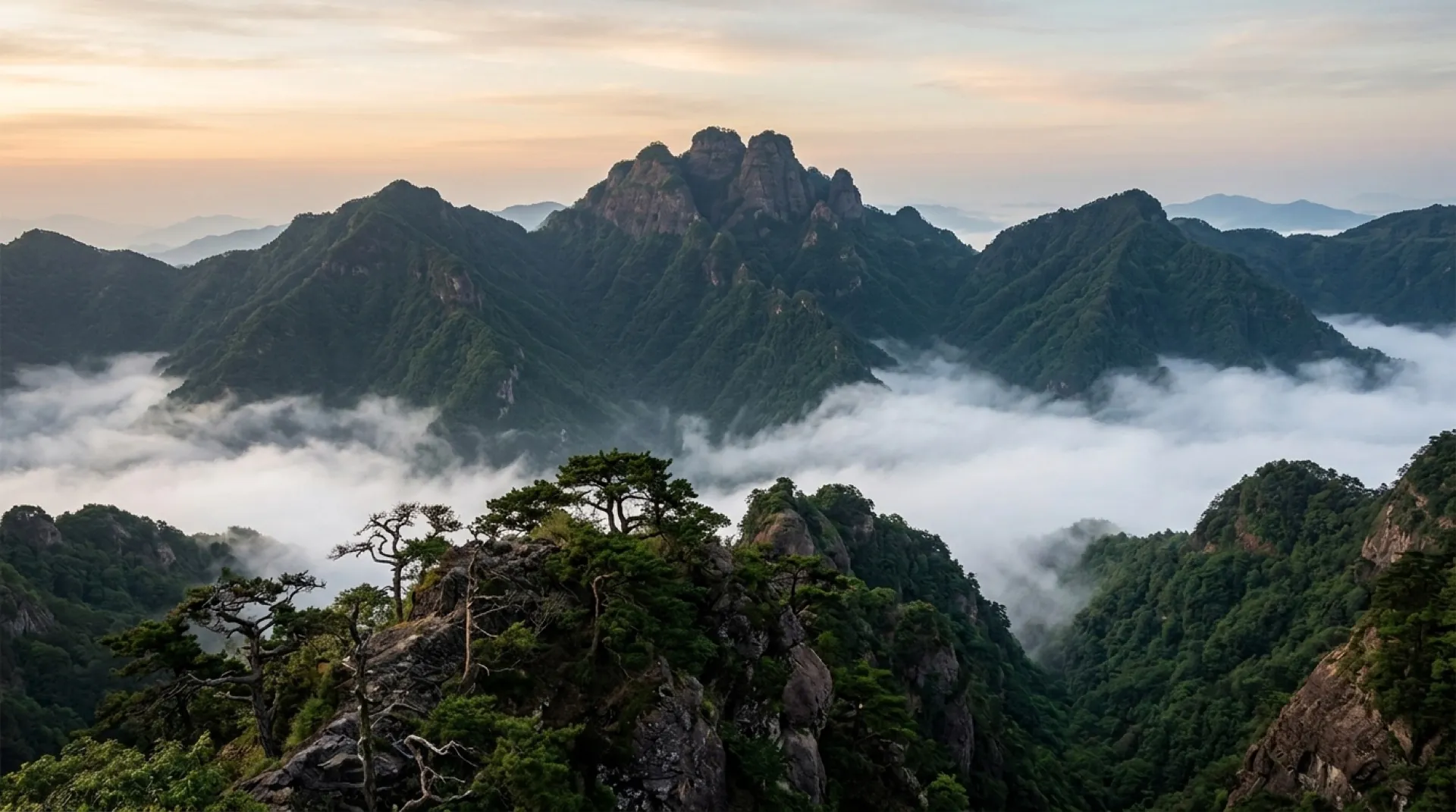
Forested rocky peaks rising above a sea of clouds at dawn.

1. Why Yema Fenzong and Yunü Chuansuo Anchor Diagonal Transitions in Wudang Taijiquan

While Grasp the Sparrow’s Tail (Lanquewei) trains the four cardinal energies (Peng, Lu, Ji, An) along the primary line of direction, a complete Wudang Taijiquan form must also open the four diagonal corners (Siyu 四隅) and express the Four Diagonal Energies (Cai, Lie, Zhou, Kao). Two classical postures embody this diagonal elasticity more clearly than any others: Parting the Wild Horse’s Mane (Yema Fenzong 野马分鬃) and Fair Lady Works at Shuttles (Yunü Chuansuo 玉女穿梭).

In both postures, the practitioner gathers into a compact spherical frame (Embracing the Taiji Sphere, Baoqiu) over a rooted supporting leg, steps cleanly along a 45-degree angle (Cat-Walking), and expands the two arms in opposite spiral directions from the waist.

2. Biomechanics of Parting the Wild Horse’s Mane (Yema Fenzong): Split-Peng and Downward Pluck

In Yema Fenzong, the two arms never pull apart using flat shoulder strength; instead, they express a paired Yin-Yang spiral of Upward-Diagonal Ward-Off/Splitting (Peng 掤 + Lie 列) and Downward-Settling Pluck/Press (Cai 采 / An 按):

  1. Gathering into the Sphere (Baoqiu 抱球): As weight settles into the rear leg, one hand cradles under the abdomen while the opposite palm rests above it at chest height, keeping the armpits hollow and the spine upright.
  2. Waist-Led Diagonal Split: As the front foot steps out and transitions into a bow stance, the lower hand spirals forward and upward to chest height with the forearm rounded in Peng, while the upper hand spirals downward beside the hip crease to anchor the root.
  3. Avoiding the “Leaning Shoulder” Trap: The lead wrist stops in line with the centerline and shoulder height—never over-reaching past the front toes or lifting the trapezius.
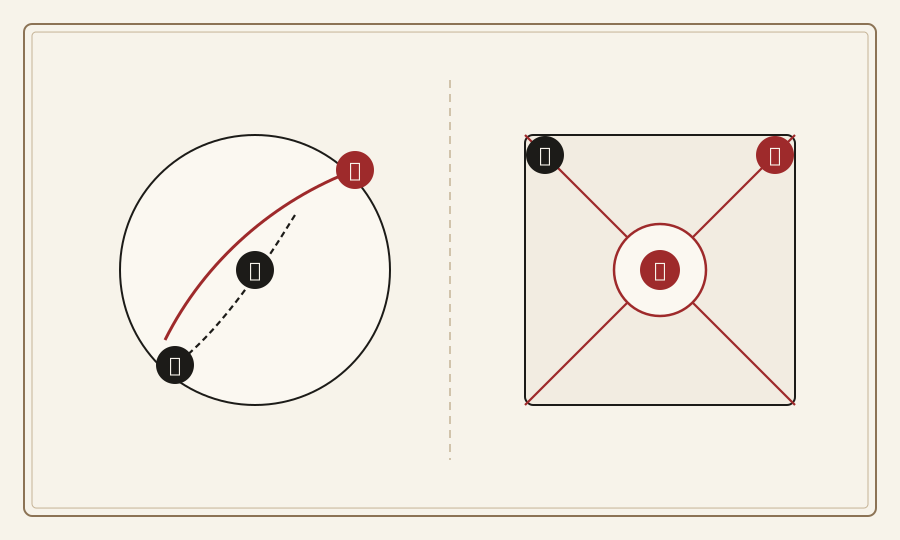
Classical numbers-only diagram contrasting Parting the Wild Horse’s Mane (①–③: central Baoqiu sphere, upward diagonal Peng-Lie arc, downward settling palm) on the left with Fair Lady Works at Shuttles (④–⑥: four-corner pivot, upper ward-off frame, forward palm extension) on the right.

Wudang Taijiquan Yema Fenzong & Yunü Chuansuo (numbers-only SVG key): Diagonal splitting arcs and four-corner shuttle transitions.

  1. ① Embracing the Sphere (Baoqiu Center): Gathering both arms around the lower Dantian axis before stepping.
  2. ② Upward-Diagonal Ward-Off & Split (Yema Fenzong Lead Arm): Rounded forearm spiraling forward-upward from the waist.
  3. ③ Downward-Settling Root Palm (Cai/An Anchor): Rear hand settling beside the hip crease to balance the forward extension.
  4. ④ Central Pivot of the Four Corners (Yunü Chuansuo Axis): Turning cleanly through the four 45-degree corners like a weaver’s shuttle.
  5. ⑤ Upper Rolling Ward-Off Frame (Shangjia Peng): Lead forearm rotating upward above the forehead with the elbow sunk, never collapsed.
  6. ⑥ Forward Shuttle Palm Extension (Tuizhang An): Opposite palm pressing calmly forward from the ribs in coordination with the bow stance.

3. Biomechanics of Fair Lady Works at Shuttles (Yunü Chuansuo): Weaving the Four Corners

Named after a wooden shuttle gliding smoothly back and forth across a loom, Yunü Chuansuo trains 90-degree and 180-degree corner turns while maintaining simultaneous upper protection and forward extension:

  • Threading the Shuttle Under the Elbow (Chuanzhang 穿掌): Before turning toward a new corner, the active hand threads softly beneath the opposite forearm near the waist—closing the centerline before opening.
  • Upward Rolling Frame + Forward Palm (Shangjia Xiachuan 上架下推): As the bow stance settles into the diagonal corner, one forearm rolls upward at a 45-degree angle in front of the forehead (protecting the head without raising the shoulder, Chenjian Zhuizhou) while the other palm presses forward at chest level.
  • Four-Corner Footwork Discipline: Each turn pivots first on the heel and ball of the feet with the hip creases softened (Zhedie folding) so the knee never twists under load.

4. 5-Minute Small-Space Alternating Drill & Safety Notes

Whether you are training on Wudang Mountain or in a living room in Singapore, you can practice both postures in just two square meters using a stationary “step-and-return” rhythm: stand in Wuji, shift weight onto the right leg while holding the ball on the right, step forward-left into Yema Fenzong on the exhalation, then shift back, thread the right hand under the left elbow, and step into Yunü Chuansuo on the next exhalation before stepping back to center and repeating on the right side.

Complete six slow cycles per side. Safety note: when raising the upper arm in Yunü Chuansuo, keep the shoulder blade relaxed downward and the elbow slightly forward of the forehead; if you have shoulder impingement or knee pain, keep the frame lower and consult a qualified healthcare professional.

Seeker’s Q&A · Frequently Asked Questions

How do Parting the Wild Horse’s Mane (Yema Fenzong) and Fair Lady Works at Shuttles (Yunü Chuansuo) complement each other?

Both postures develop waist-led diagonal transitions from a gathered Baoqiu sphere: Yema Fenzong trains diagonal Splitting (Lie) and Ward-Off (Peng) paired with a downward plucking palm, whereas Yunü Chuansuo trains four-corner pivoting with an upward rolling ward-off frame paired with a forward palm press.


