WUDANG TAIJIQUAN · 武当太极拳

Separating Kick Left and Right (Zuoyou Fenjiao) vs. Heel Kick (Dengjiao) in Wudang Taijiquan: Cross-Wrist Opening, Instep Alignment, and Single-Leg Root 武当太极拳「左右分脚」与「蹬脚」辨微:十字手合抱、绷脚与勾脚劲路及独立护膝指南

How to practice Left and Right Separating Kick (Zuoyou Fenjiao) in Wudang Taijiquan—comparing pointed-instep Fenjiao against hooked-heel Dengjiao, coordinating Cross-Hands (Shizishou) gathering with two-arm splitting, and keeping single-leg balance without leaning back.


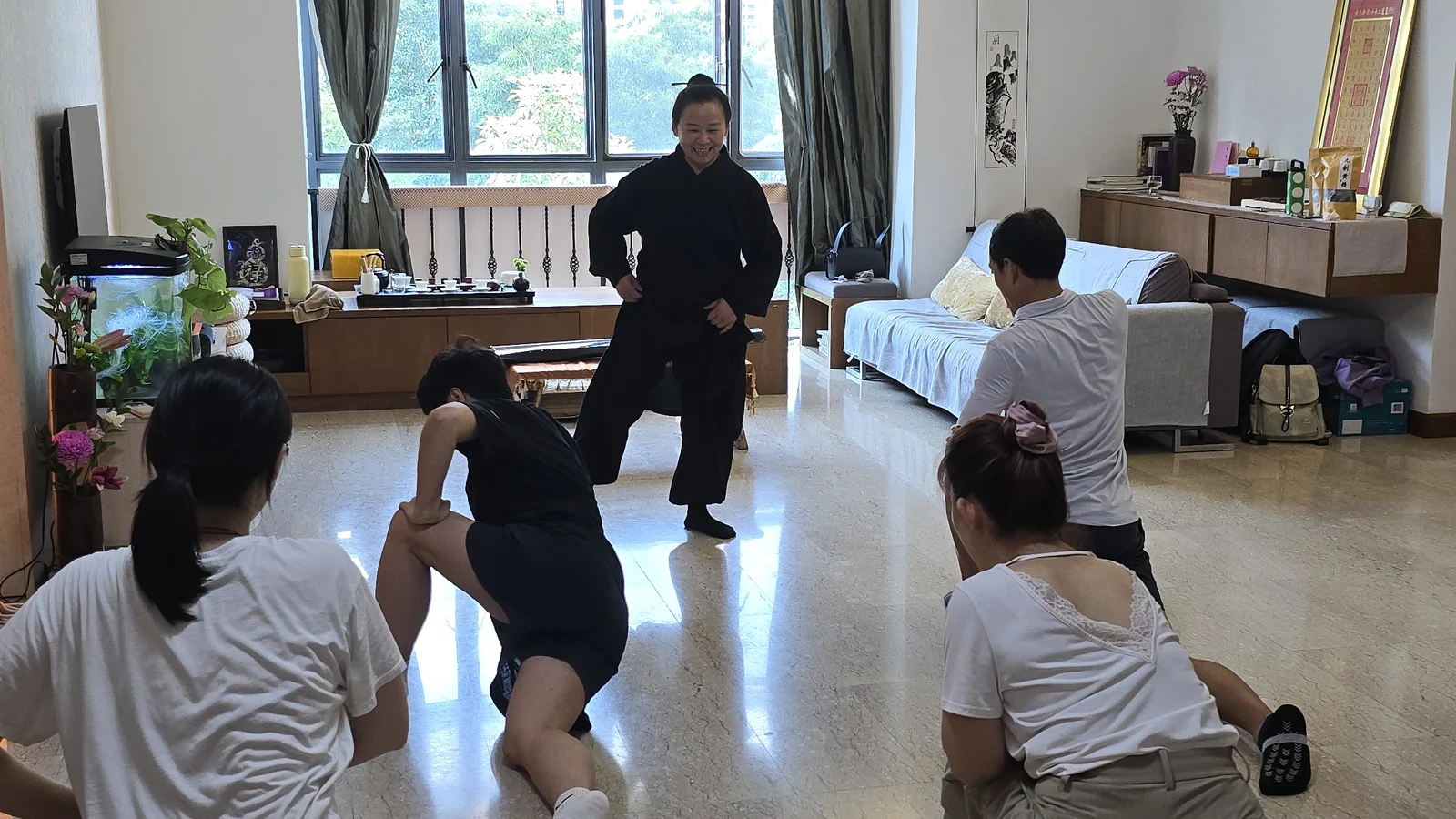
A Wudang taijiquan lesson in a sunlit room: students seen from behind kneel into deep lunges to open the hips while a teacher in black Taoist-style clothing stands in a wide stance, smiling, with an ink-painting scroll on the wall behind.

Fenjiao vs. Dengjiao: The Exact Difference Between Separating Kick and Heel Kick

In Wudang and traditional Taijiquan forms, practitioners encounter two distinct slow-motion high kicks that share the same preparatory Cross-Hands (Shizishou 十字手) chamber yet express force through opposite parts of the foot: Separating Kick Left and Right (Zuoyou Fenjiao 左右分脚) and Heel Kick (Dengjiao 蹬脚). Understanding their anatomical difference prevents blurred technique. In Fenjiao ('Separating Foot'), the ankle plantar-flexes gently so the instep and toes extend Smoothly (脚面自然绷平,劲达脚背与脚尖), lengthening the front line of the shin and thigh like a calligraphy brush drawing a clean stroke. In Dengjiao ('Heel Kick'), the toes hook back toward the shin (dorsiflexion) so force presses outward through the heel (勾脚尖,劲达脚跟), engaging the posterior chain of the calf and hamstring. Both kicks begin from a chambered knee lift (提膝), never by swinging a stiff, straight leg upward from the ground.

Upper-and-Lower Unity: Coordinating Cross-Hands Gathering with Two-Arm Splitting

Why is Fenjiao called 'Separating' (fen 分)? Because the kick happens at the exact moment the crossed hands separate into two open wings (手脚同分,上下相随). Before extending the leg, first gather into single-leg balance: shift 100 percent of your weight onto the supporting leg, sink into its hip crease (songkua 松胯), and draw the kicking knee upward to hip height while both hands scoop upward from below to cross at the wrists in front of the chest (Shizishou 十字手, with the wrist matching the kicking leg on the outside). On the exhale, as your crossed wrists rotate and open outward into two rounded shoulder-height Tile-Ridge Palms (Walengzhang 瓦楞掌), the raised shin unfolds smoothly along the exact same line as your lead arm (右分脚与右手上下相对,左分脚与左手上下相对).

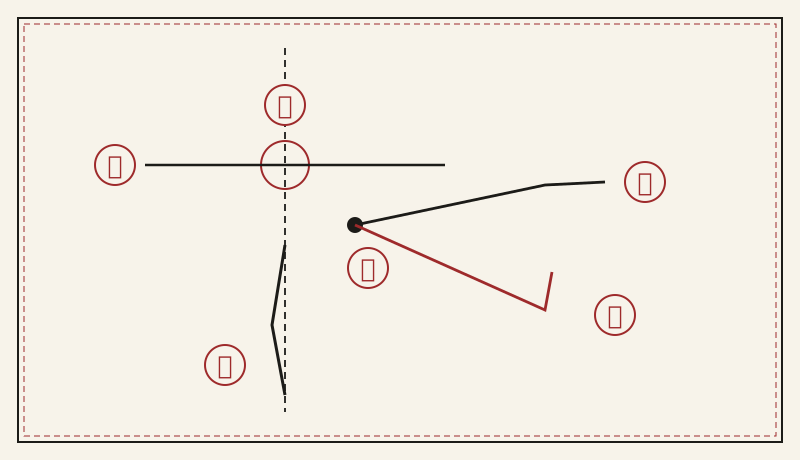
Classical Wudang ink-on-parchment diagram of Separating Kick (Zuoyou Fenjiao) vs. Heel Kick (Dengjiao) showing Rooted Supporting Leg (①), Cross-Wrist Gathering Shizishou (②), Two-Arm Horizontal Splitting Fen Zhang (③), Lifted Knee Chamber (④), Pointed-Instep Fenjiao Extension (⑤), and Hooked-Toe Heel Thrust Dengjiao Comparison (⑥).

Key — ① Rooted Supporting Leg (独立腿微屈坐胯, knee unlocked and aligned with toes); ② Cross-Hands Gathering (十字手合抱蓄劲, lifting the knee while wrists cross in front of the chest); ③ Symmetrical Palm Splitting (左右分掌, seating both wrists as the arms open); ④ Chambered Knee Fold (提膝折叠, never swinging a stiff straight leg from the floor); ⑤ Fenjiao Pointed-Instep Extension (分脚绷脚面,劲达脚背与趾端); ⑥ Dengjiao Hooked-Toe Heel Thrust Comparison (蹬脚勾脚尖,劲达脚跟).

Three Keys to Effortless Single-Leg Balance Without Leaning the Torso Backward

The most common balance error during Zuoyou Fenjiao is leaning the upper torso backward (后仰) to counterbalance the weight of the extended leg. Leaning back breaks the vertical plumb line (虚领顶劲,立身中正) and uproots the standing heel. Instead, use three classical Wudang alignments: 1. Keep a Soft Bend in the Standing Knee: A locked standing knee acts like a rigid stick that wobbles at the slightest breeze; a 10-degree bend in the standing knee lets the ankle and hip socket absorb micro-adjustments silently. 2. Sink the Opposite Shoulder and Arm: As the right foot kicks toward the right-front diagonal, let the left (rear) arm extend softly to the left-rear as a natural counterweight while both shoulders sink heavy. 3. Choose Quality of Alignment Over Kick Height: A level, unstrained kick at hip or waist height (45°) with an upright spine is far superior to a chest-high kick that forces the pelvis to tilt.

A Four-Minute Wall-Side or Courtyard Chamber-and-Extend Solo Drill

To build calm stability for both Fenjiao and Dengjiao, stand with your feet shoulder-width apart and practice a slow four-count cadence: Count 1 (Gather & Chamber): Shift onto your left leg, sink the left hip crease, cross both wrists in front of your chest, and lift your right knee calmly. Count 2 (Separate & Extend — Fenjiao): Exhale, open both arms outward with seated wrists, and unfold the right shin forward with a gently pointed instep (绷脚), holding for one quiet breath without locking the standing knee. Count 3 (Re-Chamber): Inhale, fold the right knee back to the chambered position while softening the wrists. Count 4 (Step Down Like a Cat): Place the right foot down softly without dropping your weight heavily. Repeat 6 times per side, then practice 4 repetitions flexing the ankle into Dengjiao (勾脚蹬跟) to feel the contrast. Safety note: If your hamstrings feel tight or your lower back rounds when extending the leg, kick lower (knee or mid-thigh height) so your pelvis and spine remain completely upright.

Seeker’s Q&A · Frequently Asked Questions

What is the key structural alignment in Separating Kick Left and Right (Zuoyou Fenjiao) vs. Heel Kick (Dengjiao) in Wudang Taijiquan?

How to practice Left and Right Separating Kick (Zuoyou Fenjiao) in Wudang Taijiquan—comparing pointed-instep Fenjiao against hooked-heel Dengjiao, coordinating Cross-Hands (Shizishou) gathering with two-arm splitting, and keeping single-leg balance without leaning back.
