WUDANG TAIJIQUAN · 武当太极拳

Diagonal Flying (斜飞势 Xiefeishi) and Raising Hands (提手上势 Tishou Shangshi) in Wudang Taijiquan: 45-Degree Corner Splitting and Empty-Step Closing 武当太极拳“斜飞势”与“提手上势”精解:隅角挒靠大开与虚步提引大合的阴阳相济

How Wudang Taijiquan pairs expansive 45-degree diagonal splitting (Lie) and shoulder-hip Kao with compact empty-heel vertical gathering (Tishou Shangshi) to train whole-body opening and closing (Kai-He).

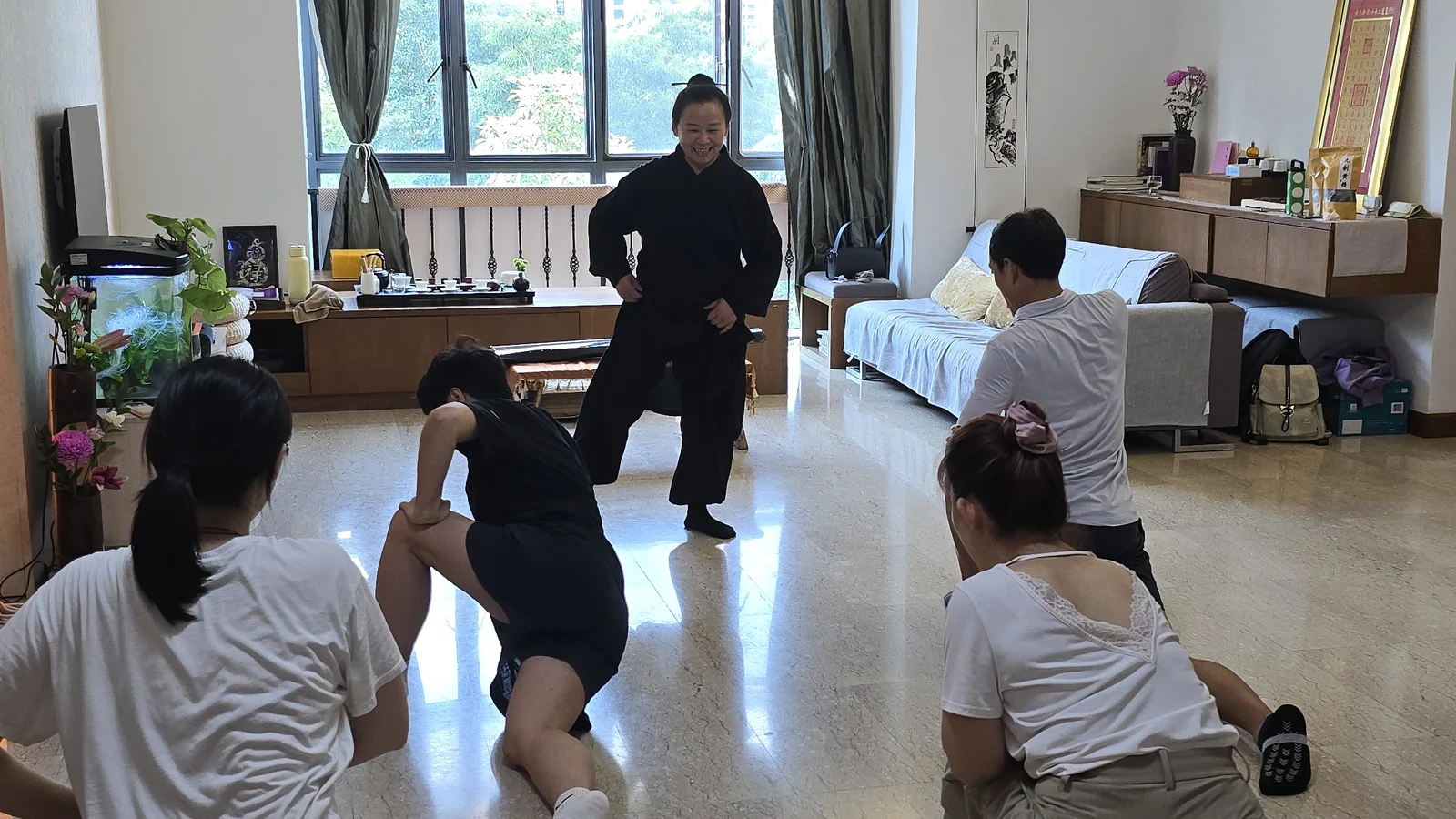
A Wudang taijiquan lesson in a sunlit room: students seen from behind kneel into deep lunges to open the hips while a teacher in black Taoist-style clothing stands in a wide stance, smiling, with an ink-painting scroll on the wall behind.

In Wudang Taijiquan, Diagonal Flying (Xiefeishi 斜飞势) and Raising Hands (Tishou Shangshi 提手上势) form a classic study in complementary opposites: Xiefeishi is one of the grandest diagonal openings (Da Kai 大开) in the solo form, releasing splitting (Lie 挒) and shoulder-back (Kao 靠) energy along a 45-degree corner axis, whereas Tishou Shangshi is a compact vertical gathering (Da He 大合) that settles into a heel-touch empty stance (Xubu 虚步) while drawing the forearms inward and slightly upward to uproot an opponent’s center.

1. Classical Pairing in the Thirteen Postures (Shisanshi 十三势): Corner Energies (Lie 挒 & Kao 靠) and Kai-He (开合)

In the framework of The Thirteen Postures (Shisanshi) of Wudang Taijiquan, the Four Cardinal Energies (Peng, Lu, Ji, An 掤捋挤按) govern the four cardinal directions, while the Four Corner Energies (Cai, Lie, Zhou, Kao 采挒肘靠) operate along the 45-degree diagonal corners (Yu Jiao 隅角).

  • Xiefeishi (斜飞势 — Diagonal Flying) as the Archetype of Lie (挒) and Kao (靠): Stepping out at a 45-degree diagonal angle from a tightly coiled sphere (Baoqiu 抱球), the practitioner's lead arm sweeps diagonally upward like a wild goose banking into the mountain wind, while the rear hand presses downward beside the rear hip. The torso, shoulder, hip, and outside of the lead leg arrive simultaneously to express whole-body Kao (torso/shoulder bump) and Lie (diagonal splitting rotation).
  • Tishou Shangshi (提手上势 — Raising Hands and Stepping Up) as Vertical Peng-Cai Gathering (He 合): Immediately balancing that broad diagonal expansion, Tishou Shangshi gathers the front foot into a heel-touch empty stance (Xubu 虚步) while both forearms rotate slightly inward to close toward the centerline—one palm higher near eyebrow/nose level, the other guarding the opposite elbow/chest—creating a subtle upward-and-inward lifting wedge.
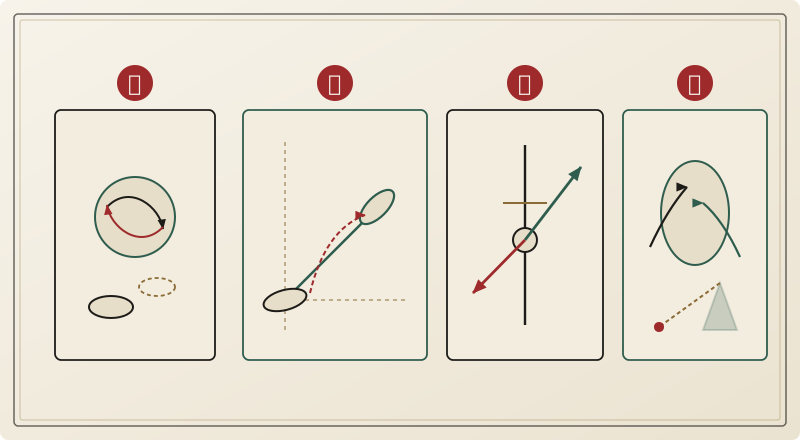
Classical Wudang Taijiquan biomechanical diagram for Xiefeishi (Diagonal Flying) and Tishou Shangshi (Raising Hands)
Figure 1 — Biomechanical Progression of Xiefeishi (斜飞势) and Tishou Shangshi (提手上势): ① Coiled preparation (Baoqiu 抱球): sinking into the supporting Kwa while folding both arms into a compact sphere at the lower Dantian; ② 45-degree corner arc step: stepping out onto the diagonal corner track while preserving shoulder-width lateral stability; ③ Xiefeishi diagonal split (Duila 对拉): upper-right diagonal Lie/Peng expansion balanced by lower-left Cai/An rooting and unified shoulder-hip Kao; ④ Tishou Shangshi vertical closing (He Jin 合劲): 70% weight rooted in the rear leg, front heel touching lightly (Xubu), and both forearms converging upward along the centerline.

2. Step-by-Step Biomechanical Breakdown

Posture & Phase Footwork & Kwa Alignment Arm Spiral & Palm Orientation Internal Intention (Yi 意) & Breath
1. Coiling into the Sphere (Shou Kua Bao Qiu 收胯抱球) Shift weight 100% onto the supporting leg; draw the empty foot lightly inward toward the supporting ankle Fold the lead hand beneath the abdomen (palm up) and the other hand above the chest (palm down), holding a compact Taiji sphere (Baoqiu) Inhale deeply into the lower Dantian; store elastic potential (Xu Jin 蓄劲) without shrugging the shoulders
2. Xiefeishi Corner Step & Diagonal Split Step the empty foot out along the 45° diagonal corner, touching heel-first and rolling onto the full sole into a diagonal bow stance (Gongbu 弓步) As the waist turns toward the corner, the lower forearm spirals upward and outward to shoulder/forehead height (palm obliquely up), while the upper hand presses down beside the rear hip (palm down) Exhale smoothly; feel a diagonal pull-split (Xie Xiang Duila 斜向对拉) from the rear heel and hip palm through the spine to the lead wrist
3. Transition Pivot into Tishou Shangshi Sink into the front leg (or pivot from Single Whip Danbian / White Crane Baihe Liangchi), folding the rear Kwa deeply to draw the front foot half a step in Both arms curve downward and outward slightly before gathering inward along a vertical ellipse Inhale as the rear Kwa opens and hollows; keep Xu Ling Ding Jin vertical
4. Tishou Shangshi Empty-Heel Closing (Xubu He Jin) Settle 70% weight into the rear leg; place the front foot on the centerline rail with only the heel touching the ground (Jiao Gen Dian Di 脚跟点地), toes naturally lifted Bring both palms inward toward the centerline with palms facing each other (lead hand at nose height, rear hand near the lead elbow, elbows sunk and heavy) Exhale and sink the Qi to the Dantian; feel how sinking the tailbone creates a subtle upward-and-inward lift through the forearms

3. Common Structural Mistakes and Wudang Corrections

  1. Leaning the Torso Forward in Xiefeishi: Because the lead arm reaches diagonally upward, students often tip the chest toward the front knee. Correction: Keep the plumb line from Baihui to the perineum (Huiyin) vertical; the diagonal extension comes from the waist turning and the rear leg pressing into the earth, balanced equally by the rear palm rooting beside the hip (the same bidirectional balance trained in Parting the Wild Horse's Mane Yema Fenzong).
  2. Stiffly Shrugging the Shoulders in Tishou Shangshi: Because the posture is named "Raising Hands" (Tishou 提手), beginners often lift the hands with their upper trapezius muscles. Correction: In Wudang Taijiquan, "raising the hands" is powered by sinking the rear Kwa and dropping the elbows (Chen Jian Zhui Zhou 沉肩坠肘), identical in principle to the empty-step guard of Play the Lute (Shouhui Pipa).

Practice Reflection for Students

Practice three slow repetitions transitioning between the coiled sphere (Baoqiu) and Xiefeishi on both the right and left sides, pausing for two breaths at full extension to check whether your rear hand is as alive and rooted beside your hip as your lead hand is in the air.

Seeker’s Q&A · Frequently Asked Questions

How do you raise the hands in Tishou Shangshi without shrugging the shoulders?

The name says “raising hands”, so beginners lift with the muscles on top of the shoulders. In this posture the lift comes from below: settle about 70% of your weight into the rear leg, sink the rear hip crease, let the shoulders and elbows drop, and touch the front heel lightly to the ground. As the tailbone sinks, the forearms close toward the centerline and rise slightly on their own.


