WUDANG TAIJIQUAN · 武当太极拳

Step Up and Planting Punch (Shangbu Zaichui) and Low-Gate Punch (Zhidangchui) in Wudang Taijiquan: Folding the Hip Crease Without Dropping the Crown 武当太极拳「上步栽捶」与「指裆捶」要诀:松胯折叠、斜中寓正与忌低头弯腰练法

Learn how to execute Step Up and Planting Punch (Shangbu Zaichui) and Low-Gate Punch (Zhidangchui) in Wudang Taijiquan—mastering the inguinal hip hinge (Zhedie Songkua) so the spine elongates on a clean 30-to-45-degree diagonal without rounding the back or dropping the head.


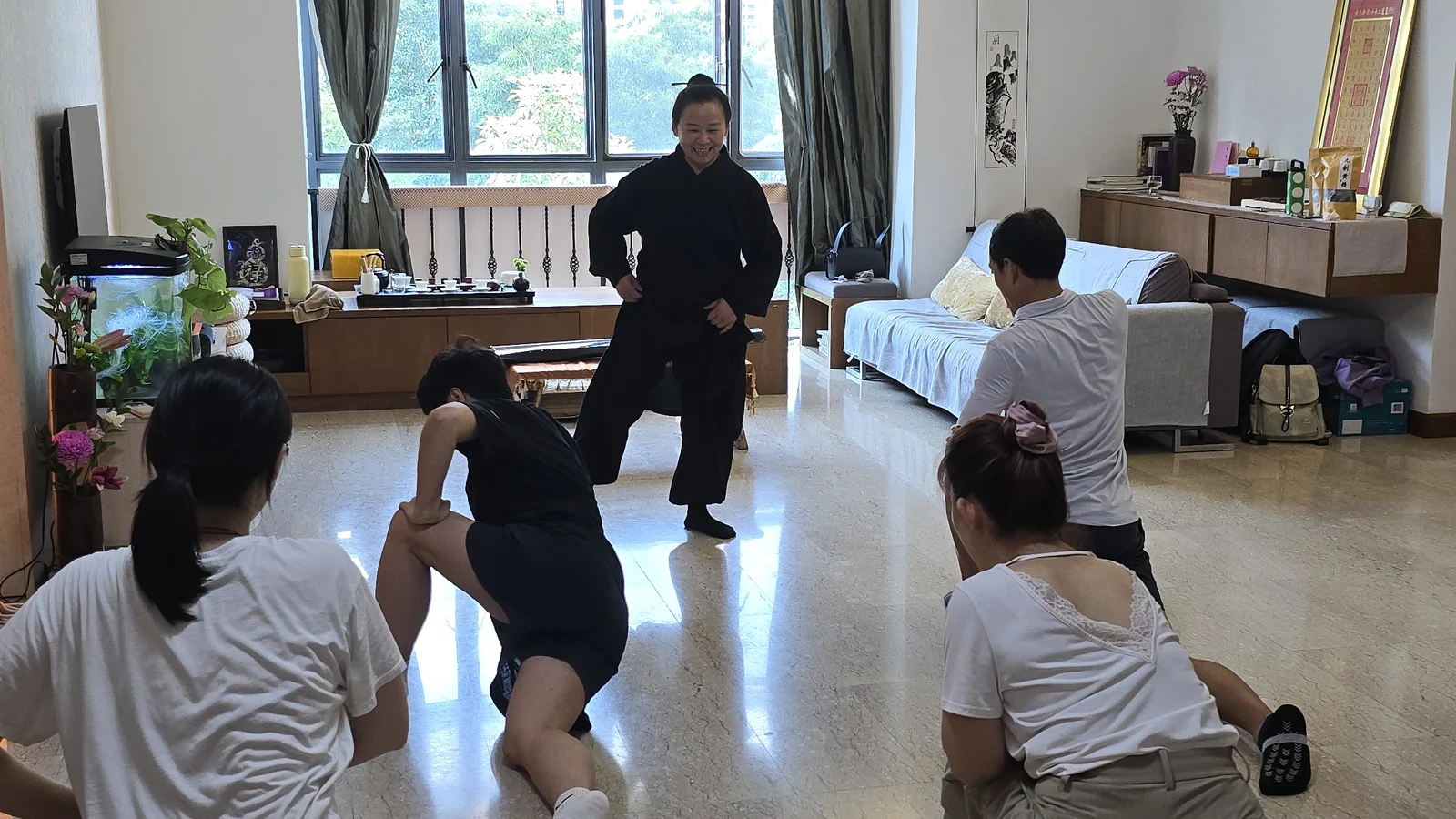
A Wudang taijiquan lesson in a sunlit room: students seen from behind kneel into deep lunges to open the hips while a teacher in black Taoist-style clothing stands in a wide stance, smiling, with an ink-painting scroll on the wall behind.

What Are “Planting Punch” (Zaichui) and “Low-Gate Punch” (Zhidangchui) in Wudang Taijiquan?

Most punches in Taijiquan travel horizontally at chest or rib height, such as Deflect, Parry, and Punch (Banlanchui 搬拦捶) or Fist Under Elbow (Zhoudi Kanchui 肘底看捶). Two classical postures, however, direct the Hollow Fist (Kongxinquan 空心拳) along a downward diagonal toward the lower gate: Step Up and Planting Punch (Shangbu Zaichui 上步栽捶—literally 'planting' a punch toward the earth like setting a seedling into soil, typically following Brush Knee or Needle at Sea Bottom/Fan Through Back sequences) and Low-Gate Punch (Zhidangchui 指裆捶—aimed toward the lower abdomen/pelvic level). Because both postures require striking downward while stepping into a Bow Stance (Gongbu 弓步), they serve as the ultimate test of Wu Yuxiang's rule in the Shisanshi Xinggong Xinjie (十三势行功心解): 'In going and returning there must be folding (zhedie)' (往复须有折叠).

The Core Biomechanical Distinction: Folding the Kua (Hip Hinge) vs. Rounding the Back and Dropping the Head

When beginners try to punch downward in Shangbu Zaichui, they almost always bend their upper back into a C-shape, drop their chin toward their chest (低头弯腰), and shift their weight dangerously past their front toes. In classical Taijiquan, bowing the head and hunching the thoracic spine breaks the central axis (失中), cuts off the transmission of force from the rear foot, and makes it easy for a partner to pull you forward onto your face. Instead, Wudang Taijiquan uses a pure inguinal hip hinge (songkua zhedie 松胯折叠): as you step into the left Bow Stance, the pelvis folds cleanly at the left and right hip sockets (胯根内收折叠) so the entire torso inclines forward at a smooth 30-to-45-degree angle as one straight, elongated line from tailbone (Weilu) to crown (Baihui)—what traditional teachers call 'uprightness within a diagonal' (xie zhong yu zheng 斜中寓正).

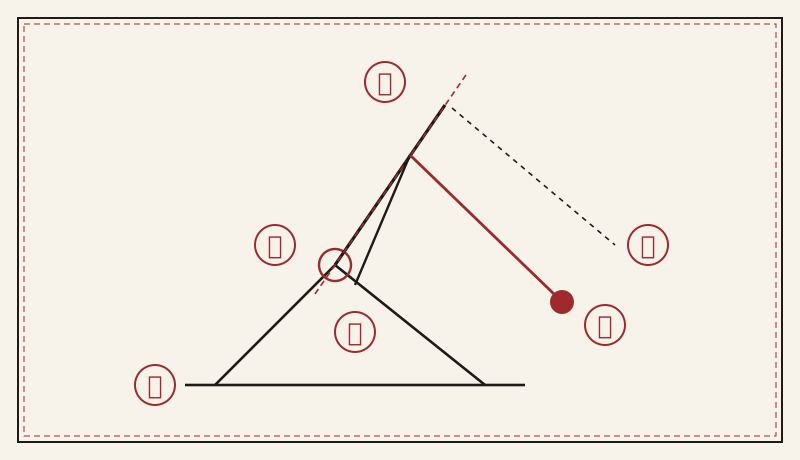
Classical Wudang ink-on-parchment diagram of Step Up and Planting Punch (Shangbu Zaichui) showing Rooted Bow Stance Base (①), Inguinal Hip-Crease Fold Songkua (②), Elongated Diagonal Spine Axis from Crown to Tailbone (③), Lead Brushing Guard Palm Beside Knee (④), Downward-Diagonal Hollow Fist Zaichui (⑤), and Forward-Downward Gaze Vector (⑥).

Key — ① Rooted Bow Stance Base (弓步坐实, knee aligned over toes without collapsing forward); ② Inguinal Crease Folding (松胯折叠, hinging cleanly at the hip sockets rather than rounding the lumbar spine); ③ Elongated Crown-to-Tailbone Diagonal Axis (斜中寓正,虚领顶劲而不低头驼背); ④ Lead Brushing Guard Palm (前手搂膝护按); ⑤ Downward Planting Hollow Fist (栽捶斜下击出,腕部平直); ⑥ Calm Forward-Downward Gaze (目视前下方).

Two-Hand Coordination: Brushing Past the Knee (Louxi) and Planting the Fist with Forearm Spiral

Just like Brush Knee and Twist Step (Louxi Aobu 搂膝拗步), Shangbu Zaichui and Zhidangchui rely on opposite-yet-complementary trajectories of the two arms. As you step forward with the left foot into a left Bow Stance, the left hand brushes downward and outward past the left knee in a rounded Tile-Ridge Palm (Walengzhang 瓦楞掌), coming to rest beside the outer left thigh with the palm pressing downward (左手搂膝按于左胯旁) to guard the lower gate and provide a backward-downward counter-pull. Simultaneously, the right hand forms a Hollow Fist at the right ear or shoulder, spirals inward (内旋螺旋转腕) as the waist turns left, and punches forward-and-downward past the inside of the left knee (拳心斜向下,拳眼朝内 in Zaichui, or 拳眼朝上 in Zhidangchui). Keep the right wrist completely straight and the right shoulder sunk so the punch is driven by the rear leg and waist rather than arm lunging.

A Three-Minute Hip-Hinge and Zaichui Solo Practice Drill

Before practicing Shangbu Zaichui at full depth, train the clean hip hinge in three progressive steps. Stand in a moderate left Bow Stance with your hands resting on your inguinal creases (Kua). Step 1: On an exhale, crease your left hip socket deeper so your straight spine inclines forward 30 degrees while keeping the crown drawn along the diagonal line of your spine and your front knee directly over your front ankle (never past the toes). Step 2: Add the left brushing palm (louxi) sweeping past the left knee to anchor beside the left hip. Step 3: Add the right Hollow Fist rolling from the right shoulder and planting diagonally downward to knee-or-shin height in front of the centerline as you exhale, then inhale and fold back into the rear hip crease. Repeat 8 times per side. Safety note: If you have lower-back sensitivity, keep the torso nearly upright (only a 10-to-15-degree hip hinge) and punch toward waist height (Zhidangchui) rather than reaching low toward the floor.

Seeker’s Q&A · Frequently Asked Questions

What is the key structural alignment in Step Up and Planting Punch (Shangbu Zaichui) and Low-Gate Punch (Zhidangchui) in Wudang Taijiquan?

Learn how to execute Step Up and Planting Punch (Shangbu Zaichui) and Low-Gate Punch (Zhidangchui) in Wudang Taijiquan—mastering the inguinal hip hinge (Zhedie Songkua) so the spine elongates on a clean 30-to-45-degree diagonal without rounding the back or dropping the head.
