WUDANG TAIJIQUAN · 武当太极拳

Grasping the Sparrow's Tail (Lanquewei): Mastering Peng, Lu, Ji, and An in Wudang Taijiquan 揽雀尾(掤捋挤按四正手):武当太极拳的十三势母式、四正劲转换与听劲要法

A comprehensive technical guide to Lanquewei (揽雀尾), the foundational mother posture of Wudang Taijiquan, examining the biomechanics and internal listening of the four primary energies: Peng (掤), Lu (捋), Ji (挤), and An (按).


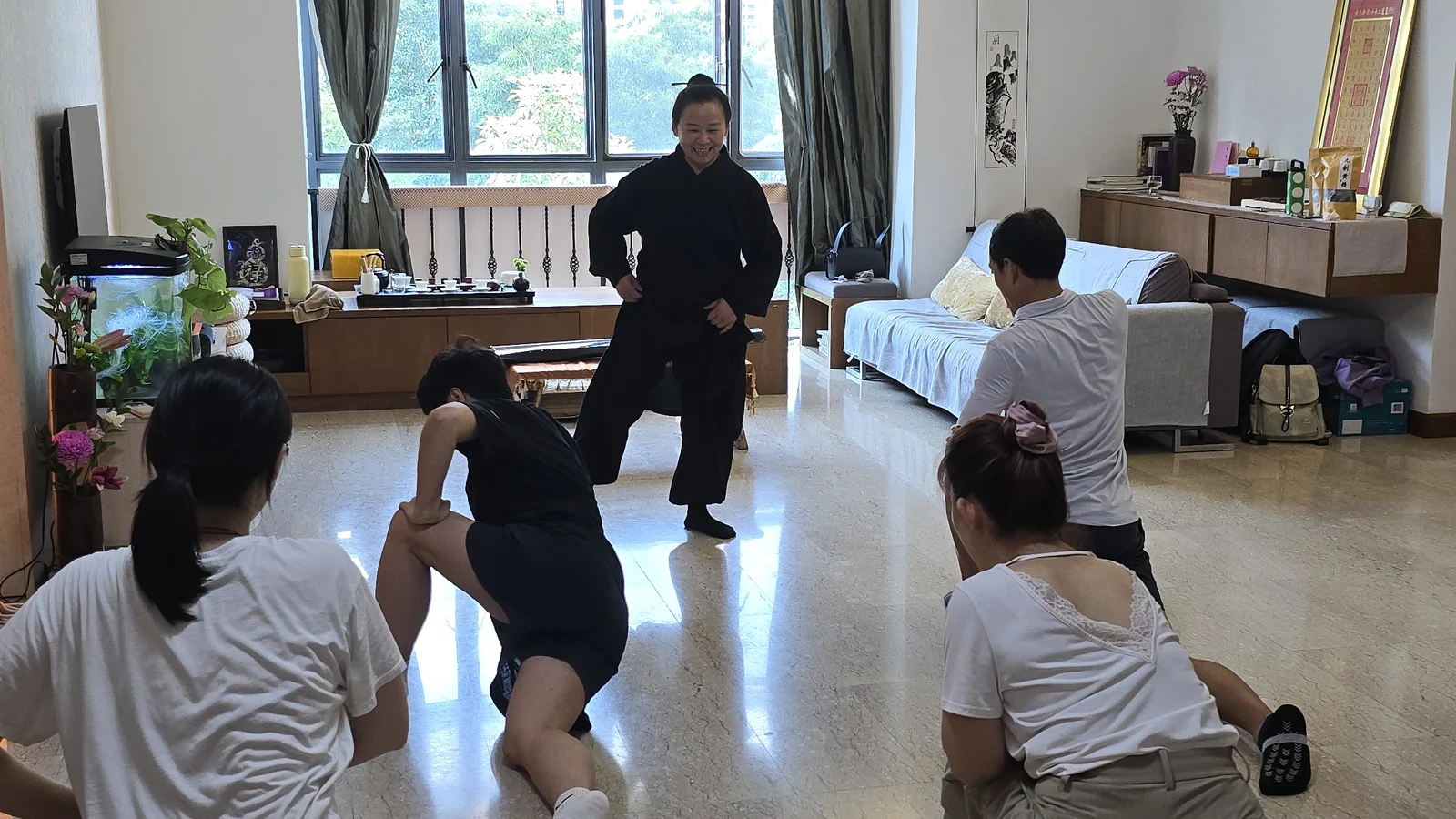
A Wudang taijiquan lesson in a sunlit room: students seen from behind kneel into deep lunges to open the hips while a teacher in black Taoist-style clothing stands in a wide stance, smiling, with an ink-painting scroll on the wall behind.

Why Lanquewei Is Called the Mother Posture of Taijiquan

Immediately after the opening wave of Commencing Taiji from Wuji (Taiji Qishi), traditional Wudang Taijiquan enters its most important composite sequence: 'Grasping the Sparrow's Tail' (Lanquewei, 揽雀尾). In classical Taijiquan treatises (Taijiquan Lun, studied under Taoist & Martial Classics), the Thirteen Postures (Shisanshi, 十三势) consist of eight trigrams of energy and five phases of stepping; the four cardinal trigrams—Qian, Kun, Kan, and Li—correspond to the Four Primary Energies (Si Zheng Jin, 四正劲): Ward-Off (Peng, 掤), Roll-Back (Lu, 捋), Press (Ji, 挤), and Push (An, 按). Because Lanquewei links all four primary energies into a single continuous cycle, Wudang masters revere it as the 'Mother Posture' (Mushi, 母式) of both solo form and two-person Push Hands (Wudang Push Hands and Tingjin Guide). It directly embodies Tao Te Ching Chapter 54: 'What is well planted is not uprooted; what is well embraced does not slip away.'

Peng (掤) and Lu (捋): Buoyant Expansion and Rotational Yielding

From Embracing the Sphere (Baoqiu, 抱球), the practitioner steps into a bow stance as the lead forearm rises horizontally in front of the chest in Peng (掤, Ward-Off). Rather than stiffly shoving outward, Peng resembles buoyant deep water supporting a boat: the shoulder sinks, the elbow drops slightly below the wrist, and the back rounds softly so any incoming pressure meets elastic spherical rebound. When the opponent presses harder against that Peng frame, the practitioner does not resist; instead, the waist turns and the weight shifts smoothly into the rear hip crease in Lu (捋, Roll-Back), with one palm adhering to the partner's wrist and the other supporting their elbow to guide their momentum diagonally past the flank into emptiness.

Grasping the Sparrow's Tail (Lanquewei): Mastering Peng, Lu, Ji, and An in Wudang Taijiquan

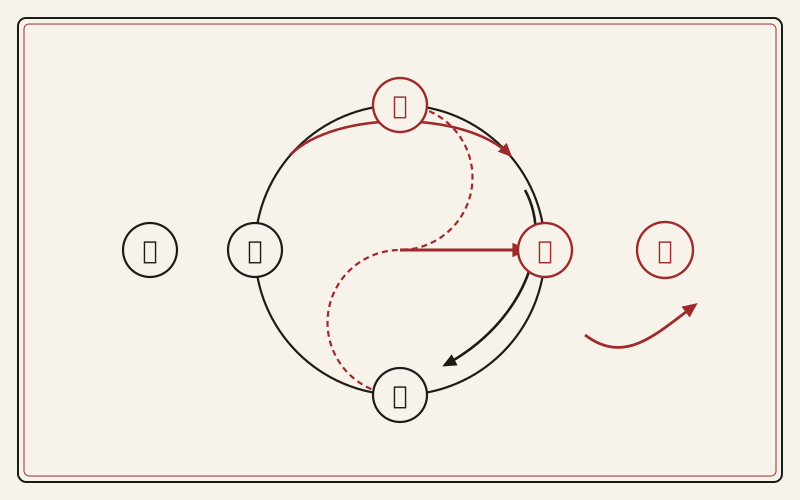
Biomechanical cycle of Lanquewei (Grasping the Sparrow's Tail — The Four Primary Energies): ① Embracing the Sphere (Baoqiu) over the supporting leg to store root, ② Ward-Off (Peng — buoyant outward-expanding forearm arc in Bow Stance), ③ Roll-Back (Lu — waist-guided rotational deflection drawing incoming force diagonally across the hip), ④ Press (Ji — rear palm joining the lead inner wrist to emit focused horizontal expansion from the rear heel), ⑤ Withdraw and Sink (Huishou — separating the wrists and sitting back slightly to dissolve counter-pressure), and ⑥ Push / Downward-Forward Seal (An — wave-like two-palm issue rooted in Mingmen).

Ji (挤) and An (按): Unified Wedge Emission and Wave-Like Release

The moment the opponent's center is drawn forward by Lu and they attempt to recover upright, the practitioner rotates the waist back toward the front corner into Ji (挤, Press): the fingertips or palm of the rear hand lightly meet the inner wrist of the lead forearm, forming a unified wedge that expands forward from the rear heel and Mingmen like a coin bouncing off a drumhead. If the opponent attempts to press down or deflect the wedge of Ji, the practitioner separates the wrists slightly, shifts the weight back into the rear hip while drawing the palms across the chest to dissolve their force, and then shifts forward again in An (按, Push)—pressing both palms downward-and-forward in a single wave before transitioning into Single Whip (Danbian).

The Sparrow Metaphor: Tactile Sensitivity Without Crushing or Losing Contact

Why does the classical name speak of 'grasping a sparrow's tail' (揽雀尾)? In the teaching lineage of Wudang Mountain (and our Start Here curriculum), elders explain that if you hold a live sparrow in your palm and squeeze with clumsy muscular force, you injure the bird; if your palm is slack and unattentive, the bird flies away. Yet if your palm senses the tiny downward press of the sparrow's feet the instant before it leaps and yields by a hair's breadth, the sparrow has no solid surface to push off from and cannot take flight. Training Peng, Lu, Ji, and An in Lanquewei cultivates this exact tactile sensitivity.

Seeker’s Q&A · Frequently Asked Questions

What is the key structural alignment in Grasping the Sparrow's Tail (Lanquewei)?

A comprehensive technical guide to Lanquewei (揽雀尾), the foundational mother posture of Wudang Taijiquan, examining the biomechanics and internal listening of the four primary energies: Peng (掤), Lu (捋), Ji (挤), and An (按).
