
WUDANG TAIJIQUAN · 武当太极拳

Apparent Close-Up (Rufeng Sibi) & Cross Hands (Shizishou) in Wudang Taijiquan: Threading Under the Elbow, Sealing the Center & Returning to Wuji 武当太极拳“如封似闭”与“十字手”详解:穿掌脱腕、蓄势双按与太极还原无极

Why the posture that follows every Deflect, Parry, and Punch is named “As If Sealing, As If Closing”—and how Cross Hands gathers the entire form back into the quiet stillness of the Lower Dantian.

A still mountain pool ringed by mossy rocks, ferns and pines, reflecting the sky.

Every time you execute Deflect, Parry, and Punch (Ban Lan Chui) in the traditional Wudang Taijiquan form, the punch is immediately followed by two poetic postures that bring the section—and ultimately the entire form—to a close: “Apparent Close-Up” (如封似闭, Rufeng Sibi, literally “As If Sealing, As If Closing”) and “Cross Hands” (十字手, Shizishou).

Why did the classical masters name this posture “As If Sealing, As If Closing” rather than simply “Seal and Close”? Because in Taijiquan, if you close your arms too tightly against your chest, you trap yourself; if you spread them too wide, you leave your centerline exposed. Rufeng Sibi maintains that living middle measure—closed enough that nothing can penetrate, yet open and elastic enough to issue at a touch.

1. Structural Anatomy of Apparent Close-Up (如封似闭) & Cross Hands (十字手)

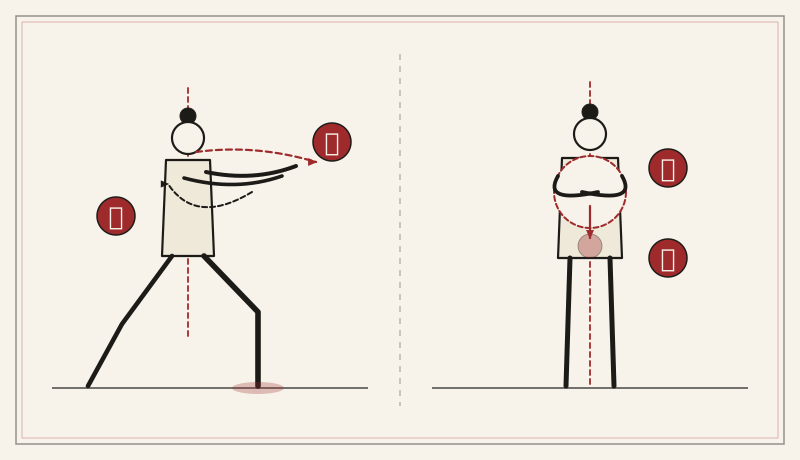
Classical ink-and-cinnabar diagram comparing Apparent Close-Up (Rufeng Sibi) on the left with threading under the elbow and double-palm Bow-Stance press, and Cross Hands (Shizishou) on the right with parallel stance and spherical wrist cross returning to the Dantian

Mechanics of Apparent Close-Up and Cross Hands (武当太极拳“如封似闭”与“十字手”四维图解).

  1. Threading Under the Elbow & Sitting Back (左掌穿肘 · 坐胯脱腕): if an opponent grabs or blocks your punching right wrist after Ban Lan Chui, your left palm threads beneath the right elbow and wipes outward as you sit back onto the rear leg—peeling their grip off effortlessly
  2. “As If Sealing, As If Closing” Double Press (如封似闭 · 弓步双按): drawing both palms back in front of the shoulders like two open gates closing, you shift forward into a Bow Stance and press both palms forward at shoulder width (An / Push energy)
  3. Cross Hands Embracing the Sphere (十字手 · 合抱太极球): pivoting back to face the front in a shoulder-width parallel stance, both arms scoop upward from the sides and cross at the wrists before the chest with rounded Peng (Ward-Off) fullness
  4. Taiji Returns to Wuji (太极还原无极 · 气沉丹田): uncrossing the wrists, both palms descend calmly to the sides as breath and awareness return to the lower Dantian (Shougong)

2. Why “Rufeng Sibi” Teaches You How to Escape a Grab

In partner application, when you punch with your right fist in Ban Lan Chui, a skilled opponent will often parry or seize your right wrist. If you pull your right arm backward with brute force, you pull the opponent straight into your chest. Instead, by sliding your left palm underneath your right elbow (palm facing up or outward) and rotating both forearms outward as your weight shifts into your rear hip (Empty and Full), your left hand acts as a wedge that strips their hand off your wrist while keeping your centerline completely sealed.

3. Completing the Circle: From “Wugetaiji” Back to “Wuji”

Echoing Chapter 16 of the Tao Te Ching (Dao De Jing)—“The ten thousand things flourish together, and each returns to its root” (Wuji and Taiji Cosmology)—the closing sequence of Cross Hands (十字手) is the mirror image of the Opening Posture:

  • At the beginning of the form, stillness gave birth to movement (Wuji generating Taiji);
  • In Cross Hands and the Closing Form, all the spirals, steps, and eight energies (Shisanshi) gather back into quiet vertical alignment (Zhan Zhuang), leaving your breath deeper and your spirit calmer than when you began.

4. Studying the Complete Wudang Form Between Wudang Mountain and Singapore

Connecting the authentic martial lineage near Wudang Mountain’s UNESCO World Heritage ancient Taoist temples with our regular classes in Singapore, Wudang.Org guides students through the entire arc of traditional Wudang Taijiquan. Start with Wudang Tai Chi for Beginners, visit Start Here, or join our Singapore Tai Chi Retreat Camp.

Safety note: After lowering your hands in the Closing Posture, stand quietly for three to six breaths before walking away so your breathing settles naturally; traditional martial training does not replace medical care.

Seeker’s Q&A · Frequently Asked Questions

Why is the posture called “Apparent Close-Up” (“As If Sealing, As If Closing,” Rufeng Sibi 如封似闭)?

The words “Ru” (as if) and “Si” (seemingly) remind you not to clamp your arms stiffly shut: your two palms guard the chest at shoulder width so no force can enter, yet remain supple and ready to press forward immediately.


What is the martial purpose of threading the left hand under the right elbow at the start of Rufeng Sibi?

When you punch with the right fist in Ban Lan Chui and an opponent grabs or blocks your right wrist, threading the left palm beneath the right elbow while sitting back wedges their hand off your wrist and clears your centerline.

How should I transition from Cross Hands (Shizishou 十字手) into the final Closing Posture?

Inhale as both arms round upward to cross at the wrists before the chest; exhale slowly as the wrists uncross and both palms descend to the sides, guiding your awareness and warmth down into the Lower Dantian.
