TAOIST PHILOSOPHY · 道家哲学

Mellow Governance & The Mutual Leaning of Fortune: Qi Zheng Men Men, Huo Fu Xiang Yi, and Fang Er Bu Ge in Tao Te Ching Chapter 58 祸兮福之所倚与方而不割直而不肆:《道德经》第五十八章的阴阳转化与太极留余之理

An in-depth study of Tao Te Ching (Dao De Jing) Chapter 58, examining why mellow governance nurtures simplicity while harsh scrutiny breeds cunning, the dialectic of Huo Fu Xiang Yi, and the four jade-like virtues of the sage.

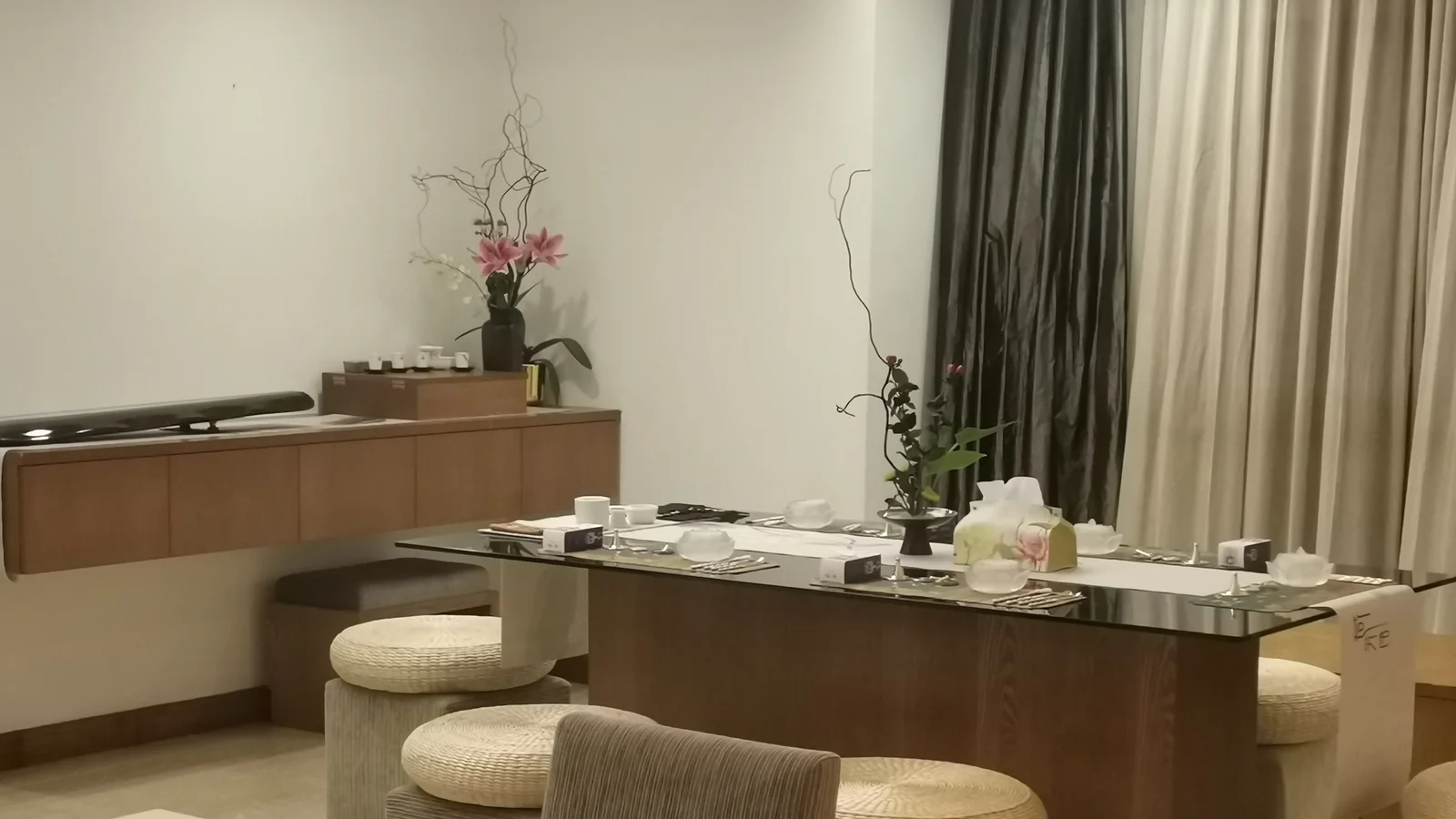
A quiet Taoist study room: a black guqin on a low wooden console beside a pink lily arrangement and tea set, and a dark-glass study table set with white lotus-shaped cups, an incense holder and a floral branch, with straw cushions and a grey curtain.

Qi Zheng Men Men versus Qi Zheng Cha Cha: Generous Space Versus Harsh Scrutiny

Placed directly between Chapter 57's non-intrusive self-transformation (Governing with Uprightness in Chapter 57) and Chapter 59's deep roots (Frugality and Deep Roots in Chapter 59), Chapter 58 of the Tao Te Ching (Dao De Jing) opens with a contrast of reduplicated adjectives: 'When governance is mellow and unintrusive, the people are simple and honest; when governance is harsh and prying, the people are depleted and calculating' (其政闷闷,其民淳淳;其政察察,其民缺缺). In Wang Bi's (王弼) commentary and the Hanfeizi (Jie Lao, 韩非子·解老, studied under Taoist Classics), Men Men (闷闷) does not mean dullness, but a warm, unhurried spaciousness that leaves room for organic growth, whereas Cha Cha (察察) describes anxious, nitpicking surveillance. In somatic cultivation (Wudang Qigong & Daoyin and Start Here), harsh self-scrutiny tightens the breath and fragments coordination, whereas spacious awareness allows the sinews to settle into natural wholeness (Chun Chun, 淳淳).

Huo Xi Fu Zhi Suo Yi, Fu Xi Huo Zhi Suo Fu: The Mutual Root of Polarities

Laozi next utters the most celebrated dialectical maxim in Chinese thought: 'Misfortune—upon it good fortune leans! Good fortune—within it misfortune lurks! Who knows their ultimate limit? There is no fixed norm: the upright turns again into the unexpected, and the auspicious turns again into the ominous' (祸兮福之所倚,福兮祸之所伏。孰知其极?其无正也。正复为奇,善复为妖). Illustrated famously in the Huainanzi (Renjian Xun, 淮南子·人间训) parable of the old frontiersman who lost his horse (Sai Weng Shi Ma, 塞翁失马), every apparent advantage contains the seed of complacency, while every difficulty can awaken prudence and deeper rooting. In the martial practice of Wudang Mountain and Wudang Taijiquan, an overextended attack ('good fortune') already conceals the opening for the defender's counter, while yielding under pressure ('misfortune') stores the coiled spring of recovery.

Mellow Governance & The Mutual Leaning of Fortune: Qi Zheng Men Men, Huo Fu Xiang Yi, and Fang Er Bu Ge in Tao Te Ching Chapter 58

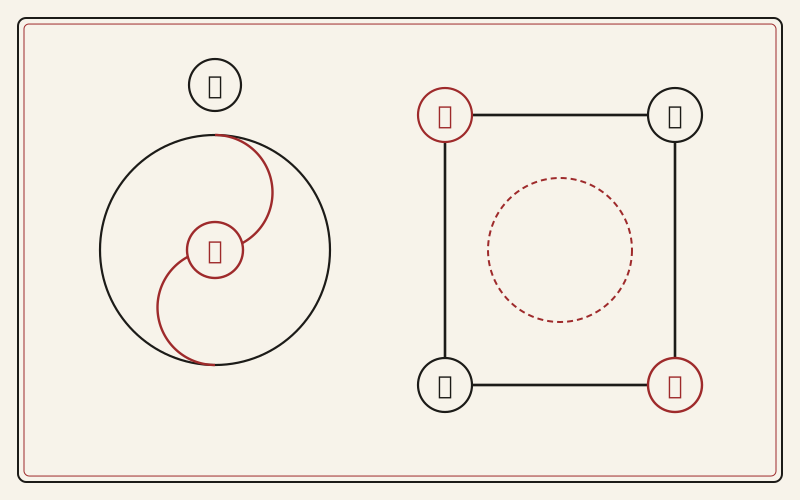
Classical diagram of Tao Te Ching Chapter 58 (Mellow Governance, Mutual Leaning of Misfortune and Good Fortune, and the Four Qualities of the Sage): ① Mellow Unintrusive Governance Fostering Simple Wholeness (Qi Zheng Men Men, Qi Min Chun Chun) versus Harsh Inquisitive Governance (Qi Zheng Cha Cha), ② Misfortune as That on Which Good Fortune Leans, Good Fortune as That in Which Misfortune Lurks (Huo Xi Fu Zhi Suo Yi, Fu Xi Huo Zhi Suo Fu), ③ Square Yet Not Cutting (Fang Er Bu Ge — moral integrity without harsh edges), ④ Sharp-Edged Yet Not Wounding (Lian Er Bu Gui — clear discernment without injuring others), ⑤ Straight Yet Not Overextended (Zhi Er Bu Si — upright alignment without reckless excess), and ⑥ Luminous Yet Not Glaring (Guang Er Bu Yao — inner radiance without ostentatious display).

The Four Jade-Like Qualities of the Sage: Fang, Lian, Zhi, and Guang

How, then, does the practitioner navigate a world where polarities constantly invert without falling into extremes? Chapter 58 concludes with a fourfold portrait modeled on polished nephrite jade: 'Therefore the sage is square yet does not cut; sharp-cornered yet does not wound; straight yet does not overextend; luminous yet does not glare' (是以圣人方而不割,廉而不刿,直而不肆,光而不耀). Just as an ancient jade cong tube has four clear square corners whose edges are bevelled smooth so they never slice the hand, the sage upholds principle (Fang, 方) without harshness, maintains moral clarity (Lian, 廉) without humiliating others, stands upright (Zhi, 直) without reckless overreach, and radiates inner clarity (Guang, 光) while softening the glare (Chapter 56's He Qi Guang).

Zhi Er Bu Si (直而不肆) in Wudang Taijiquan Palm Emission

Among these four phrases, Zhi Er Bu Si (直而不肆, 'straight yet not overextended') is a direct biomechanical law in Brush Knee and Twist Step (Louxi Aobu) and every linear palm press in Wudang Taijiquan. When the rear palm travels straight forward along the centerline, it must never lock the elbow or lean the shoulder past the toe ('overextending', Si, 肆)—for the moment a straight line reaches its rigid limit, Fu turns into Huo. Keeping a micro-reserve in the elbow and hip preserves the living pivot of The Tao itself.

Seeker’s Q&A · Frequently Asked Questions

How does Mellow Governance & The Mutual Leaning of Fortune guide daily Wudang cultivation?

An in-depth study of Tao Te Ching (Dao De Jing) Chapter 58, examining why mellow governance nurtures simplicity while harsh scrutiny breeds cunning, the dialectic of Huo Fu Xiang Yi, and the four jade-like virtues of the sage.
