TAOIST PHILOSOPHY · 道家哲学

What Is Well Planted Is Not Uprooted & Cultivating True Virtue: Shan Jian Zhe Bu Ba and Yi Shen Guan Shen in Tao Te Ching Chapter 54 善建者不拔与修之于身其德乃真:《道德经》第五十四章的立根抱一与五重修德之道

An in-depth study of Tao Te Ching (Dao De Jing) Chapter 54, examining the twin martial and ethical maxims Shan Jian Zhe Bu Ba and Shan Bao Zhe Bu Tuo, the five concentric circles of cultivating Virtue from the body to the world, and epistemological self-observation.

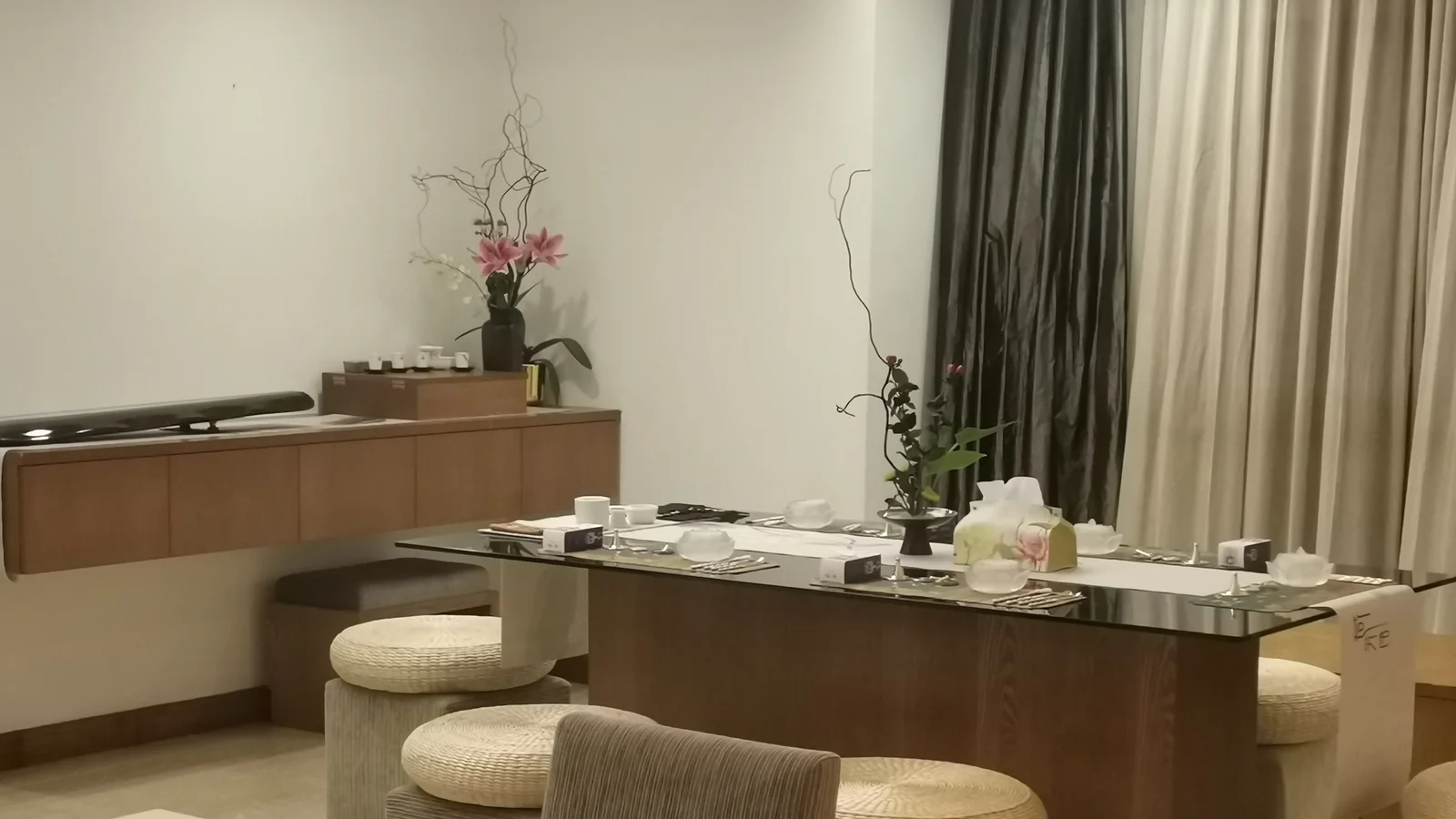
A quiet Taoist study room: a black guqin on a low wooden console beside a pink lily arrangement and tea set, and a dark-glass study table set with white lotus-shaped cups, an incense holder and a floral branch, with straw cushions and a grey curtain.

Shan Jian Zhe Bu Ba, Shan Bao Zhe Bu Tuo: Rooting and Embracing Without Force

Chapter 54 of the Tao Te Ching (Dao De Jing) opens with two lines that have served for centuries as a foundational motto for both Taoist self-cultivation and Wudang internal martial arts: 'What is well planted is not uprooted; what is well embraced does not slip away; thus descendants continue their ancestral offerings without cease' (善建者不拔,善抱者不脱,子孙以祭祀不辍). In Wang Bi's (王弼) commentary and the Hanfeizi (Yu Lao, 韩非子·喻老, studied under Taoist Classics), why is something 'well planted' (Shan Jian, 善建) impossible to uproot? Because it is planted not by driving a rigid stake into the surface, but by aligning with the living terrain like the deep roots of an ancient pine on Wudang Mountain—anticipating Chapter 59's 'deep roots and firm base' (Frugality, Early Readiness, and Deep Roots in Chapter 59). Likewise, 'what is well embraced' (Shan Bao, 善抱) does not rely on white-knuckled muscular clutching, which tires and loosens; it embraces the center with unified spirit and breath (Bao Yi, 抱一) so nothing is lost.

Xiu Zhi Yu Shen, Qi De Nai Zhen: The Body as the First Crucible of Virtue

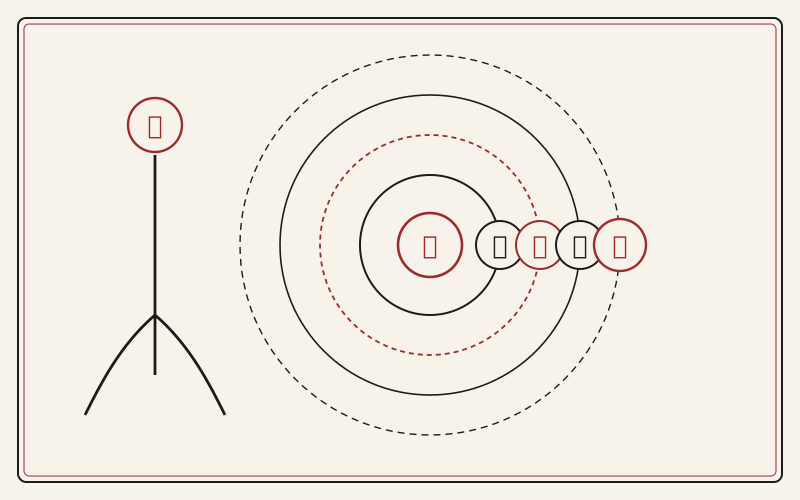
Laozi next traces how authentic cultivation radiates outward through five concentric spheres: 'Cultivate it in your own person, and its Virtue will be genuine; cultivate it in the family, and its Virtue will overflow; cultivate it in the village, and its Virtue will endure; cultivate it in the state, and its Virtue will be abundant; cultivate it throughout the world, and its Virtue will be universal' (修之于身,其德乃真;修之于家,其德乃余;修之于乡,其德乃长;修之于邦,其德乃丰;修之于天下,其德乃普). Notice the progression of the five adjectives—genuine (Zhen, 真), overflowing (Yu, 余), enduring (Chang, 长), abundant (Feng, 丰), and universal (Pu, 普). Everything begins with Xiu Zhi Yu Shen, Qi De Nai Zhen (修之于身,其德乃真): until the principles of The Tao itself are embodied somatically in one's own breath, posture, and conduct (Wudang Qigong & Daoyin and Start Here), outward ethical claims remain hollow ornament.

What Is Well Planted Is Not Uprooted & Cultivating True Virtue: Shan Jian Zhe Bu Ba and Yi Shen Guan Shen in Tao Te Ching Chapter 54

Classical diagram of Tao Te Ching Chapter 54 (What Is Well Planted Is Not Uprooted & The Five Concentric Rings of Cultivated Virtue): ① What Is Well Planted Is Not Uprooted, What Is Well Embraced Does Not Slip Away (Shan Jian Zhe Bu Ba, Shan Bao Zhe Bu Tuo), ② Cultivated in the Person, Virtue Is Genuine (Xiu Zhi Yu Shen, Qi De Nai Zhen — somatic and spiritual root), ③ Cultivated in the Family, Virtue Overflows (Xiu Zhi Yu Jia, Qi De Nai Yu), ④ Cultivated in the Village, Virtue Endures (Xiu Zhi Yu Xiang, Qi De Nai Chang), ⑤ Cultivated in the State, Virtue Is Abundant (Xiu Zhi Yu Bang, Qi De Nai Feng), and ⑥ Cultivated Throughout the World, Virtue Is Universal — Observing Each Realm by Its Own Root (Xiu Zhi Yu Tian Xia, Qi De Nai Pu / Yi Shen Guan Shen).

Martial Embodiment in Lanquewei: Rooting the Feet and Embracing the Sphere

On the practice stones of Wudang Taijiquan, Shan Jian Zhe Bu Ba (善建者不拔) and Shan Bao Zhe Bu Tuo (善抱者不脱) describe the two halves of postural integrity in Grasping the Sparrow's Tail (Lanquewei). 'Well planted' refers to the lower body: when the inguinal creases fold (Songkua, 松胯) and the weight settles cleanly through Yongquan into the earth, a partner's push cannot uproot the stance. 'Well embraced' refers to the upper body's circular Ward-Off frame (Pengjin, 掤劲): the arms curve as if embracing a buoyant sphere, adhering to incoming force without rigid grabbing so the partner can neither break through nor slip away.

Yi Shen Guan Shen: Observing Reality Without Preconception

Chapter 54 concludes with a clear epistemological principle: 'Therefore, by the person observe the person; by the family observe the family; by the village observe the village; by the state observe the state; by the world observe the world. How do I know the world is so? By this' (故以身观身,以家观家,以乡观乡,以邦观邦,以天下观天下。吾何以知天下然哉?以此). Rather than projecting anxious subjective bias onto situations, the practitioner observes one's own body directly through somatic listening (Tingjin, 听劲) and observes the wider world according to the same natural law of rootedness—carrying the steady foundation of Chapter 64 and Chapter 55 into every sphere of life.

Seeker’s Q&A · Frequently Asked Questions

How does What Is Well Planted Is Not Uprooted & Cultivating True Virtue guide daily Wudang cultivation?

An in-depth study of Tao Te Ching (Dao De Jing) Chapter 54, examining the twin martial and ethical maxims Shan Jian Zhe Bu Ba and Shan Bao Zhe Bu Tuo, the five concentric circles of cultivating Virtue from the body to the world, and epistemological self-observation.
