TAOIST PHILOSOPHY · 道家哲学

Governing a Great State Is Like Cooking a Small Fish: Peng Xiao Xian and De Jiao Gui Yan in Tao Te Ching Chapter 60 治大国若烹小鲜与德交归焉:《道德经》第六十章的文火勿扰与内丹火候之理

An in-depth study of Tao Te Ching (Dao De Jing) Chapter 60, exploring the culinary metaphor Zhi Da Guo Ruo Peng Xiao Xian in the Hanfeizi and Heshanggong commentary, non-agitation of internal Qi, and the mutual convergence of Virtue (De Jiao Gui Yan).


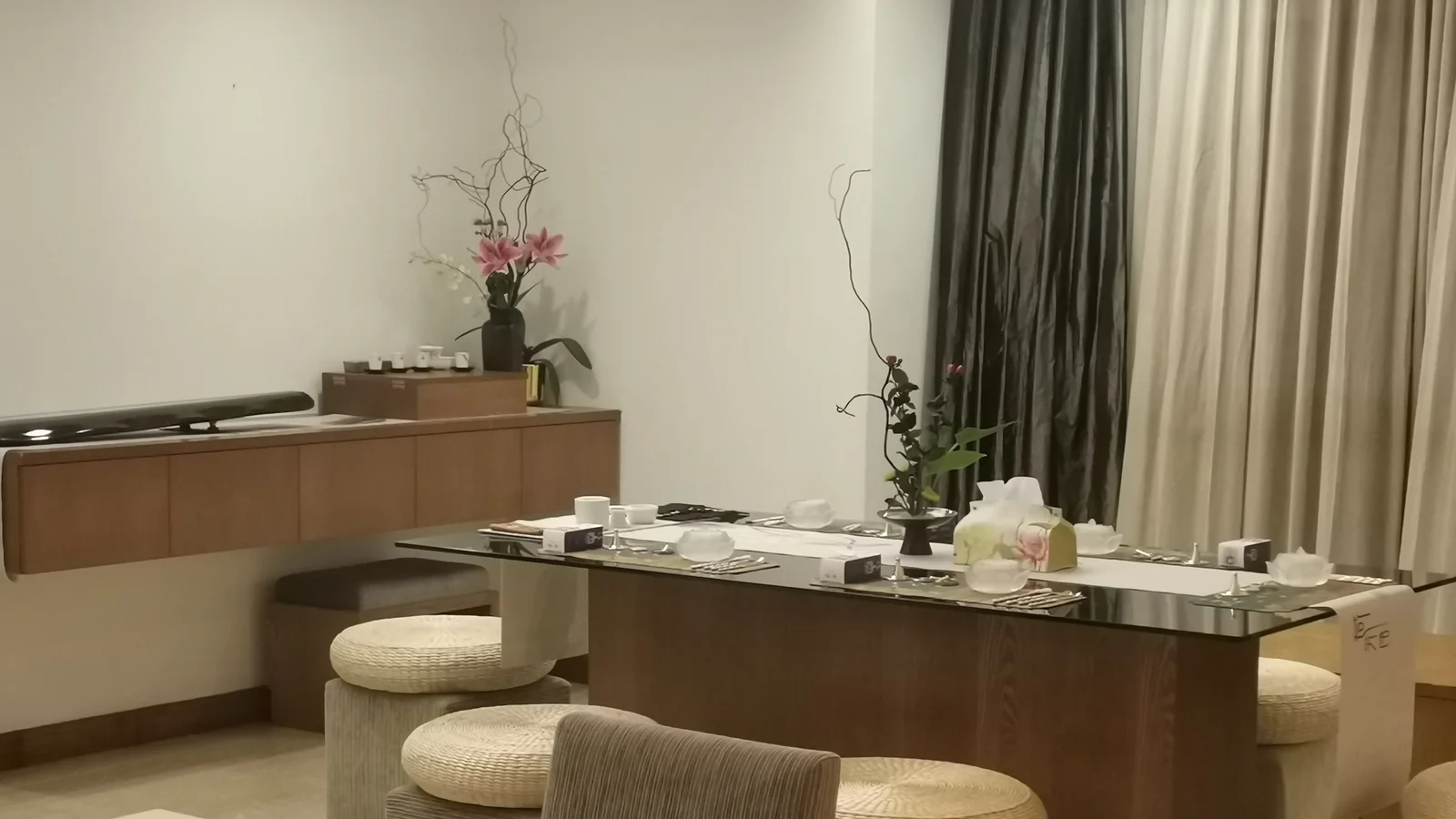
A quiet Taoist study room: a black guqin on a low wooden console beside a pink lily arrangement and tea set, and a dark-glass study table set with white lotus-shaped cups, an incense holder and a floral branch, with straw cushions and a grey curtain.

Zhi Da Guo Ruo Peng Xiao Xian: Why Restless Stirring Ruins the Dish

Chapter 60 of the Tao Te Ching (Dao De Jing) opens with one of the most memorable six-character aphorisms in classical Chinese philosophy: 'Governing a great state is like cooking a small fish' (治大国,若烹小鲜). What does cooking a tiny, delicate minnow (Xiao Xian, 小鲜) have in common with governing a vast realm or cultivating the human body? As the Hanfeizi (Jie Lao, 韩非子·解老) and Heshanggong (河上公) explain in their commentaries (studied under Taoist Classics), if a cook scales, guts, and incessantly flips or pokes a small fish in the pan, it disintegrates into fragments; only by tending a steady, gentle fire (Wenhuo, 文火) and leaving the fish undisturbed does it cook whole. Continuing the theme of mellow non-intrusion from Chapter 57 and Chapter 58, and the conservation of root in Chapter 59, Laozi teaches that complex living systems thrive on steady warmth and minimal agitation.

Peng Xiao Xian in Wudang Neidan and Daoyin: The Gentle Fire of Wenhuo

In the internal alchemy (Neidan, 内丹) and Wudang Qigong & Daoyin traditions practiced on Wudang Mountain, Peng Xiao Xian (烹小鲜) is a direct instruction on 'firing times' (Huohou, 火候). When a student beginning at Start Here sits in meditation or stands in Zhan Zhuang, the fledgling gathering of vital breath in the lower Dantian is as delicate as a small fish in a clay pot. If the practitioner impatiently 'stirs the pot'—constantly shifting mental focus, forcing abdominal contractions, or checking every few seconds for sensations—the gathered Qi scatters. Bathing the Dantian with quiet, continuous awareness (Wenhuo Wen Yang, 文火温养) allows internal harmony to mature intact.

Governing a Great State Is Like Cooking a Small Fish: Peng Xiao Xian and De Jiao Gui Yan in Tao Te Ching Chapter 60

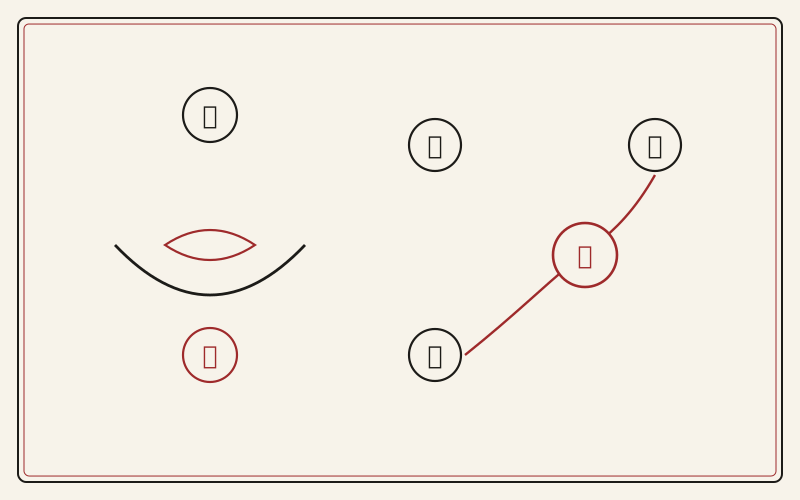
Classical diagram of Tao Te Ching Chapter 60 (Governing a Great State Is Like Cooking a Small Fish & Virtue Converging in Mutual Non-Harm): ① Cooking a Small Fish Without Restless Stirring (Zhi Da Guo Ruo Peng Xiao Xian — steady gentle heat preserving form intact), ② Approaching the World with the Tao (Yi Dao Li Tian Xia — calm, non-intrusive alignment), ③ Subtle Forces Cease Agitating (Qi Gui Bu Shen — disharmonious impulses subside when the center is calm), ④ Subtle Forces Do Not Harm People (Qi Shen Bu Shang Ren), ⑤ The Sage Likewise Does Not Harm People (Sheng Ren Yi Bu Shang Ren), and ⑥ Neither Harms the Other, Thus Virtue Converges in Both (Liang Bu Xiang Shang, Gu De Jiao Gui Yan).

Yi Dao Li Tian Xia, Qi Gui Bu Shen: Calming Restless Impulses

Laozi next describes what happens when leadership—or the governing heart-mind—abides in The Tao itself: 'When one approaches the world with the Tao, restless spirits do not manifest uncanny disruption. Not that they lack power, but their power does not harm people; not only does their power not harm people, the sage also does not harm people' (以道莅天下,其鬼不神;非其鬼不神,其神不伤人;非其神不伤人,圣人亦不伤人). In both Wang Bi's philosophical reading and Heshanggong's somatic reading, when Yin and Yang are kept in calm equilibrium without harsh interference from the ruler (the conscious will), discordant external influences and erratic internal impulses (Gui, 鬼—unruly shadows of agitation) find no fissure to exploit.

Liang Bu Xiang Shang, Gu De Jiao Gui Yan: Mutual Non-Harm in Martial Practice

The chapter closes with a luminous synthesis: 'Because neither harms the other, Virtue converges in both' (夫两不相伤,故德交归焉). On the practice floor of Wudang Taijiquan—whether transitioning through empty-stance listening postures like Play the Lute (Shouhui Pipa) and White Crane Spreads Its Wings (Baihe Liangchi) or engaging in cooperative Push Hands—the goal of training is never mutual injury (Liang Xiang Shang), but mutual refinement where both partners' Virtue and skill converge (De Jiao Gui Yan).

Seeker’s Q&A · Frequently Asked Questions

How does Governing a Great State Is Like Cooking a Small Fish guide daily Wudang cultivation?

An in-depth study of Tao Te Ching (Dao De Jing) Chapter 60, exploring the culinary metaphor Zhi Da Guo Ruo Peng Xiao Xian in the Hanfeizi and Heshanggong commentary, non-agitation of internal Qi, and the mutual convergence of Virtue (De Jiao Gui Yan).
