
TAOIST PHILOSOPHY · 道家哲学

The Mirror-Like Mind (Yong Xin Ruo Jing) in Zhuangzi: Responding Without Storing and Cleansing the Inner View 《庄子·应帝王》“用心若镜”详解:不将不迎,应而不藏的道家心法

Why Zhuangzi compares the sage’s awareness to a polished bronze mirror and still water—neither anticipating before events arrive nor clinging after they pass.

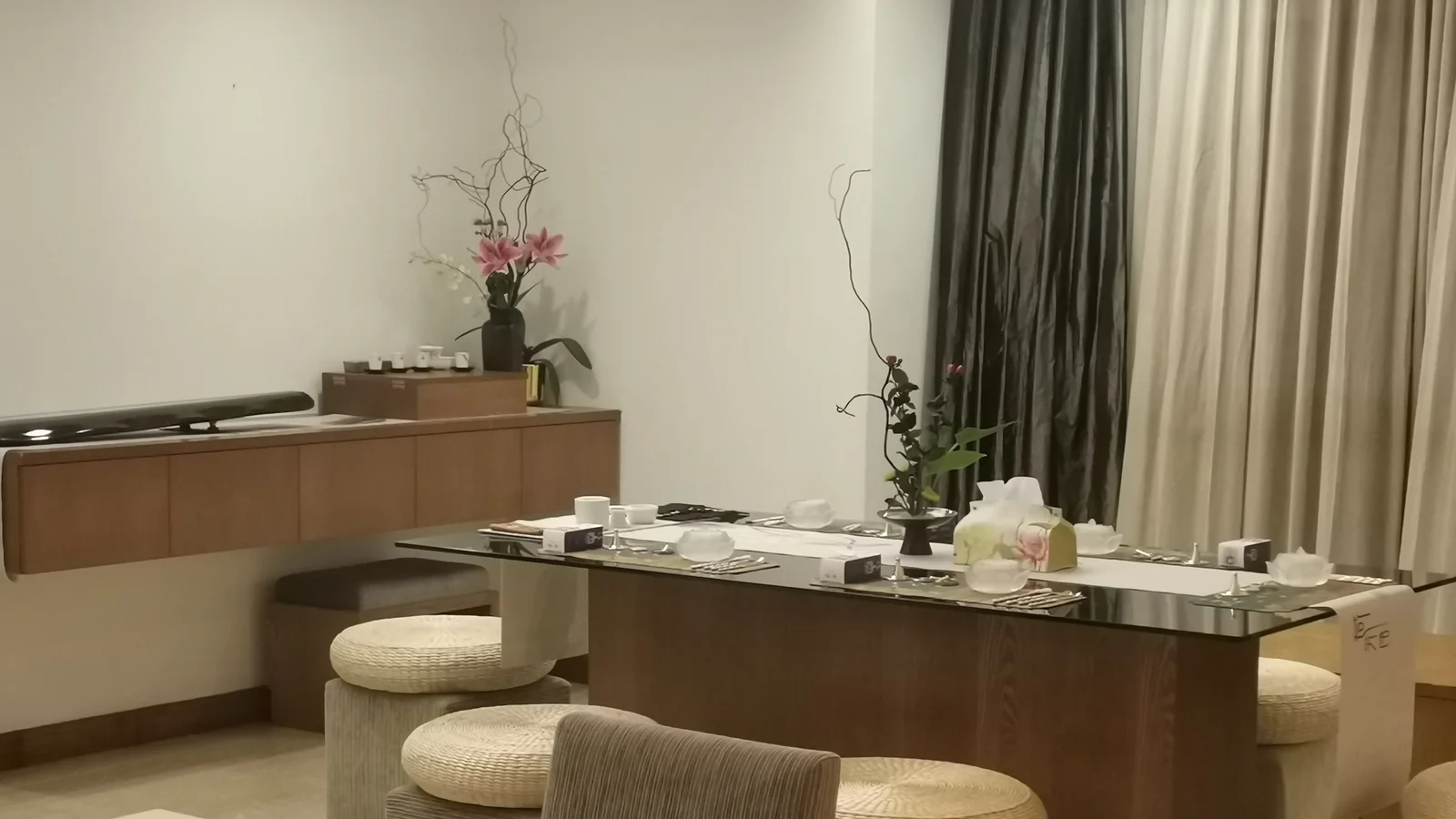
A quiet Taoist study room: a black guqin on a low wooden console beside a pink lily arrangement and tea set, and a dark-glass study table set with white lotus-shaped cups, an incense holder and a floral branch, with straw cushions and a grey curtain.

Why does a single tense ten-minute conversation at 10:00 AM often exhaust us for the rest of the day? Usually, we spend an hour beforehand rehearsing arguments in our head, ten minutes actually speaking, and another six hours replaying what was said while lying awake at night. In Chapter 7 of the Zhuangzi—Responding for Emperors and Kings (《庄子·内篇·应帝王》)—Zhuangzi diagnoses this human habit of mental exhaustion and offers one of the most practical remedies in all of Taoist philosophy: “using the heart-mind like a mirror” (用心若镜, Yong Xin Ruo Jing).

1. The Classical Passage in Zhuangzi Chapter 7: “Neither Escorting Nor Welcoming”

Near the close of the Inner Chapters, Zhuangzi summarises how a person of mature cultivation meets the demands of the world without burning out:

“Do not be a lifeless ritual effigy of fame; do not be a storehouse of schemes; do not take the burden of affairs onto your ego; do not be the master-possessor of cleverness.Embody the inexhaustible to the fullest and wander where there is no trace… The utmost person uses the heart-mind like a mirror—neither escorting things as they leave nor welcoming them before they arrive; responding to what is present without storing it away. Therefore they can meet all things without being injured (至人之用心若镜,不将不迎,应而不藏,故能胜物而不伤).”

Alongside this passage stands Chapter 10 of the Tao Te Ching (Dao De Jing), which asks: “Cleansing the inner mirror of view, can you leave it without blemish?” (涤除玄览,能无疵乎), and Chapter 13 of the Zhuangzi (《天道》), which observes: “When water is still, it clearly reflects the beard and eyebrows… the heart-mind of the sage in stillness is the mirror of Heaven and Earth, the bronze mirror of the ten thousand things.” (See also Qingjing Jing and Xinzhai: Fasting of the Heart-Mind.)

2. How a Bronze Mirror Works: Four Principles of Non-Exhaustion

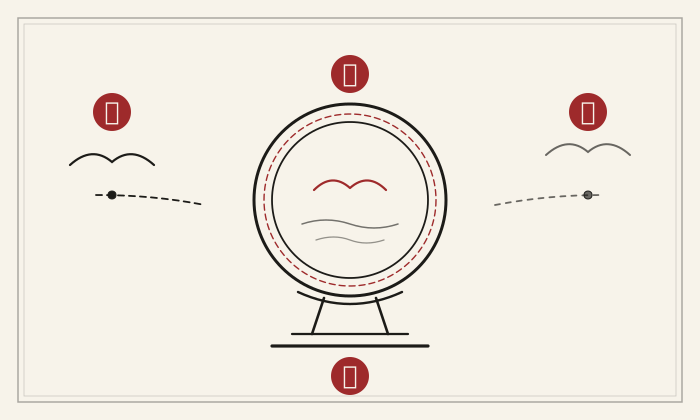
In antiquity, mirrors were cast from bronze and polished until their surface gleamed like still mountain water (How to Read a Taoist Bronze Mirror). Consider what happens when a white crane flies past a bronze mirror standing on a veranda table:

Classical ink-and-cinnabar diagram of Zhuangzi's Mirror-Like Mind (Yong Xin Ruo Jing) showing no anticipatory welcoming on the left, no lingering escorting on the right, the central bronze mirror reflecting a passing crane clearly in the present, and the stable wooden stand below

Zhuangzi’s four-part anatomy of the Mirror-Like Mind (至人之用心若镜 · 不将不迎,应而不藏).

  1. Do Not Welcome Before Arrival (不迎 · Zero Anticipatory Anxiety): before the bird flies in front of the stand, the mirror does not strain forward or project imaginary shadows
  2. Do Not Escort After Departure (不将 · Zero Lingering Regret): once the bird has flown past, the mirror does not chase after it or keep its ghost etched on the bronze
  3. Respond in the Present Without Storing (应而不藏 · Clear Real-Time Reflection): while the bird is directly before the stand, the mirror reflects every feather with complete fidelity and zero distortion (Wu Wei)
  4. Cleansed Surface & Grounded Stand (涤除玄览 · 水静犹明): because nothing is hoarded inside the mirror, the surface remains unblemished and ready for the next moment (Neiguan)

Notice what Zhuangzi is not saying. A mirror is not a cold stone wall with its eyes shut: when someone stands before a mirror, it responds immediately and clearly (应, ying). What prevents injury (故能胜物而不伤) is that it does not store (不藏, bu cang) yesterday’s praise or insult on top of today’s image. If a mirror kept a permanent layer of every face that walked past it at 9:00 AM, by noon it would be a dark, muddy smudge incapable of reflecting anything at all.

3. How the Mirror-Like Mind Guides Wudang Taijiquan and Daily Work

In the Wudang curriculum, “neither escorting nor welcoming; responding without storing” is the exact mental state required for both martial sensitivity and calm daily living:

  • In Wudang Push Hands (Tuishou) and Tingjin: “Welcoming” (迎) means lunging forward prematurely to meet a partner’s hand before it arrives, which exposes your centre; “escorting” (将) means leaning and chasing after a retreating partner until you over-extend and fall into emptiness. A skilled practitioner stays in Central Equilibrium (Zhongding) like a mirror on its stand: “When the other does not move, I do not move; when the other stirs even slightly, my response is already there.”
  • In Daily Conversations and Decision-Making: Handle the task in front of you with 100% care while it is present (应); once the email is sent or the meeting concludes, let the inner mirror return to clear stillness (不藏) through three slow abdominal breaths rather than carrying the previous meeting’s frustration into the next room.
An antique circular Chinese bronze mirror on a carved wooden stand reflecting pine needles and pale morning sky beside a celadon water basin and blank dark-blue thread-bound classical books.

“The utmost person uses the heart-mind like a mirror—neither escorting nor welcoming; responding without storing” (Zhuangzi Chapter 7).

4. Polishing the Mirror Between Wudang Mountain and Singapore

Connecting the contemplative heritage near Wudang Mountain’s UNESCO World Heritage ancient Taoist temples with our regular classes in Singapore, Wudang.Org offers practical ways to wipe the dust from the inner mirror each day—whether through five minutes of Zuowang, a midday Desk Daoyin Reset, or our Evening Qigong Wind-Down. Begin your study pathway on Start Here.

Seeker’s Q&A · Frequently Asked Questions

What does Zhuangzi mean by “using the heart-mind like a mirror” (用心若镜)?

A polished bronze mirror does not project anxious thoughts before something arrives (bu ying 不迎), reflects whatever is directly in front of it with complete clarity (ying 应), and retains no lingering trace once the object leaves (bu jiang 不将, bu cang 不藏).


Is the Mirror-Like Mind cold or indifferent to other people?

No. Indifference is like a dusty stone wall that refuses to reflect at all. A clear mirror responds immediately, warmly, and accurately to whatever is present (“ying” 应); it simply avoids hoarding resentment, vanity, or rumination afterward (“bu cang” 不藏).

How does “neither escorting nor welcoming” apply to Wudang Taijiquan Push Hands?

In Push Hands, “welcoming” means reaching out stiffly before your partner’s force arrives, losing your root; “escorting” means leaning forward to chase a retreating partner, falling into emptiness. Staying centered like a mirror lets you yield and respond cleanly in real time.
