
TAOIST PHILOSOPHY · 道家哲学

Qiwu Lun: Zhuangzi on Equalizing Perspectives and the Pivot of the Tao 齐物论:庄子如何以“道枢”消解成心与是非之争

How Chapter 2 of the Zhuangzi—from the Piping of Heaven to the Pivot of the Tao and “Three in the Morning”—frees the mind from rigid partiality without collapsing into relativism.

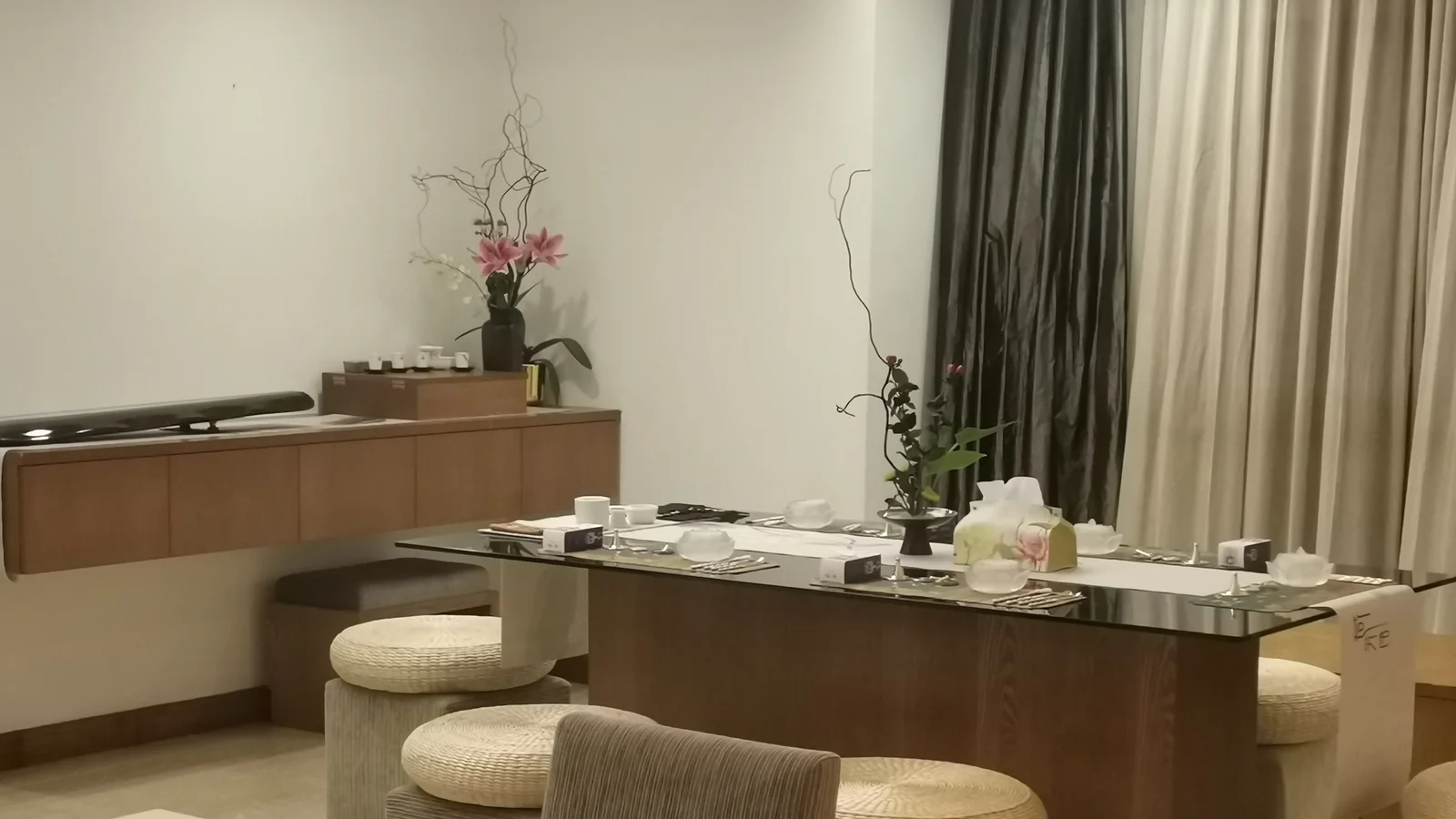
A quiet Taoist study room: a black guqin on a low wooden console beside a pink lily arrangement and tea set, and a dark-glass study table set with white lotus-shaped cups, an incense holder and a floral branch, with straw cushions and a grey curtain.

Few texts in world philosophy look more directly at why intelligent people talk past one another than Chapter 2 of the Zhuangzi: the Qiwu Lun (齐物论). Notice that its three characters can be read in two complementary ways—“Discourse on Seeing Things as Equal” and “Equalizing the Discourses About Things.” Building on Chapter 2 of the Tao Te Ching (Dao De Jing) (where high and low, difficult and easy define one another), Zhuangzi asks: when every viewpoint sees only from its own corner, how can your heart-mind stay clear without getting trapped in endless partisan quarrels?

1. “Today I Lost My Ego-Self” and the Piping of Heaven (吾丧我与天籁)

The chapter opens not with an abstract argument, but with a posture of quiet sitting that prefigures Wudang Zuowang (Sitting and Forgetting). Ziqi of South Wall leans against his armrest, breathes softly upward, and remarks to his student Yancheng Ziyou: “Just now, I lost my narrow self” (今者吾丧我). Notice the two different first-person pronouns in Classical Chinese: a deeper awareness (wu 吾) remains wide awake precisely when the defensive, opinion-clinging ego (wo 我) steps aside.

Ziqi then contrasts three kinds of music: the Piping of Humanity (bamboo flutes), the Piping of Earth (wind roaring through mountain caves and hollows), and the Piping of Heaven (天籁, Tianlai)—the unseen breath that lets each hollow sound strictly according to its own shape without forcing uniformity. Just as Ziran (being so of itself) honours each creature’s nature, the Tao itself never forces pine needles and mountain caverns to sing the same note.

A three-legged bronze ding vessel, blank blue thread-bound classical books, and a celadon teacup on a weathered stone and elm table overlooking moso bamboo and Chinese red pines in mountain mist.

Wind moving through bamboo and mountain pines beyond a quiet study table—evoking the Piping of Heaven in Zhuangzi’s Qiwu Lun.

2. Pre-Formed Bias (成心) and Standing at the Pivot of the Tao (道枢)

Why, then, do human debates turn so bitter? Zhuangzi names the culprit in two characters: Chengxin (成心, the pre-formed, hardened mind). Once we harden a partial habit or interest into our identity, we call our own standpoint “this / right” (是) and every contrasting standpoint “that / wrong” (彼), forgetting that “that” arises alongside “this” (Words, Names and Reality).

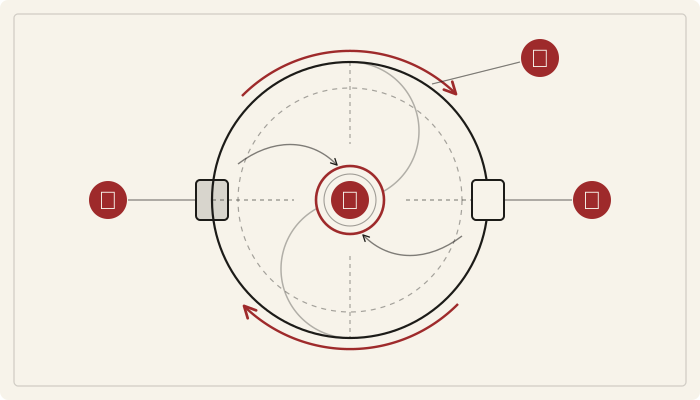
Zhuangzi’s remedy is the central image of the entire chapter—the Pivot of the Tao (道枢, Daoshu):

“Where neither ‘that’ nor ‘this’ clings to its opposite as fixed enemy—that is called the Pivot of the Tao. Only when the pivot stands squarely in the socket at the centre of the ring (得其环中) can it respond without end (以应无穷).”

Classical ink-and-cinnabar diagram of Zhuangzi’s Pivot of the Tao showing the central socket inside a ring responding freely to opposing viewpoints on the outer rim

Zhuangzi’s Pivot of the Tao (Qiwu Lun): a door-hinge turns freely only because its pin rests in the open centre socket rather than bolting itself to one edge of the frame.

  1. The Pivot in the Centre of the Ring (道枢 · 得其环中): quiet, unprejudiced clarity (Qingjing)
  2. One fixed standpoint (“This” · 是): useful from one angle, blind when treated as the whole
  3. The opposing standpoint (“That” · 彼): arising in mutual dependence with its counterpart
  4. Unobstructed responsiveness around the circumference (以应无穷): adapting to real context without dogma

3. “Three in the Morning” (朝三暮四) and Embodied Practice

To show how rigid attachment to labels blinds us, Zhuangzi tells the famous story of the monkey keeper handing out chestnuts: when promised “three in the morning and four in the evening,” the monkeys bristle in anger; when offered “four in the morning and three in the evening,” they rejoice—even though the total of seven chestnuts has not changed at all.

Whether you study the classics on Wudang Mountain (UNESCO World Heritage ancient Taoist temples) or practise in Singapore, Qiwu Lun translates directly into daily discipline: in Wudang Tai Chi, keeping your centre neutral allows you to listen to incoming force from any angle; in conversation, stepping back into the “centre of the ring” lets you ask what real substance is at stake before fighting over labels. New readers can map their next step on Start Here.

Seeker’s Q&A · Frequently Asked Questions

What does Zhuangzi mean by the “Pivot of the Tao” (Dao Shu 道枢) in the Qiwu Lun?

Just as a door pivot turns freely because it rests in an open socket rather than being nailed to one side of the doorframe, a mind free of hardened pre-judgement (Chengxin) stands at the centre of the ring and responds clearly to changing perspectives without getting trapped in one-sided dogma.
Does equalizing perspectives in Qiwu Lun mean truth and ethics do not matter?

No. Zhuangzi critiques “pre-formed bias” (Chengxin) that mistakes a narrow, self-serving viewpoint for universal reality; dropping ego-driven bias leads to clearer perception (“using clarity,” 以明) and more humane action, not indifference.

What was the original meaning of the idiom “Three in the Morning, Four in the Evening” (朝三暮四)?

In Qiwu Lun, monkeys grew angry when offered three chestnuts in the morning and four at night, then grew happy when offered four in the morning and three at night—illustrating how easily people react emotionally to superficial framing even when the underlying reality (seven chestnuts) is unchanged.
