QIGONG & DAOYIN · 气功与导引

Kneading Fengchi and Warming Dazhui: Wudang Cervical Daoyin for Clear Yang and Nape Resilience 按揉风池与温擦大椎:武当颈项导引清阳固表功法指南

How traditional self-massage of the Wind Pool hollows (GB-20) and the Great Hammer prominence (GV-14) releases upper-back tension before standing post and sitting practice
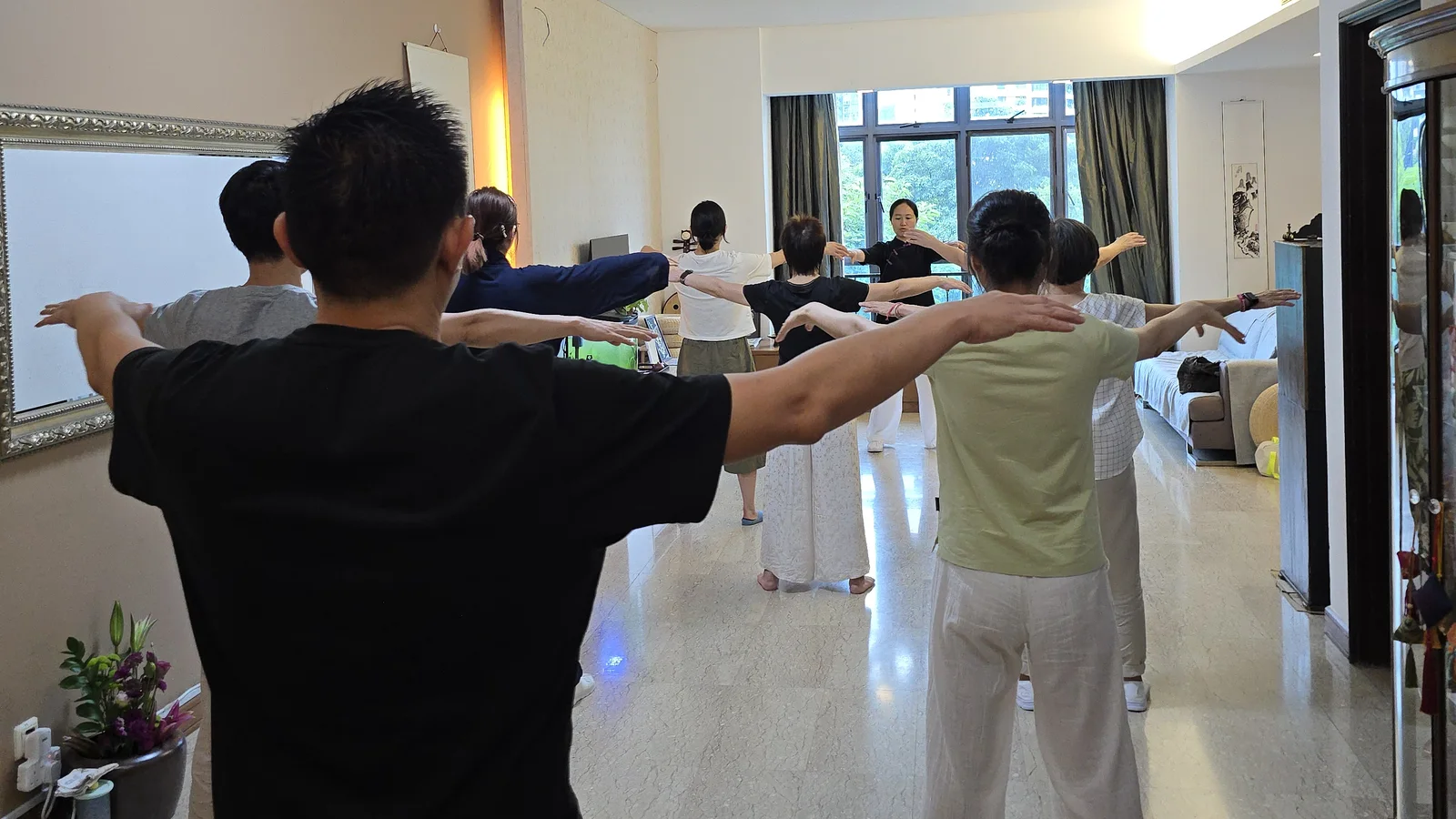
A standing qigong class in a sunlit room: students seen from behind hold both arms open at shoulder height in the same alignment, facing a teacher in dark clothing before a tall window with green trees outside.

In the high mountain climate of Wudangshan, where cool morning mists blow across open stone terraces, practitioners have long paid special attention to the back of the neck — the bridge connecting the upper torso to the cranium. In classical Taoist body geography, the nape houses the "Jade Pillow Pass" (Yuzhen Guan 玉枕关) along the Governing Vessel (Du Mai 督脉) as well as the paired suboccipital hollows known as Fengchi (风池, "Wind Pool") and the prominent seventh cervical junction called Dazhui (大椎, "Great Vertebra"). Before standing meditation (Zhan Zhuang 站桩) or morning Qigong, warming and loosening these two gates softens neck rigidity and allows the crown to suspend naturally.

1. Anatomical Landmarks: Fengchi (风池) and Dazhui (大椎)

Both landmarks can be located easily by touch without instruments:

  • Fengchi (风池, GB-20): Situated at the base of the skull in the bilateral depressions between the upper insertion of the sternocleidomastoid muscle and the outer border of the trapezius muscle, level with the earlobe.
  • Dazhui (大椎, GV-14): Located on the posterior midline at the base of the neck, directly in the hollow below the spinous process of the seventh cervical vertebra (C7) — the largest bony prominence felt when gently bowing the head forward.

2. Step-by-Step Wudang Daoyin Method

Drawing on traditional self-massage (Anqiao 按跷) recorded in the Yangxing Yanming Lu (养性延命录), practice this sequence seated upright or standing in a relaxed shoulder-width stance:

  1. Warming the Palms (Cuozhang 搓掌): Rub both palms briskly together until the Laogong (劳宫) centers feel warm, ensuring you never apply cold fingers directly to the bare nape.
  2. Kneading Fengchi (Anrou Fengchi 按揉风池): Clasp the fingers lightly behind the occiput or rest the four fingers on the back of the head, placing both thumb pads into the Fengchi hollows. With the chin slightly tucked to lengthen the cervical spine, press gently inward and upward toward the opposite eye and make 24 to 36 slow circular rotations in each direction while breathing smoothly through the nose.
  3. Warming Dazhui (Ca Dazhui 擦大椎): Reach one warm palm across the back of the neck so the center of the palm and base of the fingers cover Dazhui. Sweep horizontally back and forth 24 to 36 times until a mild, comfortable warmth spreads across the upper shoulders, then repeat with the other hand.
  4. Drawing Down the Neck Pillars (Na Tianzhu 拿天柱): Finish by gently pinching and releasing the ropy muscles along both sides of the neck from below the occiput down toward the tops of the shoulders three to five times, letting the shoulders drop away from the ears.

3. Practice Guidelines and Safety Notes

This traditional Yangsheng (nourishing life) routine is an educational movement and relaxation practice rather than a medical treatment. Keep pressure moderate and Strictly avoid pressing on the front or sides of the throat (the carotid sinus region) or forcing the neck into sharp backward hyperextension. To pair this cervical warm-up with adjacent morning routines, see Combing the Cranial Meridians (Shufa), Sounding the Heavenly Drum (Ming Tiangu), our Wudang Qigong Overview, and the Wudang Mountain Heritage Guide.

Seeker’s Q&A · Frequently Asked Questions

What is the key structural alignment in Kneading Fengchi and Warming Dazhui?

How traditional self-massage of the Wind Pool hollows (GB-20) and the Great Hammer prominence (GV-14) releases upper-back tension before standing post and sitting practice.


