QIGONG & DAOYIN · 气功与导引

The “Jade Pond” and “Generating Fluid” (Yuchi Shengjin) in Taoist Qigong: Tongue Placement, Tapping the Teeth and Nourishing Inner Moisture 武当“赤龙搅海”与“玉池生津”导引法:舌抵上腭、叩齿咽津与《黄庭经》内景养生

Why every Wudang standing, seated, and Taijiquan practice begins by resting the tip of the tongue gently behind the upper teeth—and how classicalHuangting Jing hygiene calms the nervous system.

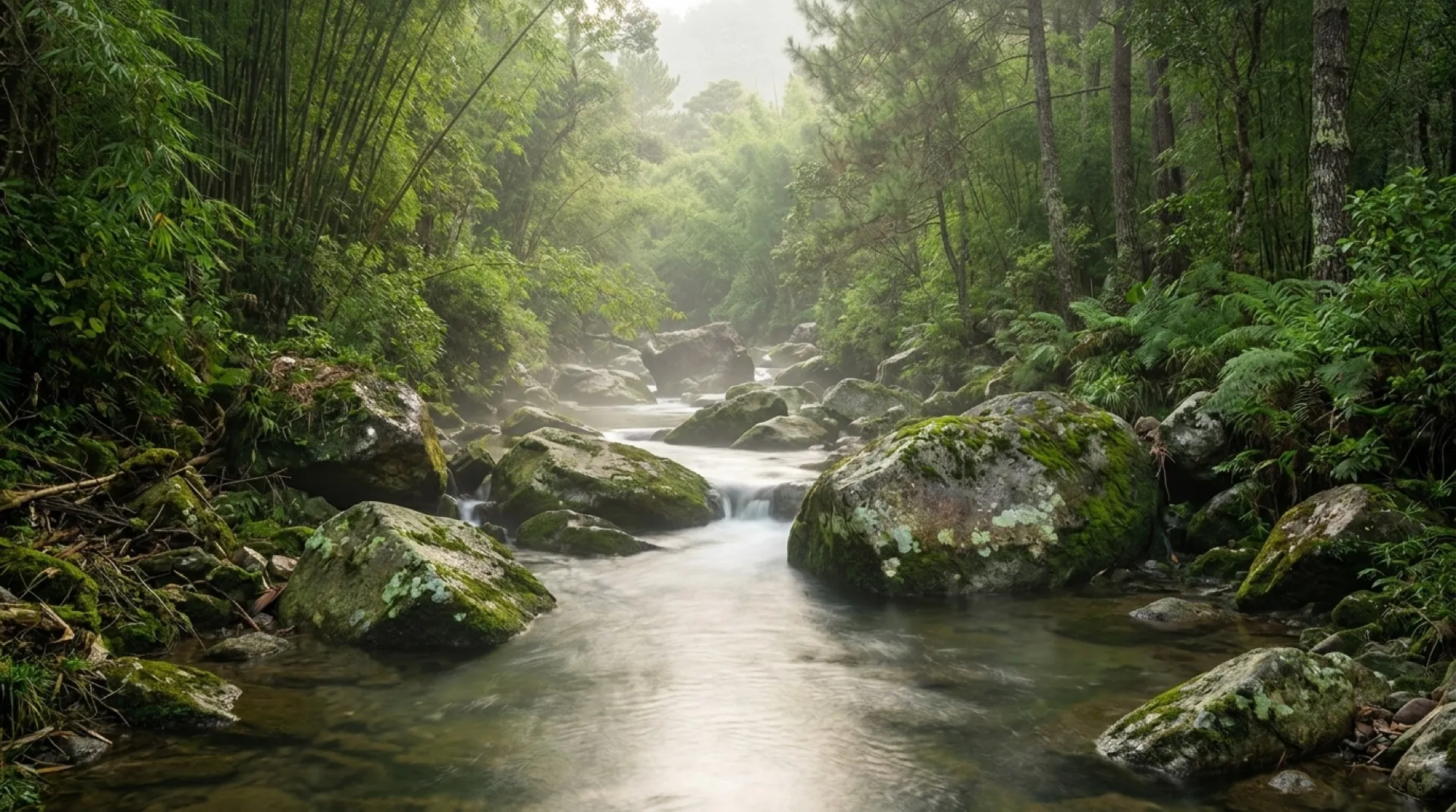
A clear mountain stream running between mossy boulders through bamboo and forest in soft morning light.

Step into any traditional Wudang Qigong, seated meditation, or Taijiquan class, and one of the very first alignment cues you will hear—right alongside suspending the crown and sinking the shoulders—is “Rest the tip of the tongue lightly against the roof of the mouth” (舌抵上腭, She Di Shang E, poetically called “Building the Magpie Bridge,” 搭鹊桥).

Soon after, as your breathing deepens and your shoulders soften, you will notice a sweet, clear moisture naturally gathering in the mouth. In classical Taoist inner-landscape texts, particularly the Huangting Jing (Yellow Court Classic) and the early health manual Yangxing Yanming Lu (《养性延命录》), the mouth is called the “Jade Pond” (玉池, Yuchi), and its clear fluid is revered as the “Jade Fluid” (玉液) or “Golden Elixir Water” (金津玉液).

1. Classical Sources: “The Mouth Is the Jade Pond, Palace of Supreme Harmony”

  • The Huangting Jing on the Jade Pond: In the chapter The Mouth Is the Jade Pond (《口为章》), the scripture reads: “The mouth is the Jade Pond, the official of Supreme Harmony; rinsing and swallowing the numinous fluid keeps dryness and harm away” (口为玉池太和官,漱咽灵液灾不干).
  • Why Does “Building the Magpie Bridge” (舌抵上腭) Calm the Body? Many people notice that when they are tense or rushing, the jaw clenches, the mouth feels dry, and breathing drifts upward into the chest. Lightly resting the tip of the tongue on the alveolar ridge just behind the upper front teeth keeps the jaw unlocked and encourages quiet nasal breathing (Natural Abdominal Breathing). In the traditional teaching, a comfortably moist mouth is one familiar sign that your Zhan Zhuang or meditation has settled; treat it as a traditional rule of thumb, not a medical test.

2. The Traditional 3-minute Morning “Yuchi Shengjin” (玉池生津) Practice

In the Wudang tradition, this gentle hygiene practice is often performed upon waking (at the Mao hour) or at the close of a standing or seated session:

  1. Step 1 — “Sounding the Heavenly Drum” by Gently Tapping the Teeth (叩齿三十六 · 集神固齿): With lips softly closed and shoulders relaxed, tap your upper and lower molar teeth together lightly and rhythmically thirty-six times—with only the gentle force of raindrops or two wooden beads clicking together (never biting down hard). In traditional practice, this gentle vibration wakes up the jaw fascia and gathers wandering attention (Shouyi).
  2. Step 2 — “The Red Dragon Stirs the Sea” (赤龙搅海 · 鼓漱生津): Let the tip of the tongue (“the Red Dragon,” 赤龙) glide slowly and smoothly in circles around the outer gums between the teeth and the lips—twelve times clockwise and twelve times counter-clockwise—then twelve times around the inner gums and roof of the mouth. As clear fluid fills the “Jade Pond,” gently swish and rinse it inside the closed cheeks several times (鼓漱).
  3. Step 3 — Swallowing in Three Calm Portions to the Lower Dantian (分三口咽津 · 汩汩归田): Divide the gathered fluid into three small, unhurried swallows. On each swallow, exhale softly through the nose and let your awareness (Neiguan) follow the warm moisture smoothly down the center of the chest to settle into the lower Dantian below the navel (nourishing Jing and Qi).

3. How Tongue Placement Supports Taijiquan and Daily Work

  • Where exactly should the tongue rest during Taijiquan and Zhan Zhuang? Touch the tip of the tongue lightly to the smooth gum ridge just behind the upper front teeth—without pressing hard or curling the tongue backward (“neither too loose nor too tight”).
  • A 30-second reset during dry office hours: When speaking in long meetings or working in air-conditioned rooms leaves your throat dry and your neck stiff, combine thirty seconds of Chilong Jiaohai with our 5-Minute Eye & Neck Daoyin and Kidney-Warming Daoyin.

4. Practising Inner Hygiene Between Wudang Mountain and Singapore

Connecting the contemplative heritage near Wudang Mountain’s UNESCO World Heritage ancient Taoist temples with our regular classes in Singapore, Wudang.Org preserves the complete spectrum of classical Daoyin and internal arts. Explore Choosing Your First Qigong Set, visit Start Here, or join our Singapore Baduanjin workshop.

Safety note: Tap the teeth very lightly (especially if you have dental crowns, fillings, or TMJ sensitivity—in which case you can skip tooth-tapping and perform only the gentle tongue circles); as noted on our Huangting Jing study page, traditional inner-hygiene practices are cultural wellness habits and do not replace dental or medical care.

Seeker’s Q&A · Frequently Asked Questions

Where exactly should the tip of the tongue rest during “She Di Shang E” (舌抵上腭, Building the Magpie Bridge)?

Rest the tip of the tongue lightly against the smooth gum ridge just behind the upper front teeth (where the upper gums meet the hard palate), using feather-light contact without pressing hard or curling the tongue backward.


What does the Huangting Jing mean by calling the mouth the “Jade Pond” (Yuchi 玉池)?

In the Huangting Jing’s poetic inner landscape, the mouth is the “Jade Pond, official of Supreme Harmony” because calm breathing and quiet awareness naturally generate clear, sweet saliva that moistens the throat and nourishes internal vitality.

How lightly should I tap my teeth during “Kouchi” (叩齿, Sounding the Heavenly Drum)?

Tap the molar teeth together very gently—only loud enough for you to hear inside your own head, like two small wooden beads clicking lightly. If you have sensitive teeth, crowns, or jaw tension, skip tooth-tapping and perform only the gentle tongue circles.
