QIGONG & DAOYIN · 气功与导引

An Evening Wudang Qigong & Breath Wind-Down Routine: Settling Qi from the Head to the Soles Before Sleep 睡前十分钟武当导引与收心调息法:引气归元、松肩落涌泉与晚间养生

Why classical Yangsheng texts advise storing Yang Qi after sunset—and a gentle 10-minute sequence of shoulder release, Yongquan acupoint warmth, and abdominal breathing.

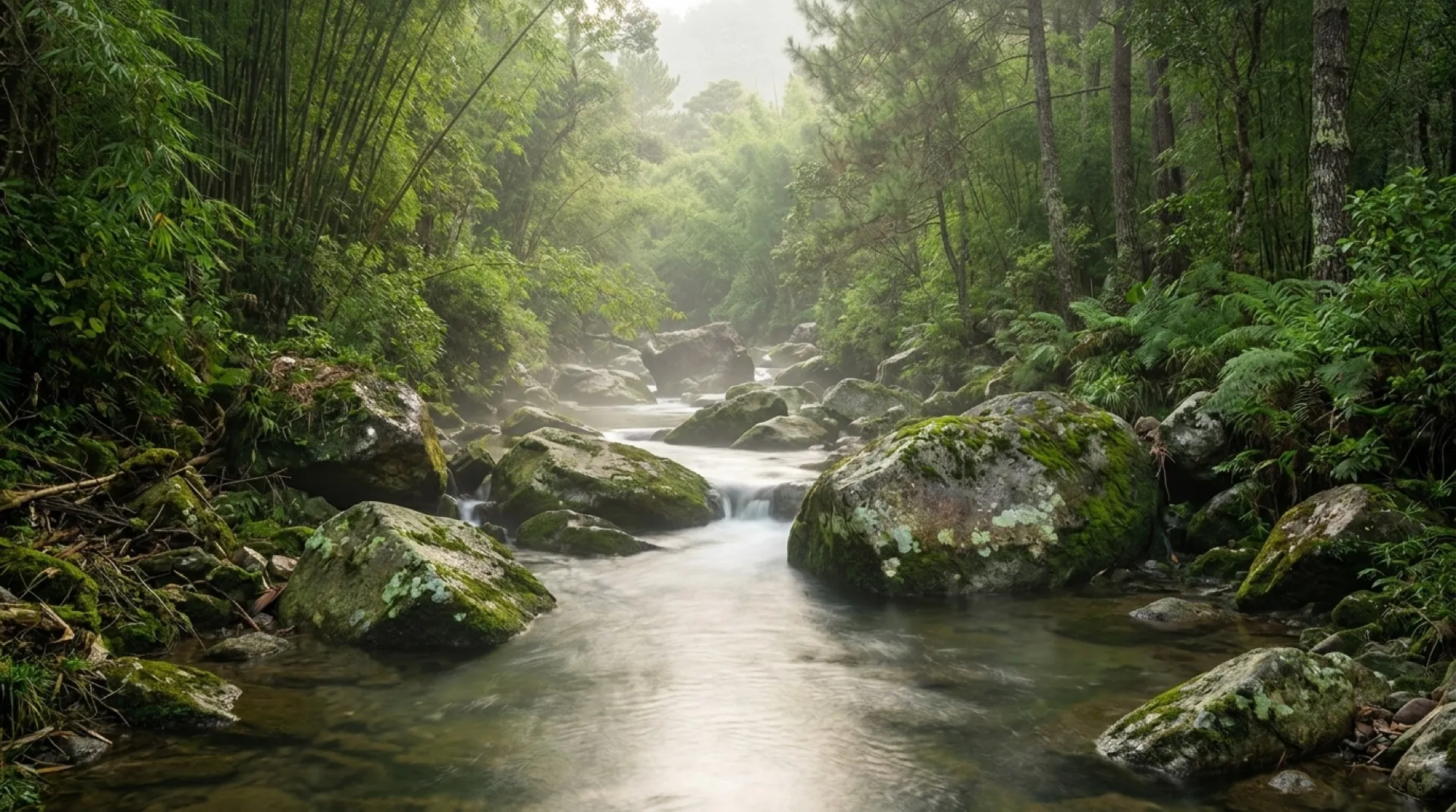
A clear mountain stream running between mossy boulders through bamboo and forest in soft morning light.

Many working adults in Singapore and around the world only find free time for themselves after nine o’clock in the evening. After hours of staring at bright screens and answering messages, your head feels hot and crowded with thoughts while your hands and feet feel cold—so even when you lie down, your mind keeps racing. Students often ask: “Is it safe to practise Qigong or Taijiquan at night, or will it wake me up?”

In classical Wudang Yangsheng (Nourishing Life), the answer depends entirely on matching your practice to the daily cycle of Yin and Yang (The Twelve Two-Hour Periods).

1. Why Evening Practice Must Gather Rather Than Disperse (日西而阳气已虚,气门乃闭)

The foundational medical classic Huangdi Neijing Suwen (《黄帝内经·素问·生气通天论》) describes how human vitality mirrors the sun’s arc across the sky:

“Yang Qi governs the exterior during the day: at dawn human Qi stirs; at midday Yang Qi reaches fullness; as the sun sinks west, Yang Qi subsides and the gates of Qi close. Therefore, once the gates have closed, take care to gather and store within—do not disturb the tendons and bones or expose yourself to fog and dew.”

This passage explains why vigorous, high-heart-rate workouts, deep low stances, or explosive martial issuing after 9:00 PM often leave you wired and sleepless: they call Yang Qi back out to the muscles just when the body is trying to tuck it inward (“returning to the root is called stillness,” 归根曰静 in the Tao Te Ching (Dao De Jing)). Morning Qigong gently opens and stretches the frame; evening Qigong gently guides attention downward from the head to the lower abdomen and the soles of the feet.

2. Your 10-Minute Wudang Evening Wind-Down Routine

Practise this four-step sequence thirty to sixty minutes before sleep in dim, quiet lighting:

  1. Minutes 1–3 — “Two Hands Hold Up the Heavens” & Gentle Rib Release (双手托天 · 轻柔版): Borrow the first movement of Baduanjin (Eight Brocades), but perform it at half your morning effort. As you interlace your fingers and stretch upward on a quiet inhalation, rise only slightly onto the balls of the feet; as you exhale through the nose, let the arms float down the sides like falling leaves, feeling tension drain from the neck and trapezius into the floor. Repeat six slow times.
  2. Minutes 4–6 — Guiding the Breath from the Crown to the Soles (“Washing the Marrow with Quiet Breath,” 吐纳涤尘): Stand in a comfortable high Wuji posture (or sit on the edge of a chair). Inhale quietly through the nose (Natural Abdominal Breathing); as you exhale, imagine a warm, soft curtain of water rinsing gently downward from the crown of the head (Baihui), past the eyes, throat, chest, and abdomen, all the way down through the knees into the centres of both soles (Yongquan 涌泉穴).
  3. Minutes 7–8 — Warming the “Bubbling Spring” on the Soles (擦涌泉 · 引火归元): Sit comfortably and use the centre of your right palm (Laogong 劳宫穴) to rub the front third arch of your left sole (Yongquan) briskly yet gently for sixty strokes until the sole feels warm, then switch sides. In traditional Daoyin, warming the soles draws scattered upper-body heat downward so the head cools and the feet warm.
  4. Minutes 9–10 — Resting Palms on the Lower Dantian (Guarding the One · Shouyi): Rest both palms over the lower abdomen below the navel, close the eyes softly (Neiguan), and let go of counting or controlling the breath (Xing and Ming).

3. Three Evening Habits That Support the Practice

  • Stop vigorous martial or strength drills at least two hours before bed: Save low stances, fast Wudang sword footwork, and heavy sweating for morning or late afternoon.
  • Pair with a warm foot soak in cool or damp weather: A ten-minute plain warm-water foot bath up to the ankles before step 3 helps relax constricted lower-leg vessels after a long day at a desk.
  • Set screens aside once you begin the ten minutes: Treat the closing breath as the boundary where daytime planning ends (Qingjing Jing).

4. Cultivating Daily Rhythm Between Wudang Mountain and Singapore

Connecting traditional mountain-retreat rhythms near Wudang Mountain’s UNESCO World Heritage ancient Taoist temples with modern urban life at our Singapore centre, Wudang.Org helps you match the right practice to the right hour of the day. Compare all four classic morning and evening sets in Choosing Your First Qigong Set, map your study path on Start Here, or join our Singapore Baduanjin workshop.

Safety note: This evening sequence is a gentle cultural relaxation practice and does not diagnose or treat clinical insomnia or sleep disorders. Avoid pressing forcefully on the soles if you have foot injuries or diabetic neuropathy, and consult your physician for persistent sleep difficulties.

Seeker’s Q&A · Frequently Asked Questions

Is it good to practise Qigong or Tai Chi late at night before bed?

Gentle, slow, downward-settling Qigong and abdominal breathing are ideal before bed because they release neck and shoulder tension and help you feel calm. However, vigorous low stances, fast weapon drills, or heavy sweating should be avoided late at night because they stir Yang Qi outward.


Why does traditional Wudang evening practice rub the Yongquan point (涌泉穴) on the soles of the feet?

Yongquan (“Bubbling Spring,” Kidney-1) sits in the front depression of the sole. Gently warming it with the palm draws excess upper-body tension and heat downward (“warming the feet and cooling the head”), helping the mind settle for rest.

How many minutes does an effective evening Qigong wind-down take?

Just 10 minutes is enough: 3 minutes of gentle overhead stretching and shoulder release, 3 minutes of downward breath scanning, 2 minutes of warming the soles, and 2 minutes of quiet palms-on-Dantian breathing.
