QIGONG & DAOYIN · 气功与导引

Wudang Nasal-Bridge Warming & Breath-Gate Clearing Daoyin (Ca Biyi & Yingxiang): Classical Morning Self-Care for Smooth Nasal Breathing 武当晨起擦鼻翼与迎香导引法:《养性延命录》温润鼻窍、调息入静指南

Learn the classical Wudang morning Daoyin method of warming the sides of the nasal bridge (Ca Biyi) and gently pressing the Yingxiang (LI-20) points—grounded in Tao Hongjing's Yangxing Yanming Lu to prepare quiet, unhurried nasal breathing before standing meditation or Qigong.


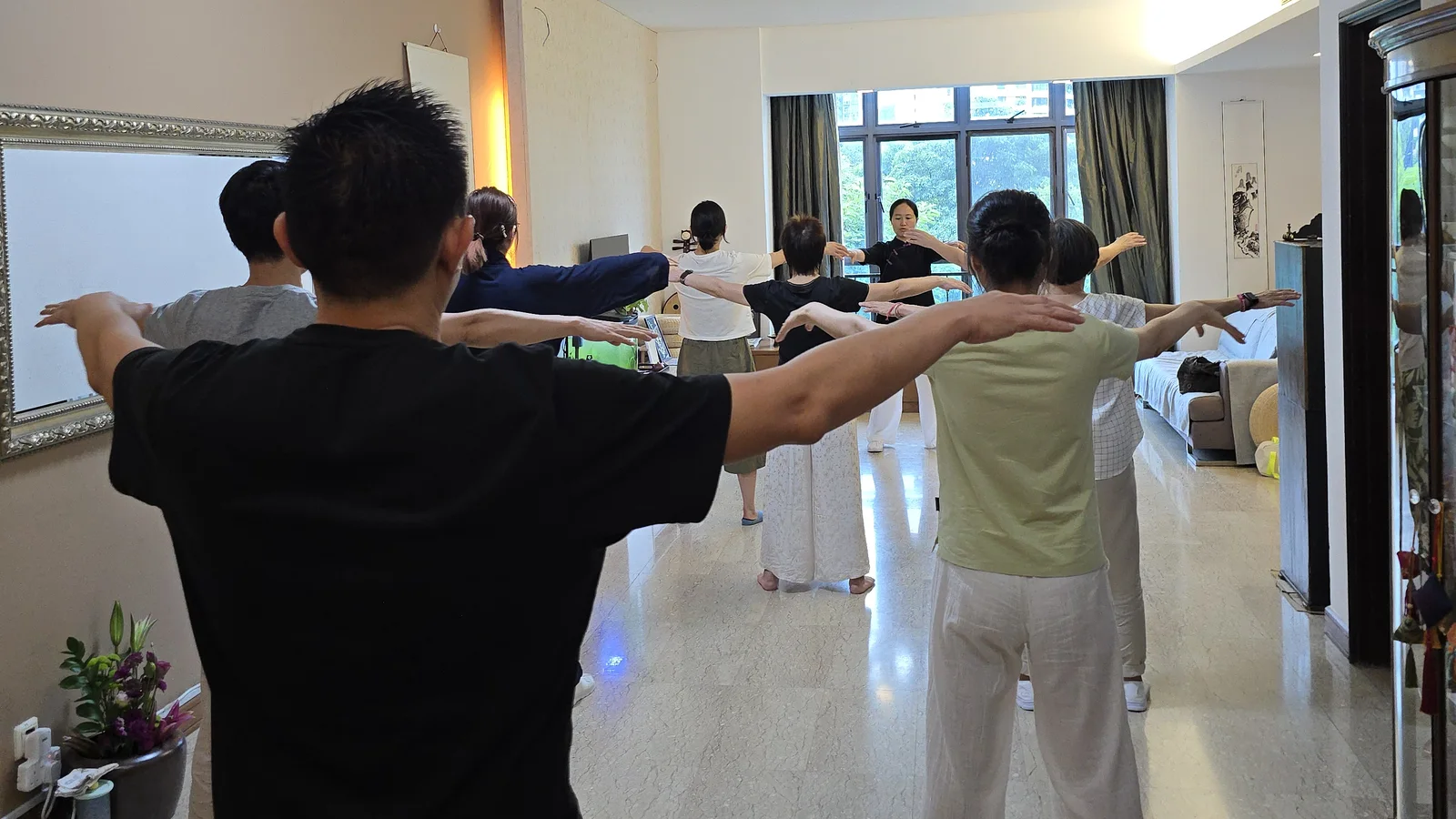
A standing qigong class in a sunlit room: students seen from behind hold both arms open at shoulder height in the same alignment, facing a teacher in dark clothing before a tall window with green trees outside.

Why Classical Daoyin Prepares the Nose Before Regulating the Breath

In Wudang Qigong, Zhan Zhuang (Standing Meditation), and quiet sitting, the breath flows gently in and out through the nose with the lips lightly closed. Yet on cool mornings or after hours in air-conditioned rooms, the nasal passages often feel cool, dry, or slightly congested, tempting beginners to breathe through the mouth or force the inhale. Classical Chinese cultivation texts address this directly at the very start of the morning routine. In the Huangdi Neijing Suwen (黄帝内经·素问·阴阳应象大论), the nose is described as the external portal of the Lung system (肺主鼻……在窍为鼻), while Tao Hongjing's Yangxing Yanming Lu (养性延命录·导引按摩篇) instructs practitioners to 'frequently rub the left and right sides of the nose with the hands until warm' (常以手摩鼻左右,令热) as part of daily morning self-care.

Anatomical Landmarks: The Thenar Eminence (Yuji), Nasal Bridge (Biliang), and Yingxiang (LI-20)

This traditional Daoyin sequence uses three simple landmarks that require no forceful pressure. First is the Yuji (鱼际) and dorsal thumb ridge—the fleshy base and outer edge of the thumb, which warms quickly when the two hands are rubbed together and belongs in traditional meridian theory to the Hand-Taiyin Lung line. Second is the lateral furrow along the bridge of the nose (Biyi 鼻翼两侧), running from the inner corners of the eyebrows (Zanzhu 攒竹) down beside the nasal bones. Third is Yingxiang (迎香, 'Welcoming Fragrance', Large Intestine 20), located in the nasolabial groove just beside the outer flare of each nostril. Warming this corridor gently stimulates local surface circulation and encourages calm, unforced nasal airflow before standing or seated practice.

Step-by-Step Three-Minute Morning Nasal-Gate Warming Routine

Sit upright on the edge of a chair or stand in a relaxed Wuji posture with your shoulders sunk and jaw unclenched. Step 1 (Warming the Thumbs): Briskly rub your palms and the base of both thumbs (Yuji) together for ten seconds until they feel noticeably warm. Step 2 (Stroking the Nasal Bridge — Ca Biyi): Slightly bend both thumbs and place the warm dorsal edges of the thumb joints against the sides of the bridge of the nose just below the inner brows. Glide smoothly downward along both sides of the nose to the nostrils and lightly back up for 24 to 36 gentle strokes until the sides of the nose feel warm. Step 3 (Circling Yingxiang): Rest the pads of your index or middle fingers in the small hollows beside the nostrils (Yingxiang) and make 12 slow, light circular rotations while breathing softly into the lower abdomen.

Integrating Ca Biyi with Dry Face-Bathing and Morning Standing Practice

In traditional Wudang morning Daoyin, warming the nasal bridge (Ca Biyi) flows naturally into Dry Face-Bathing (Gan Yumian 干浴面) and Swallowing the Jade Fluid (Yanjin 咽津). Once the sides of the nose feel warm and the nasal breath settles into a quiet, rhythmic stream, sweep the warm palms over the cheeks and forehead three times, let the tongue rest lightly against the upper palate, and transition directly into your morning Zhan Zhuang or Baduanjin routine. Safety note: Keep this traditional self-massage gentle and soothing; always wash your hands before touching your face, avoid pressing on broken skin, sunburned areas, or acute sinus inflammation, and remember that classical Daoyin is a supportive wellness habit rather than a medical treatment.

Seeker’s Q&A · Frequently Asked Questions

What is the key structural alignment in Wudang Nasal-Bridge Warming & Breath-Gate Clearing Daoyin (Ca Biyi & Yingxiang)?

Learn the classical Wudang morning Daoyin method of warming the sides of the nasal bridge (Ca Biyi) and gently pressing the Yingxiang (LI-20) points—grounded in Tao Hongjing's Yangxing Yanming Lu to prepare quiet, unhurried nasal breathing before standing meditation or Qigong.
