QIGONG & DAOYIN · 气功与导引

Pressing Neiguan (PC-6), Shenmen (HT-7), and Hegu (LI-4): Wudang Wrist-Gate Daoyin for Calming the Heart-Mind 按揉内关、神门与合谷三关:武当传统导引的腕部要穴调摄、宁心宽胸与通脉要法

A classical Wudang Daoyin guide to self-acupressure and rotational loosening across the three wrist and hand gates—Neiguan (内关), Shenmen (神门), and Hegu (合谷)—for harmonizing the thorax and settling the spirit.


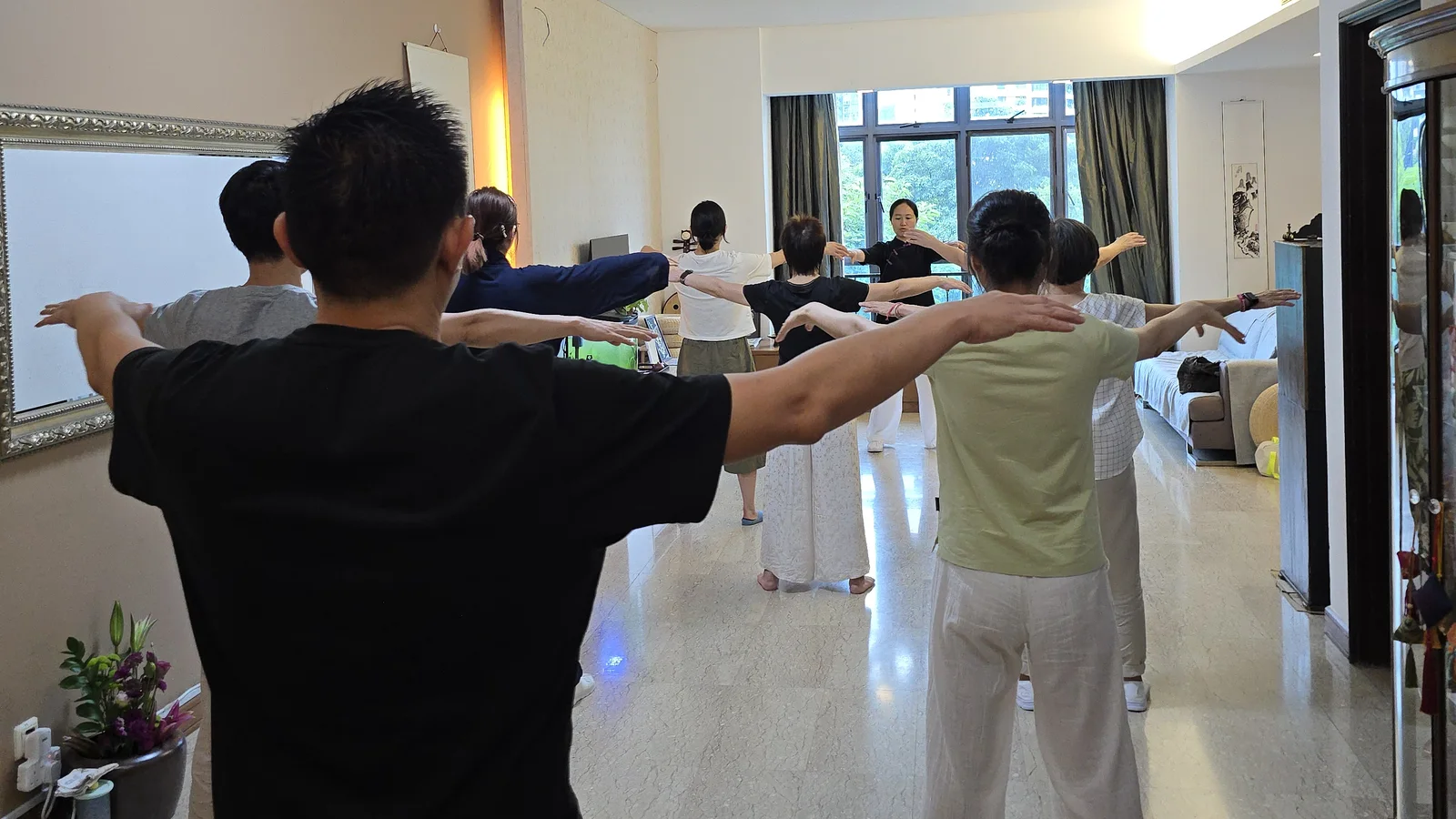
A standing qigong class in a sunlit room: students seen from behind hold both arms open at shoulder height in the same alignment, facing a teacher in dark clothing before a tall window with green trees outside.

The Wrist as the Meridian Gateway of the Heart and Pericardium

In classical Taoist cultivation and the meridian system of the Huangdi Neijing (Lingshu, 黄帝内经·灵枢, studied under Taoist Classics), the three Hand Yin meridians—Lung, Pericardium, and Heart—flow from the chest down the inner aspect of the arm to the wrist and fingertips, while the three Hand Yang meridians ascend from the fingers along the back of the wrist toward the head. Alongside Warming the Palms at Laogong, Firm Grasp of the Spirit (Wogu), and Stroking the Chest and Soothing the Flanks, traditional Wudang Qigong & Daoyin uses gentle thumb-kneading across three strategic hand and wrist gates—Neiguan (内关, PC-6), Shenmen (神门, HT-7), and Hegu (合谷, LI-4)—to quiet mental restlessness and open the chest before seated meditation.

Neiguan (内关, PC-6) and Waiguan (外关, TE-5): The Inner and Outer Passes

Neiguan ('Inner Pass', PC-6) lies on the palmar side of the forearm two cun (roughly three finger-breadths) above the transverse wrist crease, directly between the two prominent tendons of palmaris longus and flexor carpi radialis. As the Luo-Connecting point of the Pericardium meridian and the confluent point of the Yin Linking Vessel (Yinwei Mai, 阴维脉), classical verses state: 'For the chest and diaphragm, seek Neiguan' (胸胁内关谋). Directly opposite Neiguan on the dorsal aspect of the forearm lies Waiguan ('Outer Pass', TE-5). By pinching the forearm gently between the thumb on Neiguan and the index finger on Waiguan and kneading in slow circles thirty-six times on each arm, the practitioner harmonizes the Yin and Yang aspects of the upper burner simultaneously.

Shenmen (神门, HT-7) and Hegu (合谷, LI-4): Spirit Gate and Joining Valley

Next, move the thumb pad to the ulnar end of the palmar wrist crease, in the small hollow on the radial side of the flexor carpi ulnaris tendon: this is Shenmen ('Spirit Gate', HT-7), the Yuan-Source point of the Hand Shaoyin Heart meridian. Knead Shenmen gently with slow exhalations eighteen to thirty-six times to settle scattered thoughts. Finally, press Hegu ('Joining Valley', LI-4) on the dorsum of the hand between the first and second metacarpal bones at the midpoint of the radial border of the second metacarpal, massaging eighteen times on each hand to promote smooth Qi circulation through the head and shoulders.

SeatedWrist Rotations and Quiet Integration

As taught in the Wudang Mountain tradition and our Start Here guide, conclude the sequence by interlacing the fingers loosely or forming hollow fists and rotating both wrists eighteen times inward and eighteen times outward. Keep the pressure gentle and unhurried—like tending a gentle fire—so the hands, chest, and mind settle into calm clarity.

Seeker’s Q&A · Frequently Asked Questions

What is the key structural alignment in Pressing Neiguan (PC-6), Shenmen (HT-7), and Hegu (LI-4)?

A classical Wudang Daoyin guide to self-acupressure and rotational loosening across the three wrist and hand gates—Neiguan (内关), Shenmen (神门), and Hegu (合谷)—for harmonizing the thorax and settling the spirit.
