TAOIST PHILOSOPHY · 道家哲学

“There Must First Be a True Person Before There Can Be True Knowledge” in Zhuangzi: Wheelwright Bian and Why Embodied Practice Precedes Theory 《庄子》“有真人而后有真知”与“轮扁斫轮”详解:为什么道家认为真智慧必先源于身心体证?

Why Zhuangzi pairs the “True Person” (Zhenren) of Chapter 6 with Wheelwright Bian’s chisel in Chapter 13—showing that living wisdom resides in the hands, breath, and calm heart-mind before it can be read in books.

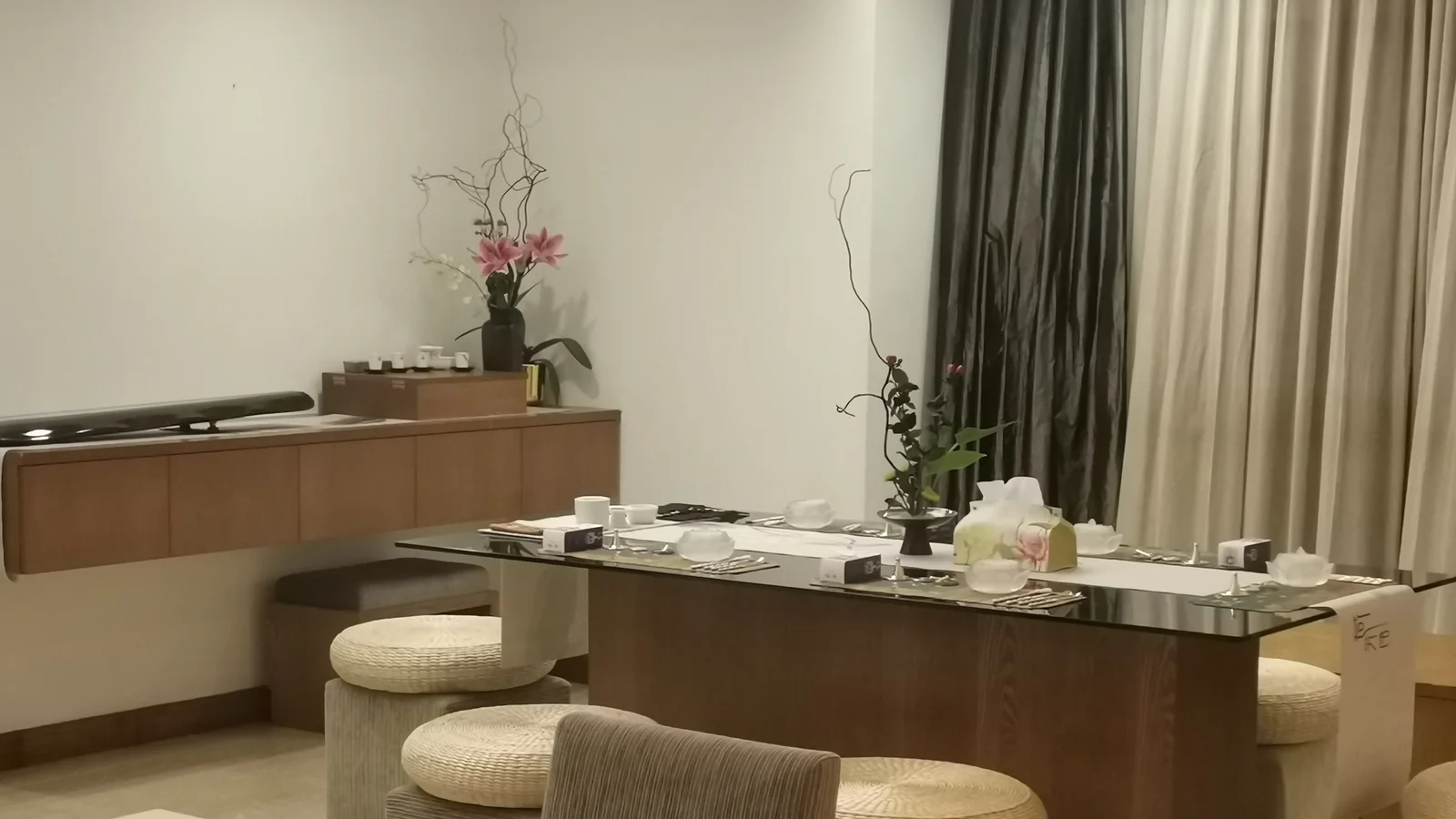
A quiet Taoist study room: a black guqin on a low wooden console beside a pink lily arrangement and tea set, and a dark-glass study table set with white lotus-shaped cups, an incense holder and a floral branch, with straw cushions and a grey curtain.

Today anyone can read dozens of translations of the classics in an afternoon, memorise the names of meridians and trigrams, and still feel just as hurried in their breathing and just as stiff in their shoulders as before. More than two thousand years ago, Chapter 6 of the Zhuangzi—The Great and Venerable Teacher (《庄子·内篇·大宗师》)—put its finger on why purely verbal knowledge fails to transform us: “Moreover, there must first be a True Person before there can be True Knowledge” (且有真人而后有真知, You Zhenren Er Hou You Zhenzhi).

1. Why State of Being Determines Quality of Knowing (《大宗师》)

In routine technical subjects, information can be transferred regardless of the student’s inner state: a person who is sleep-deprived, irritable, or boastful can still memorise a multiplication table. In Taoist philosophy and internal arts, however, your own body and heart-mind are the instrument of perception:

  • If your shoulders are shrugged and your breath is caught in your throat (“breathing from the throat”), you cannot accurately perceive subtle force (Tingjin) or inner stillness (Qingjing Jing), no matter how many paragraphs about relaxation you have underlined.
  • Therefore Zhuangzi spends forty lines in Chapter 6 describing the lived composure of the True Person (真人, Zhenren)—one whose breathing reaches the heels, who neither clings to life nor fears transformation, and whose awareness remains unclouded like a polished bronze mirror—before concluding that only from such a settled state of being can authentic understanding arise.

2. Wheelwright Bian’s Chisel (轮扁斫轮) in Zhuangzi Chapter 13

In Chapter 13 of the Zhuangzi—The Way of Heaven (《庄子·外篇·天道》)—this principle is dramatised in the famous encounter between Duke Huan of Qi and an old craftsman named Wheelwright Bian (轮扁):

Duke Huan was reading a scroll in the upper hall while Wheelwright Bian was chiselling a wooden carriage wheel in the courtyard below. Setting down his mallet and chisel, Wheelwright Bian stepped up and asked whose words the Duke was reading. “The words of the sages,” replied the Duke. “Are the sages still alive?” “They are dead.” “Then what my lord is reading is nothing more than the dregs and leavings of the ancients (古人之糟粕也)!”

Asked to explain himself or face punishment, the old wheelwright replied: “I look at it from the perspective of my own craft. When I chisel a wheel, if my stroke is too loose and slow, the tenon fits sweetly enough but is not firm (甘而不固); if my stroke is too tight and hurried, it jams and refuses to enter (疾则苦而不入). Neither too loose nor too tight (不徐不疾)—I feel it in my hand and respond to it from my heart-mind (得之于手而应于心). My mouth cannot put it into words, yet there is a subtle knack alive within it. I cannot teach it even to my own son, and my son cannot receive it from me; so here I am at seventy years of age, still chiselling wheels in person. What the ancients could not carry into words died with them—therefore what my lord is reading is their leftover trace.”

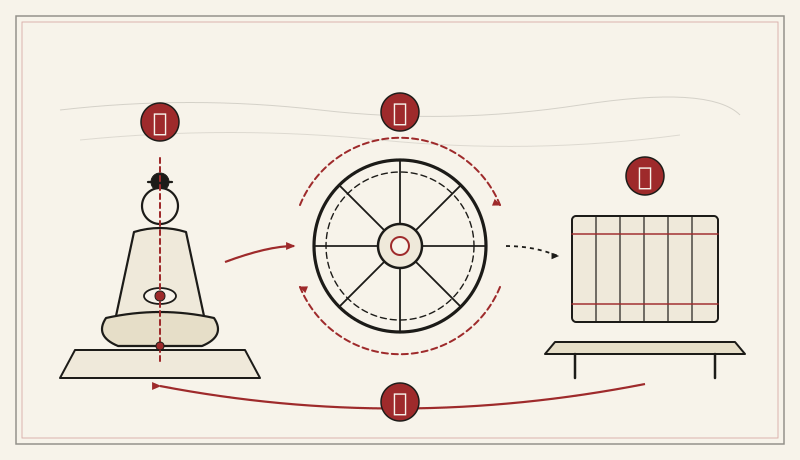
Classical ink-and-cinnabar diagram of Zhuangzi's True Person and True Knowledge (You Zhenren Er Hou You Zhenzhi) and Wheelwright Bian's craft showing the rooted practitioner on the left, the balanced wooden carriage wheel at the center, the bamboo-slip scroll on the right, and the living return loop from text back to embodied practice

How Zhuangzi links the True Person (真人), living craft (轮扁斫轮), and classical texts into a single cycle of cultivation.

  1. The True Person as Foundation (有真人 · 身心澄明之基): quiet breath reaching the heels and an unclouded heart-mind (Xinzhai) calibrate the practitioner’s living instrument
  2. “Felt in the Hand, Answered in the Heart” (得之于手而应于心 · 不徐不疾): like Wheelwright Bian’s chisel or Cook Ding’s blade, true skill is discovered through patient, embodied adjustment between “too loose” and “too tight”
  3. Written Classics as Fingerprints & Roadmaps (古人之迹 · 经典印证): scrolls and manuals record the footprints of past masters—indispensable as directional maps, yet inert if never walked in person (Words, Names, and Reality)
  4. Returning from the Scroll to the Mat (由文返身 · 知行互证): reading a line of the Tao Te Ching (Dao De Jing) or Zhuangzi and immediately testing it in Zhan Zhuang or Taijiquan brings the ancient text back to life

3. Why Wudang Cultivation Never Separates Classics from Practice

Is Zhuangzi telling us to throw away books? Not at all—after all, Zhuangzi wrote one of the greatest masterpieces of Chinese literature! Rather, together with Chapter 48 (“In the pursuit of learning, one adds every day; in the pursuit of the Tao, one subtracts every day”) and Chapter 81 of the Tao Te Ching, he warns against mistaking the menu for the meal:

  • In Wudang Taijiquan, the instruction “neither too loose nor too tight” (不徐不疾) describes the exact quality of Peng energy in Grasp the Sparrow’s Tail: if your arm is too stiff, it jams (苦而不入); if it is collapsed, it has no root (甘而不固). No book can hand you that middle measure—you discover it in your own wrists and hips over hundreds of quiet repetitions.
  • Conversely, once you have felt Silk-Reeling or Zuowang in your own body for even ten minutes, reopening the Zhuangzi or Cantong Qi is no longer dry philology—it feels like comparing notes with an old friend.
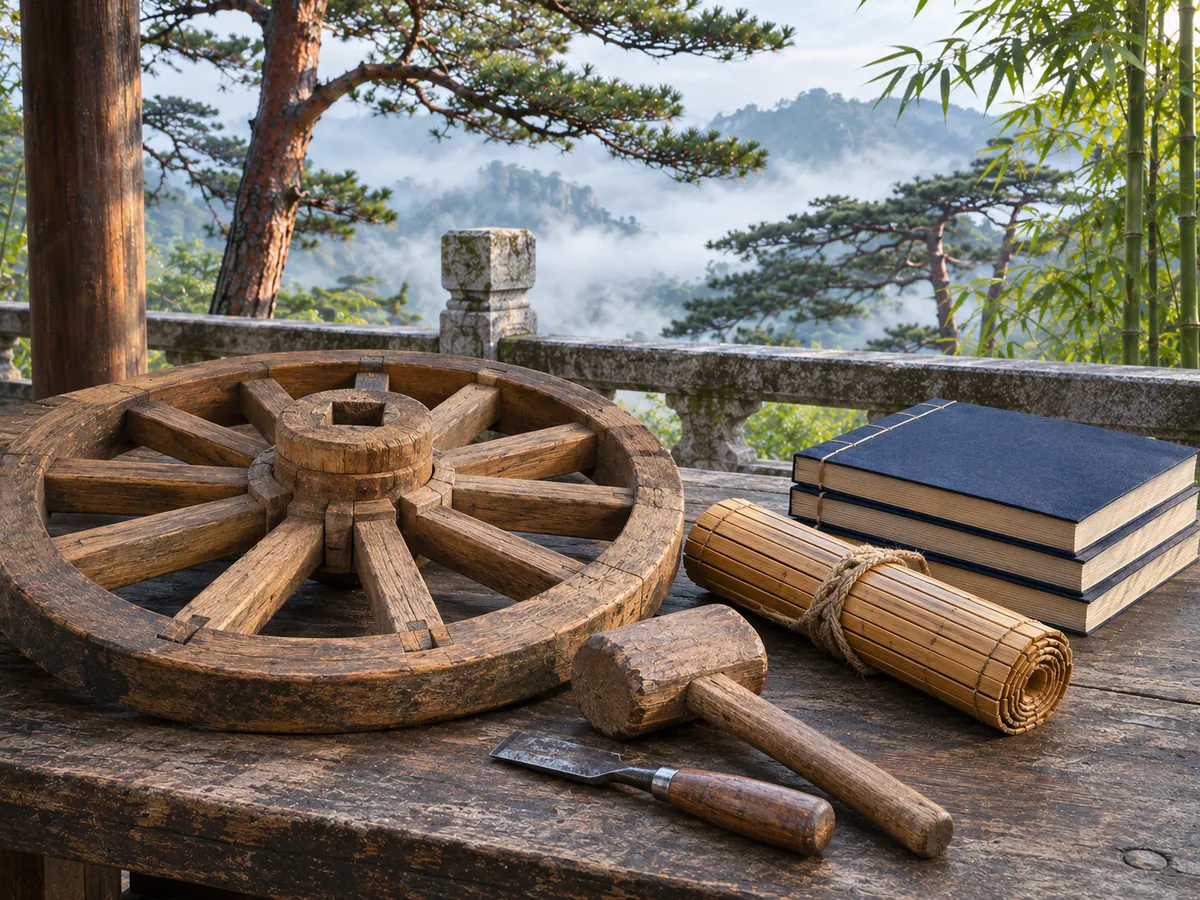
A handcrafted wooden carriage wheel hub and mortise-and-tenon spokes beside a wooden mallet, woodworking chisel, rolled bamboo-slip scroll, and blank dark-blue thread-bound classical books on a mountain veranda.

Wheelwright Bian’s Chisel and the Scroll (Zhuangzi Chapter 13): “Neither too loose nor too tight—I feel it in my hand and respond to it from my heart-mind.”

4. Living the Classics Between Wudang Mountain and Singapore

Connecting the contemplative and martial heritage near Wudang Mountain’s UNESCO World Heritage ancient Taoist temples with our regular classes in Singapore, Wudang.Org pairs classical textual study (Classical Library) directly with embodied Qigong and Taijiquan. Begin your practice on Start Here.

Seeker’s Q&A · Frequently Asked Questions

What does Zhuangzi mean by “There must first be a True Person before there can be True Knowledge” (有真人而后有真知)?

Unlike purely technical facts that can be memorised by anyone, wisdom about the Tao depends on the clarity and composure of the knower. Only when our body, breath, and heart-mind are settled and unclouded (the state of the True Person) can we perceive reality without distortion.


What is the lesson of Wheelwright Bian (轮扁斫轮) in Zhuangzi Chapter 13?

Wheelwright Bian explains that carving a mortise-and-tenon wheel requires a living feel—“neither too loose nor too tight, felt in the hand and answered in the heart”—that words alone cannot transmit. Books are helpful maps, but embodied practice is required to make wisdom real.

How does “neither too loose nor too tight” (不徐不疾) apply to Wudang Taijiquan and Zhan Zhuang?

In Wudang internal arts, “too loose” corresponds to a collapsed, slack frame lacking Peng buoyancy, while “too tight” corresponds to stiff muscular tension and shrugged shoulders. Daily solo practice trains you to feel the balanced middle between the two.
