TAOIST PHILOSOPHY · 道家哲学

The Three Treasures (Jing, Qi, Shen) in Taoist Cultivation: Essence, Breath, Spirit and Laozi’s Three Ethical Jewels 道家“三宝”详解:从老子“慈、俭、不敢为天下先”到内丹养生的“精、气、神”

Why Chinese tradition speaks of “Three Treasures” in two inseparable ways—and how ethical restraint in the Tao Te Ching protects physical essence, vital breath, and clear spirit.

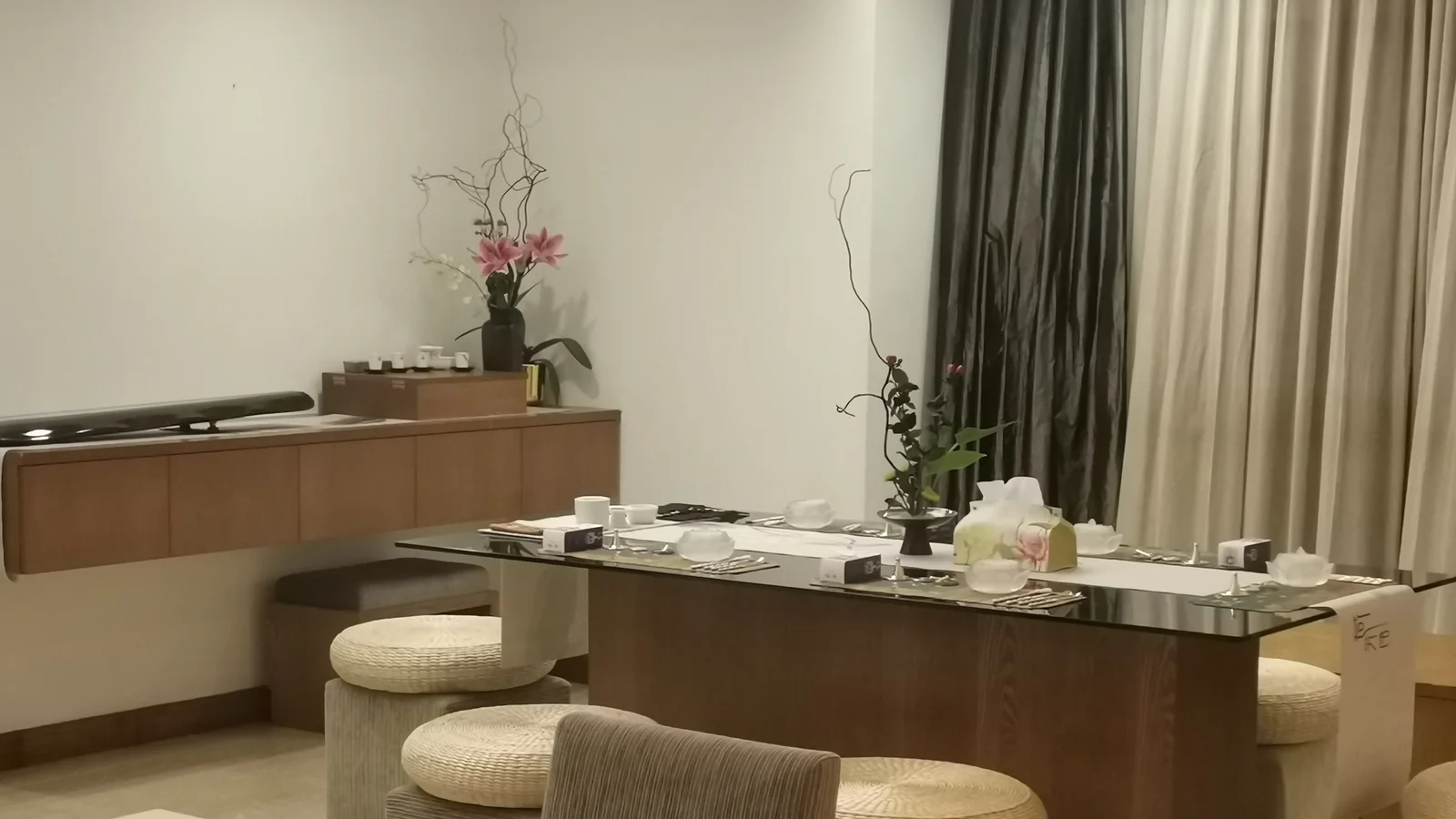
A quiet Taoist study room: a black guqin on a low wooden console beside a pink lily arrangement and tea set, and a dark-glass study table set with white lotus-shaped cups, an incense holder and a floral branch, with straw cushions and a grey curtain.

When students of Taoist philosophy and Wudang Yangsheng (Nourishing Life) hear teachers speak of “the Three Treasures” (三宝, Sanbao), they soon discover that the phrase points to two classic triads that mirror each other. In the Tao Te Ching (Dao De Jing), Laozi names his Three Treasures of character and conduct: Compassion (慈, Ci), Frugality (俭, Jian), and Not Daring to Stand Ahead of All Under Heaven (不敢为天下先). In classical medical and inner-cultivation literature (Huangting Jing, Wuzhen Pian), the Three Treasures of the human body are Essence (精, Jing), Vital Breath (气, Qi), and Spirit (神, Shen).

In the Wudang teaching tradition, these are not two unrelated lists: Laozi’s ethical treasures are the daily habits that keep your inner treasures of Jing, Qi, and Shen from leaking away.

1. Laozi’s Ethical “Three Treasures” in Tao Te Ching Chapter 67

In Chapter 67 of the Tao Te Ching, Laozi states plainly:

“I have Three Treasures that I hold fast and guard closely: the first is called Compassion (慈); the second is called Frugality (俭); the third is called Not Daring to Be First Under Heaven (不敢为天下先). Because of compassion, one can be genuinely courageous; because of frugality, one can be generous and expansive; because of not daring to stand first, one can mature into a vessel of leadership.”

Notice how each of Laozi’s three virtues directly protects one layer of your living constitution (De: Virtue and Inner Potency):

  • Frugality / Restraint (俭, Jian)—which Chapter 59 defines as conserving vitality early (早服谓之重积德)—prevents the reckless squandering of bodily Jing (Essence) through overwork, sleep deprivation, and sensory excess.
  • Compassion / Gentleness (慈, Ci) melts hostility and reactive anger, allowing Qi (Vital Breath) to remain smooth, warm, and unforced (Chapter 10: “concentrating the breath and attaining suppleness”).
  • Humility / Yielding (不敢为天下先) frees the heart-mind from anxious comparison and vanity (Qiwu Lun), allowing Shen (Spirit and Clear Awareness) to rest quietly in its seat.

2. Jing, Qi, and Shen: The Three Levels of the Inner Tripod

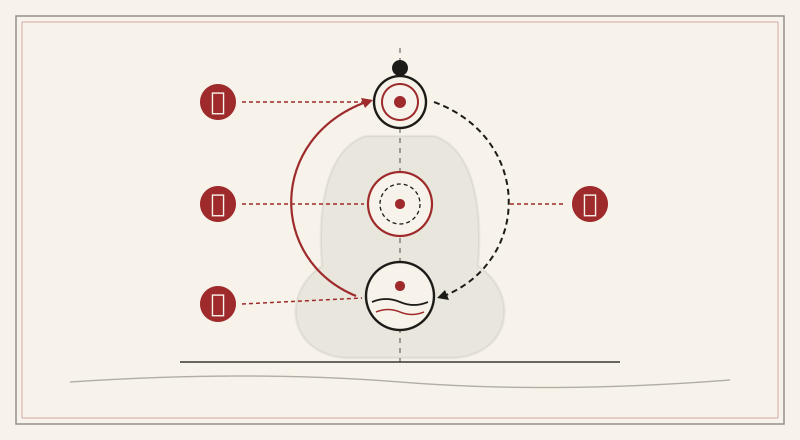
Classical Taoist physiology views the human body as a living bronze tripod vessel (鼎器) in which coarse, tangible vitality is gradually refined into clear, luminous awareness (Xing and Ming Dual Cultivation):

Classical ink-and-cinnabar diagram of the Three Treasures (Jing, Qi, Shen) showing a bronze tripod vessel representing conserved Jing at the base, rising spiral vapor of Qi in the middle chamber, luminous Shen at the upper halo, and the returning arc to emptiness

The inner alchemy of the Three Treasures (精、气、神三宝): how rooted essence, smooth breath, and clear spirit sustain one another.

  1. Jing (精 · Vital Essence at the Root): constitutional reserves, bone-and-tendon integrity, and deep recovery stored in the lower abdomen (Shouyi)
  2. Qi (气 · Vital Breath & Dynamic Flow): warm respiratory and circulatory current linking posture, organ rhythm, and movement (Natural Abdominal Breathing)
  3. Shen (神 · Clear Spirit & Awareness): unclouded perception, calm presence, and emotional equilibrium (Neiguan)
  4. The Classical Refinement Cycle (炼精化气 · 炼气化神 · 炼神还虚): conserving Jing nourishes Qi; harmonising Qi brightens Shen; settling Shen returns to spacious stillness (Wuji and Taiji)

Just as the classical lamp analogy compares the body to oil and awareness to flame, the Three Treasures distinguish three states of the same life energy: Jing is like wax or lamp oil at the base; Qi is the warm vapor rising up the wick; Shen is the clear radiance of the flame itself. When Jing is depleted by chronic exhaustion, Qi grows short and shallow; when Qi is agitated, Shen becomes scattered and anxious.

3. How Wudang Practice Nourishes Each Treasure in Order

Rather than chasing mysterious sensations, authentic Wudang training builds from the bottom of the vessel upward:

  1. Replenishing and Guarding Jing (惜精筑基): Regular sleep aligned with the Twelve Two-Hour Periods, rooted lower-body alignment in Zhan Zhuang, and gentle tendon-and-joint opening in a Morning Wudang Daoyin Warm-Up or Yijinjing keep the lower foundation solid.
  2. Harmonising Qi (调气致柔): Practising Baduanjin, Liuzijue, and Wudang Taijiquan with unforced abdominal breathing and Silk-Reeling spirals turns stiff chest breathing into long, even continuity.
  3. Clarifying and Settling Shen (存神入静): Sitting in Zuowang, reading the Qingjing Jing, and finishing the day with an Evening Qigong Wind-Down allow Shen to rest without over-thinking.
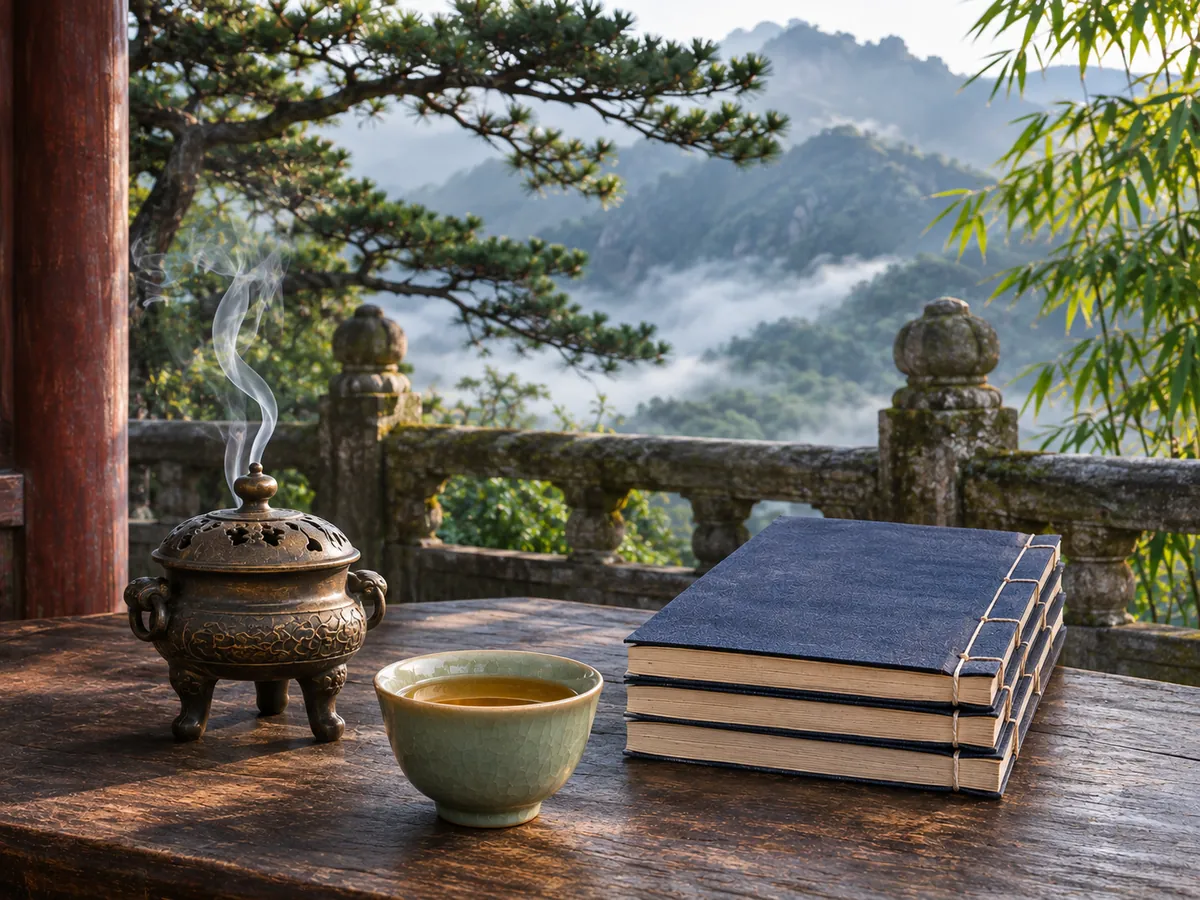
An antique three-legged bronze tripod ding vessel with a thin wisp of incense mist beside a celadon teacup and blank blue thread-bound classical books on a mountain veranda overlooking misty pines.

The inner tripod of the Three Treasures (Jing, Qi, Shen): grounded vessel, rising warm breath, and clear quiet presence.

4. Living the Three Treasures Between Wudang Mountain and Singapore

Bridging the heritage of Wudang Mountain’s UNESCO World Heritage ancient Taoist temples with our teaching centre in Singapore, Wudang.Org helps modern seekers protect their Three Treasures amidst busy urban schedules. Begin by choosing a sustainable 15-minute daily practice in Choosing Your First Qigong Set or map your full curriculum on Start Here.

Seeker’s Q&A · Frequently Asked Questions

What are the Three Treasures (Jing, Qi, Shen 精气神) in Taoist cultivation?

Jing (Essence) is the body’s foundational physical and reproductive vitality; Qi (Vital Breath) is the dynamic respiratory and functional energy circulating through the body; Shen (Spirit) is clear mental awareness and emotional presence.


How do Laozi’s Three Treasures in Tao Te Ching Chapter 67 relate to Jing, Qi, and Shen?

Laozi’s ethical virtues protect the inner treasures: Frugality (Jian 俭) prevents the depletion of Jing; Compassion and gentleness (Ci 慈) keep Qi smooth and unagitated; Humility (not daring to be first) keeps Shen calm and unclouded by ego.

What does “refining Jing into Qi, Qi into Shen, and Shen into emptiness” mean for a beginner?

For a beginner, it means building in a sensible order: first restore physical rest and rooted posture (Jing), then coordinate smooth abdominal breathing with movement (Qi), and finally sit in quiet mental clarity without forced thoughts (Shen).
