How does A Great State as the Lower Stream guide daily Wudang cultivation?
How Da Guo Zhe Xia Liu (大国者下流) and Yi Jing Wei Xia (以静为下) guide relational humility, listening energy (Tingjin), and rooted stillness in Wudang cultivation.
How Da Guo Zhe Xia Liu (大国者下流) and Yi Jing Wei Xia (以静为下) guide relational humility, listening energy (Tingjin), and rooted stillness in Wudang cultivation
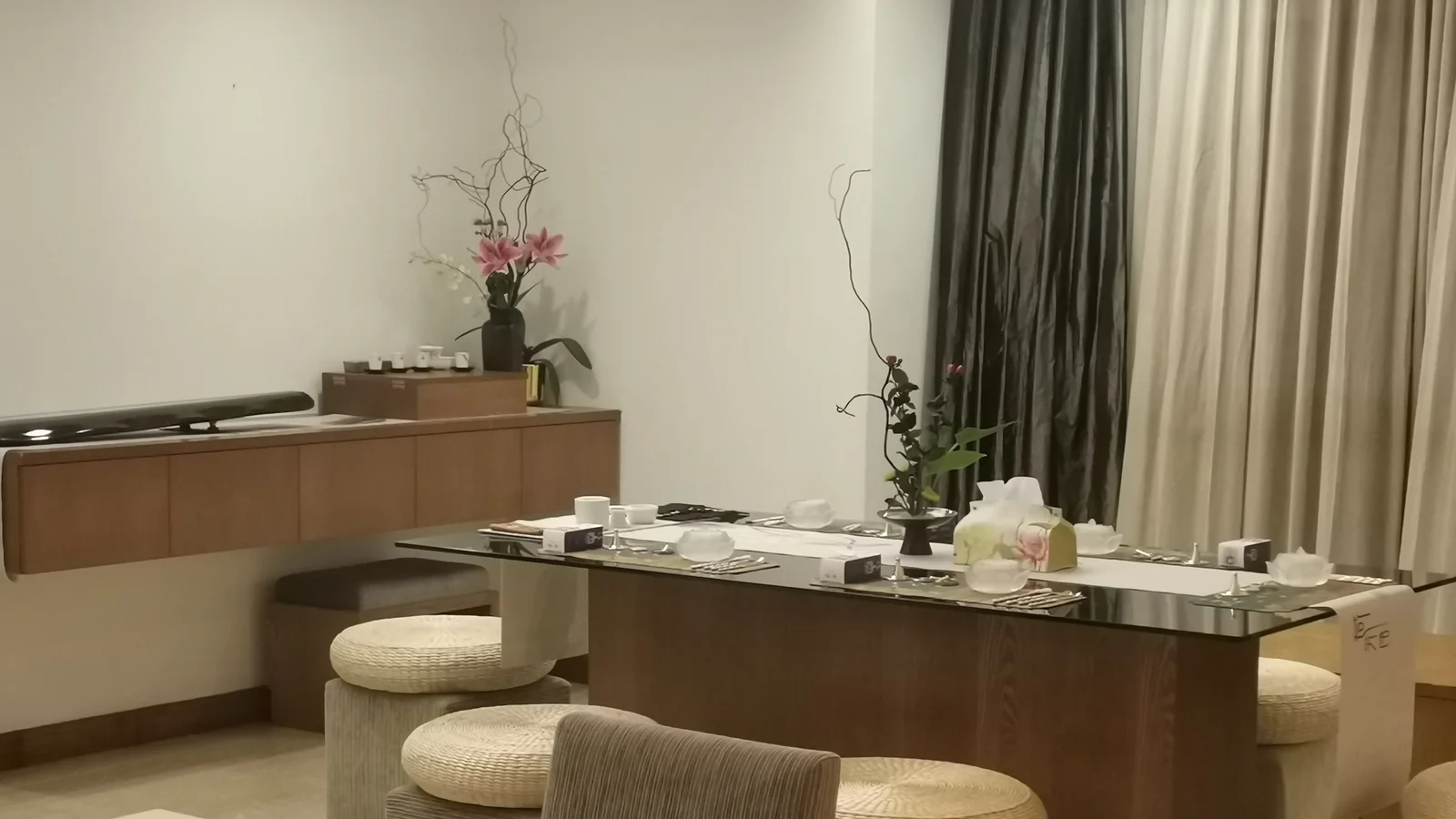
In the sixty-first chapter of the Tao Te Ching (Dao De Jing), Laozi shifts from the quiet stewardship of a single polity in Chapter 60 to the relational ethics between asymmetrical powers. Rather than defining greatness by height, dominance, or forceful expansion, the text defines it by hydrological depth: Da guo zhe xia liu, tianxia zhi jiao ye, tianxia zhi pin ye (大国者下流,天下之交也,天下之牝也) — "A great state is the lower stream, the convergence of all under heaven, the receptive valley of all under heaven." In the landscape of Wudang Mountain, where dozens of high ravines feed clear mountain rills into deep granite pools, this image is immediately tangible. High ridges shed water; only the low-lying basin can gather, hold, and clarify it.
In both the Mawangdui silk manuscripts and the received Wang Bi transmission, Chapter 61 pairs two complementary metaphors: the lower reaches of a river system (Xia Liu 下流) and the receptive principle (Pin 牝) that prevails through stillness (Jing 静):
大国者下流,天下之交也,天下之牝也。
牝常以静胜牡,以静为下。
故大国以下小国,则取小国;小国以下大国,则取大国。
故或下以取,或下而取。
大国不过欲兼畜人,小国不过欲入事人。
夫两者各得其所欲,大者宜为下。"A great state is the lower stream, the convergence of all under heaven, the receptivity of all under heaven.
Receptivity ever overcomes assertion through stillness; because of its stillness, it takes the lower position.
Therefore, when a great state places itself below a small state, it wins the trust of the small state; when a small state places itself below a great state, it wins the acceptance of the great state.
Thus one places itself below in order to gather, and the other places itself below in order to be received.
When both attain what they rightly seek, the greater ought especially to take the lower place."
Wang Bi notes that "the lower stream" does not signify moral inferiority, but gravitational capacity: because the great basin rests lower than the surrounding tributaries, every stream naturally flows toward it without coercion. Heshang Gong titles this chapter Qian De (谦德, "The Virtue of Humility"), observing that whenever strength insists on standing above others, it becomes brittle and isolated, whereas strength that settles downward creates a meeting ground (Jiao 交) where trust can gather.
The pivot of Chapter 61 lies in the six-character phrase Pin chang yi jing sheng mu, yi jing wei xia (牝常以静胜牡,以静为下). Restless assertion (Mu 牡) expends itself in outward motion, friction, and display. Receptive stillness (Pin 牝) remains unhurried and composed; because it is quiet within, it naturally settles into a low, stable center of gravity. The Tao itself never strains to elevate its own form, yet all things rely upon its low, uncontending support.
In Wudang Taoist self-cultivation, "taking the lower position through stillness" is practiced physically and respiratively before it is applied socially:
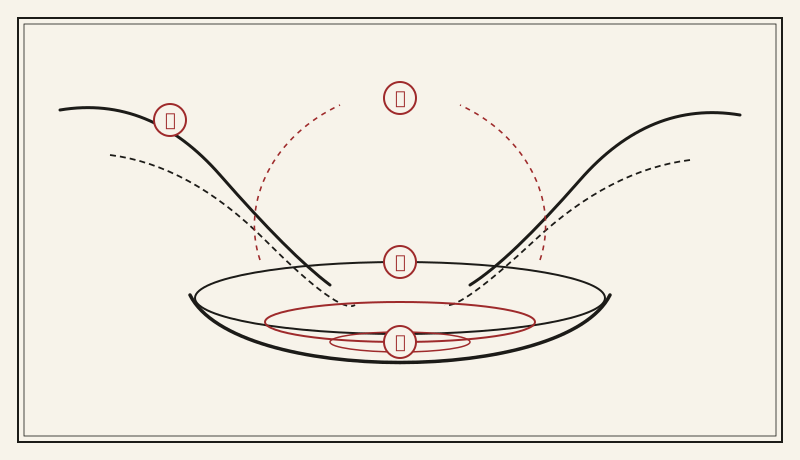
Figure 1: Classical hydrological diagram of Tao Te Ching Chapter 61 — ① Upper mountain tributaries descending along natural gradients; ② The lower valley basin (Xia Liu 下流) where waters converge (Tianxia Zhi Jiao 天下之交); ③ Deep receptive stillness at the floor of the pool (Yi Jing Wei Xia 以静为下); ④ Mutual nourishment and circulation returning moisture to the surrounding peaks (Ge De Qi Suo 各得其所).
To trace how Chapter 61 connects with neighboring chapters on water, non-contention, and quiet governance, explore our translations in the Tao Te Ching (Dao De Jing) Classical Reader, compare Chapter 66's reflection on rivers and seas in Why Rivers and Seas Lead the Hundred Valleys (Chapter 66), examine how soft yielding neutralizes hard force in the Wudang Taijiquan Curriculum Overview, and ground your daily breath work through our Wudang Qigong & Daoyin Practice Guide or the Beginner's Foundation Guide.
How Da Guo Zhe Xia Liu (大国者下流) and Yi Jing Wei Xia (以静为下) guide relational humility, listening energy (Tingjin), and rooted stillness in Wudang cultivation.
In-person classes in Singapore, picked to match this page. Dates and prices are on each course page.


