TAOIST PHILOSOPHY · 道家哲学

Vast Virtue Follows Only the Tao (孔德之容,惟道是从): Image, True Essence, and Unfailing Trust Within the Indistinct in Tao Te Ching Chapter 21 孔德之容,惟道是从:《道德经》第二十一章“惟恍惟惚,其中有精,其中有信”的武当内丹与太极哲学

Why the Tao is neither dead emptiness nor rigid form, and how Xiang (Image), Wu (Substance), Jing (Essence), and Xin (Trust) arise within receptive stillness.

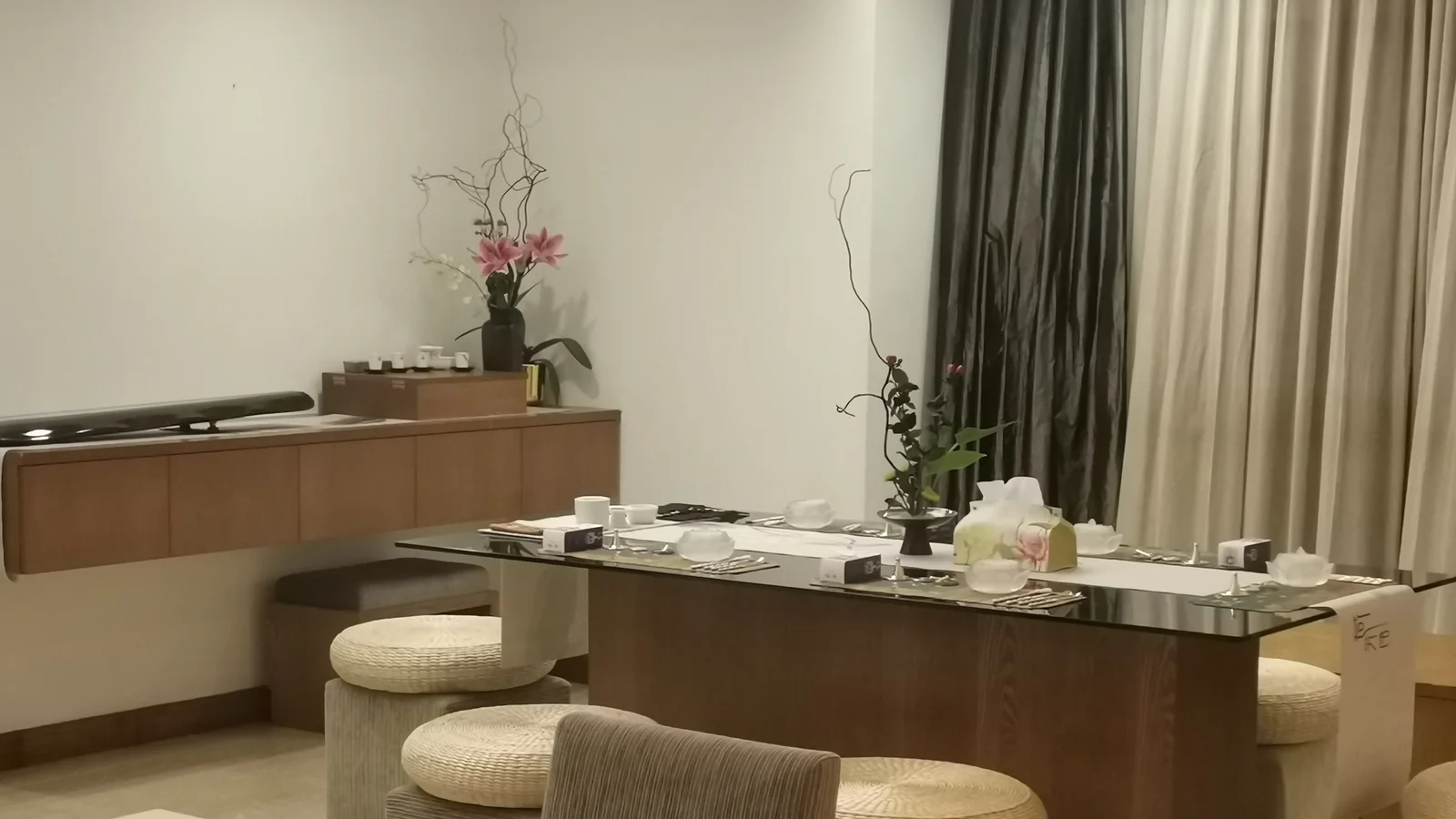
A quiet Taoist study room: a black guqin on a low wooden console beside a pink lily arrangement and tea set, and a dark-glass study table set with white lotus-shaped cups, an incense holder and a floral branch, with straw cushions and a grey curtain.

1. Classical Text and the Philological Meaning of Kong De (孔德) and Huang Hu (恍惚)

Chapter 21 of the Tao Te Ching (Dao De Jing) stands at a pivotal juncture in the first book (Dao Jing 道经), immediately preceding Chapter 22 (Yield and Remain Whole — Qu Ze Quan) and deepening the cosmology of Wuji and Taiji and De (Virtue and Inner Potency):

孔德之容,惟道是从。
道之为物,惟恍惟惚。
惚兮恍兮,其中有象;
恍兮惚兮,其中有物。
窈兮冥兮,其中有精;
其精甚真,其中有信。
自古及今,其名不去,以阅众甫。
吾何以知众甫之状哉?以此。

"The bearing of Vast (Hollow) Virtue (kong de zhi rong 孔德之容) follows only the Tao (wei dao shi cong 惟道是从).
As for the Tao as a reality, it is indistinct and elusive (wei huang wei hu 惟恍惟惚).
Elusive and indistinct! Yet within it there is Image (xiang 象);
Indistinct and elusive! Yet within it there is Substance (wu 物).
Deep and obscure (yao xi ming xi 窈兮冥兮)! Yet within it there is Essence (jing 精);
Its Essence is exceedingly true (qi jing shen zhen 其精甚真), and within it there is unfailing Trust (xin 信).
From antiquity to the present, its name has never departed, by which it observes the beginning of all things (zhong fu 众甫).
How do I know the manner of all beginnings? By this."

Two foundational philological glosses from Wang Bi (王弼, 226–249 CE) and Heshang Gong (河上公) unlock this chapter:

  1. Why Kong De (孔德) Means Both "Vast Virtue" and "Hollow/Receptive Virtue": Wang Bi glosses Kong (孔) as Kong (空, "empty, hollow, unobstructed"): only because great Virtue holds no rigid, pre-set shape of its own can its outward bearing (Rong 容) follow the Tao itself without resistance (Wei Dao Shi Cong 惟道是从). Heshang Gong adds that Kong means "great and receptive like a valley aperture"—just as a valley receives all streams, a person of Kong De follows natural principle in every movement.
  2. Why Huang Hu (恍惚) and Yao Ming (窈冥) Are Not Barren Nothingness: Beginners in meditation often mistake Taoist stillness for blank, drowsy stupor (Wan Kong 顽空). Laozi explicitly refutes that error through a four-step progression inside the indistinct stillness: within Huang Hu (dimly luminous, neither fixed form nor total absence) arise Xiang (象, archetypal Image) and Wu (物, formative Substance); within Yao Ming (profound, quiet inwardness) arises Jing (精, vital Essence); and that Essence is verified by Xin (信, reliable, repeatable experiential confirmation)—like the unfailing return of the tides or the seasonal solstices.
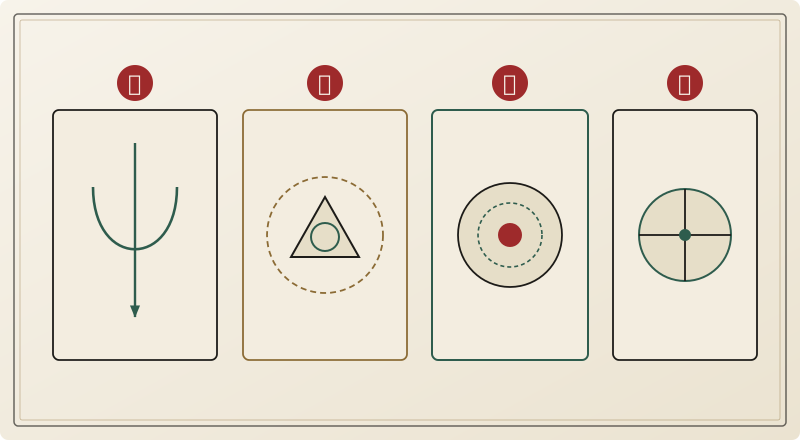
Classical Wudang diagram for Tao Te Ching Chapter 21 illustrating Kong De following the Tao and the fourfold emergence of Image (Xiang), Substance (Wu), Essence (Jing), and Trust (Xin) within luminous stillness
Figure 1 — Ontological and Contemplative Architecture of Chapter 21 (孔德之容,惟道是从): ① Kong De Zhi Rong, Wei Dao Shi Cong (孔德之容,惟道是从): the hollow, receptive vessel aligning seamlessly with the central axis of the Tao; ② Hu Xi Huang Xi — Qi Zhong You Xiang, Qi Zhong You Wu (其中有象、其中有物): archetypal Image and formative Substance emerging within the luminous mist; ③ Yao Xi Ming Xi — Qi Zhong You Jing, Qi Jing Shen Zhen (其中有精,其精甚真): the true pearl of vital Essence condensing in deep quietude; ④ Qi Zhong You Xin, Yi Yue Zhong Fu (其中有信,以阅众甫): the reliable cyclical tally witnessing the origin of the ten thousand things.

2. How Classical Inner Alchemy (Cantong Qi & Wuzhen Pian) Reads Chapter 21

In the classical Taoist texts studied on Wudang Mountain—especially the Cantong Qi (Seal of the Unity of the Three) and Zhang Boduan's Wuzhen Pian (Awakening to Reality)—Chapter 21 is revered as the direct scriptural source for the meditative state in which Prenatal vitality (Xian Tian Yi Qi 先天一炁) awakens:

Classical Term in Ch. 21Meaning in Laozi's CosmologyMeaning in Wudang Meditation & Taijiquan
Wei Huang Wei Hu (惟恍惟惚 — Indistinct & Elusive)The pre-phenomenal threshold between nameless Wuji and manifest TaijiThe quiet meditative threshold where discursive thoughts have subsided yet awareness remains wide awake
Qi Zhong You Xiang / Wu (其中有象/有物 — Image & Substance)Coherent patterns and living beings taking shape out of the uncarved blockThe spontaneous emergence of whole-body postural alignment and spiral Peng energy before a physical technique is even named
Qi Zhong You Jing, Qi Jing Shen Zhen (其中有精,其精甚真 — True Essence)The subtle, authentic generative seed at the heart of natureUncontrived vital warmth gathering in the lower Dantian (nourished at Zhongwan, Qihai, and Guanyuan)
Qi Zhong You Xin (其中有信 — Within It There Is Trust)The unfailing regularity of Heaven and EarthThe verifiable, repeatable somatic feedback of rooted practice—no superstition, only direct bodily truth

3. Wudang Martial Application: Following the Tao in Taijiquan (Wei Dao Shi Cong)

In Wudang Taijiquan and Tuishou (Push Hands), what does it mean for one's bearing (Rong 容) to "follow only the Tao" (Wei Dao Shi Cong 惟道是从)?

  • No Pre-Set Script (Kong De 空德): If you step into Tuishou determined to force a specific throw, your mind is already full (Bu Kong 不空). When your frame is hollow and receptive like Kong De, your arms automatically follow the exact vector of the incoming force—opening into Twin Peaks Pierce the Ears (Shuangfeng Guan'er) when the center is pressed low, or yielding into Rufeng Sibi when the wrist is seized.
  • Verifying Practice by Xin (信 — Reliable Evidence): In Wudang cultivation, you never need to imagine or hallucinate energy; when your shoulders sink, your chest hollows, and your breath settles into Qihai and Guanyuan, warm hands, steady single-leg balance, and a calm heart arrive with the reliability of Qi Zhong You Xin (其中有信).

Practice Reflection for Students

When standing in Wuji before your form today, pause for sixty seconds in that quiet threshold between stillness and movement (Huang Hu): do not rush to start the first posture until you feel the subtle, unmistakable fullness (Qi Zhong You Jing) gathering in your lower abdomen and soles.

Seeker’s Q&A · Frequently Asked Questions

What does “indistinct and elusive” (恍惚) mean in Tao Te Ching Chapter 21?

It is not blank emptiness. Chapter 21 says that within the indistinct there is Image (象) and Substance (物), within the deep and obscure there is Essence (精), and that this Essence is “exceedingly true”, with something reliable in it (信). The chapter opens by saying that vast Virtue follows only the Tao; Wang Bi glosses kong (孔) as “empty”, a virtue with no fixed shape of its own. For a student of meditation the lesson is twofold: stillness is quiet yet wide awake, and practice is checked by bodily results you can repeat, such as warm hands, steady balance and a calm heart, not by imagination.


How can I apply this in practice?

When standing in Wuji before your form today, pause for sixty seconds in that quiet threshold between stillness and movement (Huang Hu): do not rush to start the first posture until you feel the subtle, unmistakable fullness (Qi Zhong You Jing) gathering in your lower abdomen and soles.
