TAOIST PHILOSOPHY · 道家哲学

Knowing the Child and Keeping to the Mother (Shou Qi Mu): Guarding the Senses, Seeing the Small, and Keeping to Softness in Tao Te Ching Chapter 52 既知其子,复守其母:《道德经》第五十二章「塞兑闭门、见小守柔与袭常」发微

A practitioner-scholar study of Tao Te Ching (Dao De Jing) Chapter 52—exploring Mother and Child (Mu Zi), closing the sense gates (Sai Qi Dui), seeing the small as illumination (Jian Xiao Yue Ming), keeping to softness as strength (Shou Rou Yue Qiang), and returning outward light to inner clarity (Xi Chang).


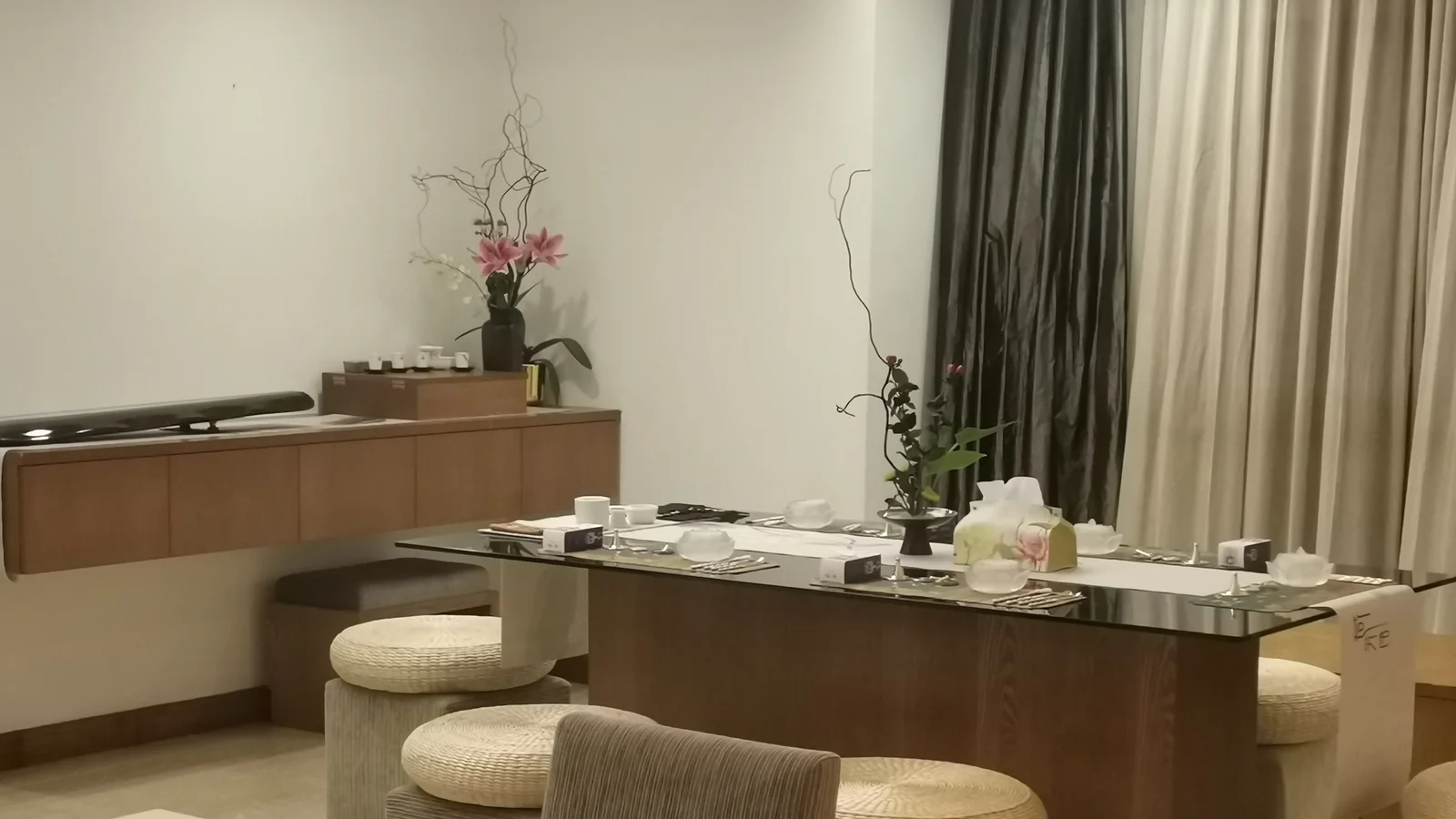
A quiet Taoist study room: a black guqin on a low wooden console beside a pink lily arrangement and tea set, and a dark-glass study table set with white lotus-shaped cups, an incense holder and a floral branch, with straw cushions and a grey curtain.

Mother and Child (Mu Zi): Why Technique Must Always Return to Its Root

Chapter 52 of the Tao Te Ching (Dao De Jing) opens with a relational image that bridges cosmology and daily cultivation: 'The world has a beginning, which may be called the Mother of the world. Having found the Mother, you come to know the Children; knowing the Children, return and keep to the Mother, and to the end of your days you will face no peril' (天下有始,以为天下母。既得其母,以知其子;既知其子,复守其母,没身不殆). In Wang Bi's commentary (老子道德经注), the 'Mother' (母) signifies the undifferentiated root of the Tao itself, while the 'Children' (子) are the myriad manifest forms, duties, and skills that branch from it. Note that Laozi does not tell the student to reject the Children or withdraw from practical life. Rather, one studies the branches through the root ('having found the Mother, know the Children') and then anchors every outward skill back in quiet origin ('knowing the Children, return and keep to the Mother'). In Wudang practice, quiet standing and calm breath are the Mother; the dozens of postures, stepping drills, and daily tasks are the Children. Whenever a practitioner becomes fascinated by external complexity alone, returning attention to the quiet root restores balance.

Guarding the Apertures (Sai Qi Dui, Bi Qi Men): Preventing Sensory Exhaustion

The second movement of Chapter 52 shifts from cosmology to the physiology of attention: 'Block the passages, close the gates, and to the end of life you will not be worn out; open the passages, multiply your affairs, and to the end of life you cannot be rescued' (塞其兑,闭其门,终身不勤。开其兑,济其事,终身不救). In Heshang Gong's commentary (老子章句) and classical Wudang quiet sitting, 'passages' (兑, dui) and 'gates' (门, men) refer to the apertures of speech, sight, hearing, and reactive desire through which vital spirit (shen 神) leaks outward. 'Closing the gates' does not mean blindfolding the eyes or refusing to engage with the world; it means ending the habit of compulsive reactivity—where every sound, screen notification, or passing opinion immediately pulls the breath upward into the chest. By softening the gaze and keeping the lips gently sealed so breath flows quietly through the nose, the practitioner preserves inner vitality in the midst of ordinary responsibilities.

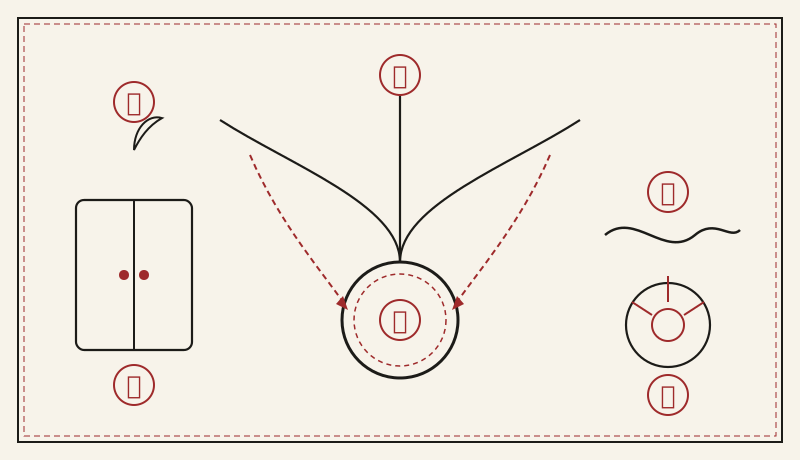
Classical Wudang ink-on-parchment diagram of Tao Te Ching Chapter 52 showing the Root-Mother (①), Branch-Children (②), Guarded Sense-Gates (③), Subtle Germination (④), Suppleness (⑤), and Returning Light to Inner Clarity (⑥).

Key — ① Root-Mother (天下母, the undivided origin of breath and quietude); ② Branch-Children (其子, manifest forms, techniques, and daily responsibilities); ③ Guarding the Gates (塞其兑,闭其门, preventing sensory dispersion); ④ Seeing the Small (见小曰明, noticing the earliest micro-tension or impulse); ⑤ Keeping to Softness (守柔曰强, resilient pliancy without brittle force); ⑥ Returning Outward Light to Inner Illumination (用其光,复归其明,是为袭常).

Seeing the Small Is Illumination, Keeping to Softness Is Strength (Jian Xiao Yue Ming, Shou Rou Yue Qiang)

Chapter 52 then offers two four-character definitions that anchor Wudang internal martial arts and Daoyin: 'Seeing the small is called illumination; keeping to softness is called strength' (见小曰明,守柔曰强). In the Han Feizi commentary (Yu Lao 韩非子·喻老), 'seeing the small' (jian xiao 见小) means perceiving a shift while it is still an unformed sprout—before a tiny hike of the shoulder turns into neck stiffness, or before a partner's nascent weight transfer becomes a full push. In Wudang Taijiquan and Tuishou (Push Hands), illumination is not looking far away in space, but sensing the first millimeter of directional change through quiet listening energy (tingjin 听劲). Paired with this perceptual sensitivity is structural softness (shou rou 守柔): maintaining elastic, unbraced joints so the body can absorb and redirect force without clashing.

Using Outward Light to Return to Inner Clarity (Yong Qi Guang, Fu Gui Qi Ming)

Laozi closes Chapter 52 with a luminous instruction on how awareness operates: 'Use its outward light, yet return to its inner illumination; leave no calamity to yourself—this is called practicing the Constant' (用其光,复归其明,无遗身殃,是为袭常). 'Light' (guang 光) is the outward ray of perception that lets us see the room, read a text, or observe a training partner's posture; 'illumination' (ming 明) is the quiet, self-possessed awareness at the center that makes seeing possible. When we spend the entire day projecting guang outward without ever returning to ming, the eyes tire and the heart-mind grows restless. Safety note: Before or after practice today, sit or stand quietly for two minutes, let your outward gaze soften so peripheral vision widens, and imagine gathering your attention back behind the eyes toward the center of the head and down to the lower abdomen.

Seeker’s Q&A · Frequently Asked Questions

How does Knowing the Child and Keeping to the Mother (Shou Qi Mu) guide daily Wudang cultivation?

A practitioner-scholar study of Tao Te Ching (Dao De Jing) Chapter 52—exploring Mother and Child (Mu Zi), closing the sense gates (Sai Qi Dui), seeing the small as illumination (Jian Xiao Yue Ming), keeping to softness as strength (Shou Rou Yue Qiang), and returning outward light to inner clarity (Xi Chang).
