TAOIST PHILOSOPHY · 道家哲学

The Three Treasures of the Tao: Compassion, Frugality, and Not Daring to Be First in Tao Te Ching Chapter 67 我有三宝(慈、俭、不敢为天下先):《道德经》第六十七章的本根三德与内家后发制人之理

An in-depth study of Tao Te Ching (Dao De Jing) Chapter 67, examining Laozi's Three Treasures—Compassion (Ci), Frugality (Jian), and Not Daring to Be First (Bu Gan Wei Tian Xia Xian)—and how each root generates its corresponding martial and ethical capacity.

A quiet Taoist study room: a black guqin on a low wooden console beside a pink lily arrangement and tea set, and a dark-glass study table set with white lotus-shaped cups, an incense holder and a floral branch, with straw cushions and a grey curtain.

Wo You San Bao: Why the Great Tao Appears 'Un-Like' Ordinary Models

Standing directly between Chapter 66's rivers and seas leading the hundred valleys (Why Rivers and Seas Lead the Hundred Valleys) and Chapter 68's calm warrior (Virtue of Non-Contention in Chapter 68), Chapter 67 of the Tao Te Ching (Dao De Jing) opens by explaining why The Tao itself resists narrow categorization: 'All the world says that my Tao is great, yet seems unlike anything else. It is precisely because it is great that it seems unlike anything else; if it resembled ordinary things, how small it would have become long ago!' (天下皆谓我道大,似不肖。夫唯大,故似不肖。若肖,久矣其细也夫). Laozi then reveals the practical heart of his teaching: 'I have three treasures that I hold and guard closely: the first is called compassion; the second is called frugality; the third is called not daring to be first in the world' (我有三宝,持而保之:一曰慈,二曰俭,三曰不敢为天下先).

Ci Gu Neng Yong, Jian Gu Neng Guang: How Root Virtues Generate True Strength

In both Wang Bi's (王弼) commentary and the Hanfeizi (Jie Lao, 韩非子·解老, studied under Taoist Classics), the brilliance of Chapter 67 lies in showing how three seemingly modest qualities generate three extraordinary capacities: 'Through compassion, one can be truly courageous; through frugality, one can be expansive; through not daring to be first in the world, one can become the chief of vessels' (慈故能勇;俭故能广;不敢为天下先,故能成器长). Why does compassion (Ci, 慈—originally the protective tenderness of a mother) produce courage (Yong, 勇)? Because egoic bravado is brittle and fearful of loss, whereas one who acts to protect life without self-aggrandizement is completely fearless (echoing Courage in Not Daring in Chapter 73). Why does frugality (Jian, 俭) produce vastness (Guang, 广)? Because conserving vital breath and essence—like the Se (啬) of Chapter 59—creates an inexhaustible internal reservoir.

The Three Treasures of the Tao: Compassion, Frugality, and Not Daring to Be First in Tao Te Ching Chapter 67

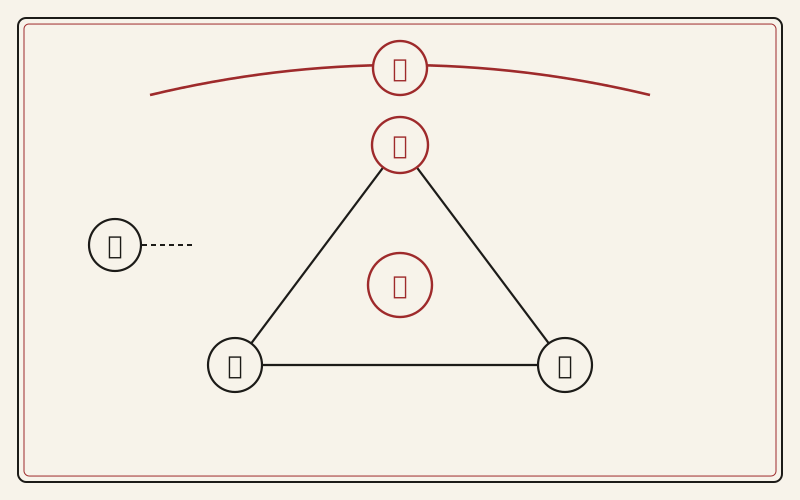
Classical diagram of Tao Te Ching Chapter 67 (The Three Treasures — San Bao): ① First Treasure: Deep Compassion / Maternal Care (Ci — giving rise to true Courage, Ci Gu Neng Yong), ② Second Treasure: Frugality / Conservation of Qi (Jian — giving rise to Expansive Capacity, Jian Gu Neng Guang), ③ Third Treasure: Not Daring to Be First in the World (Bu Gan Wei Tian Xia Xian — maturing into Leadership of Vessels, Neng Cheng Qi Zhang), ④ The Peril of Abandoning the Root for the Branch (She Ci Qie Yong, She Jian Qie Guang, She Hou Qie Xian), ⑤ Firmness in Defense and Victory in Engagement Through Ci (Yi Zhan Ze Sheng, Yi Shou Ze Gu), and ⑥ Heaven's Protective Canopy of Compassion (Tian Jiang Jiu Zhi, Yi Ci Wei Zhi).

The Fatal Error of Abandoning the Root for the Effect

Laozi issues a stark warning against trying to seize the fruits without cultivating the roots: 'Now, to abandon compassion and yet seek courage, to abandon frugality and yet seek expansiveness, to abandon staying behind and yet lunging to be first—that is death!' (今舍慈且勇,舍俭且广,舍后且先,死矣). On the training stones of Wudang Mountain and in Wudang Taijiquan (introduced at Start Here), this warning applies directly to martial practice: a practitioner who chases fierce power ('courage') without protective sensitivity (Ci), who expends energy lavishly ('expansiveness') without conserving the Dantian (Jian), or who lunges to strike first (Xian) instead of listening and responding second (Houfa xianzhi 后发先至, arriving first by starting second) immediately uproots their own structure.

Tian Jiang Jiu Zhi, Yi Ci Wei Zhi: The Protective Canopy of Compassion

Chapter 67 closes by returning to the first of the Three Treasures as the unifying shield of the whole: 'Through compassion, in engagement one prevails, and in defense one stands firm. Whom Heaven would save, it guards with compassion' (夫慈,以战则胜,以守则固。天将救之,以慈卫之). In both Wudang Qigong & Daoyin and daily conduct, Ci softens inner hostility, preserves harmony across the sinews and viscera, and surrounds the practitioner with quiet resilience.

Seeker’s Q&A · Frequently Asked Questions

How does The Three Treasures of the Tao guide daily Wudang cultivation?

An in-depth study of Tao Te Ching (Dao De Jing) Chapter 67, examining Laozi's Three Treasures—Compassion (Ci), Frugality (Jian), and Not Daring to Be First (Bu Gan Wei Tian Xia Xian)—and how each root generates its corresponding martial and ethical capacity.
