
TAOIST PHILOSOPHY · 道家哲学

Know the Male, Keep to the Female (Zhi Qi Xiong, Shou Qi Ci): The Ravine of the World and Returning to the Uncarved Block in Tao Te Ching Chapter 28 知其雄,守其雌:《道德经》第二十八章的“为天下谿”与“复归于朴”

A primary-source study of Tao Te Ching Chapter 28, examining the three polarities (Male/Female, White/Black, Glory/Lowliness), the three topographical vessels (Ravine, Model, Valley), and the three returns to the Infant, the Limitless (Wuji), and the Uncarved Block (Pu) in Wudang Taoist cultivation.

A stream rushing out of a rocky ravine into a calm green lake that reflects forested hills and drifting mist.

1. Primary Text & Wang Bi Commentary: The Three Polarities and Three Returns

Chapter 28 of the Tao Te Ching sets forth a structured three-part progression for preserving constant virtue (常德, Chang De) amidst worldly polarity: 'Know the male, yet keep to the female, and be the ravine of the world (知其雄,守其雌,为天下谿). Being the ravine of the world, constant virtue never departs, and one returns to the infant (复归于婴儿). Know the white, yet keep to the black, and be the pattern of the world (知其白,守其黑,为天下式). Being the pattern of the world, constant virtue never errs, and one returns to the limitless (复归于无极). Know glory, yet keep to lowliness, and be the valley of the world (知其荣,守其辱,为天下谷). Being the valley of the world, constant virtue is sufficient, and one returns to the uncarved block (复归于朴).' Note that Chapter 28 explicitly records the classical compound Wuji (无极, 'the Limitless'), centuries before Song-dynasty cosmologists paired Wuji with Taiji. As Wang Bi (王弼, 226–249 CE) observes in his commentary, the Taoist sage is not ignorant of strength (雄, xiong), brightness (白, bai), or honor (荣, rong); rather, having perceived where assertive display leads, the practitioner consciously abides in receptivity (雌, ci), quiet obscurity (黑, hei), and humility (辱, ru), just as all mountain streams naturally converge into the lowest ravine (谿, xi) and valley (谷, gu).

2. 'When the Uncarved Block Scatters It Becomes Vessels' (Pu San Ze Wei Qi) and 'Great Tailoring Does Not Cut'

The closing lines of Chapter 28 explain the relationship between primordial wholeness and specialized function: 'When the uncarved block scatters, it becomes vessels; when the sage uses it, he becomes the chief of officials; therefore great tailoring does not split or sever (朴散则为器,圣人用之,则为官长,故大制不割).' In early Chinese craft terminology, Pu (朴) is raw, unhewn timber still holding its natural grain intact, whereas Qi (器) denotes a carved utensil limited to a single use. Once wood is chiseled into a single vessel, it loses its universal potential; yet the Tao itself remains whole while employing every specialized vessel according to its nature. Heshang Gong (河上公) explains 'great tailoring does not cut' (大制不割, da zhi bu ge) as governing both society and one's own vital spirit through the seamless wholeness of the Tao, never hacking apart natural harmony with rigid, arbitrary divisions.

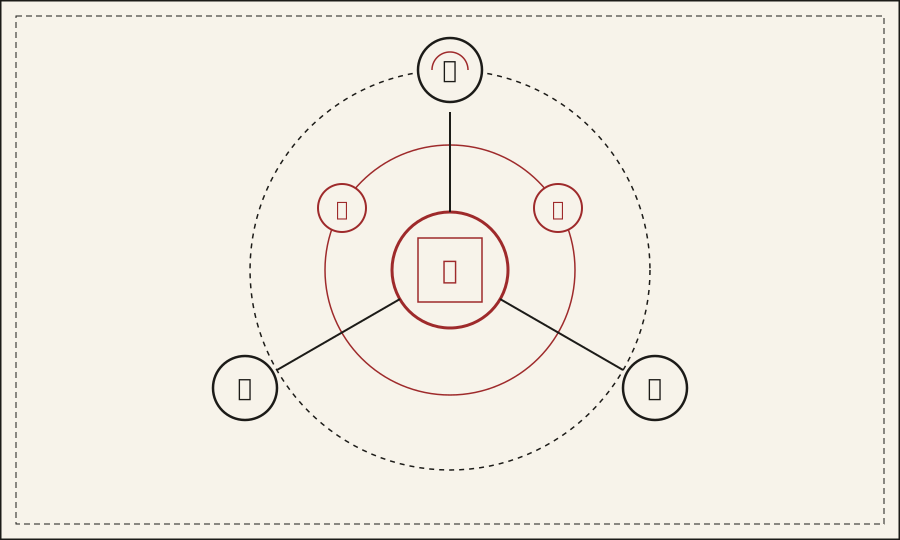
Numbers-only classical Wudang ink-and-cinnabar diagram of Tao Te Ching Chapter 28 showing the three polarities (①–③), the three returns (④–⑤), and the central Uncarved Block (⑥).

Classical Wudang diagram of Tao Te Ching Chapter 28 (numbers-only SVG key)

  1. ① Know the Male, Keep to the Female — Ravine of the World (Zhi Qi Xiong, Shou Qi Ci / Wei Tian Xia Xi)
  2. ② Know the White, Keep to the Black — Pattern of the World (Zhi Qi Bai, Shou Qi Hei / Wei Tian Xia Shi)
  3. ③ Know Glory, Keep to Lowliness — Valley of the World (Zhi Qi Rong, Shou Qi Ru / Wei Tian Xia Gu)
  4. ④ Return to the Infant (Fu Gui Yu Ying Er)
  5. ⑤ Return to the Limitless (Fu Gui Yu Wuji)
  6. ⑥ Central Seal: Return to the Uncarved Block — Great Tailoring Does Not Cut (Fu Gui Yu Pu / Da Zhi Bu Ge).

3. Wudang Taijiquan & Neidan Embodiment: Knowing Hardness While Keeping Softness

Across the historical courtyard halls of Wudang Mountain's UNESCO World Heritage ancient Taoist architectural complex and in contemporary instruction at Lee Wudang International Pte. Ltd., Chapter 28 serves as the philosophical cornerstone for Wudang Taijiquan and internal alchemy (Neidan). In Wang Zongyue's Taijiquan Lun (《太极拳论》) and Huang Zongxi's 1669 Epitaph for Wang Zhengnan (《王征南墓志铭》), the internal martial artist 'knows the male' (understands outgoing martial issuance,刚劲) yet 'keeps to the female' (abides in yielding, listening receptivity, 柔化与听劲), allowing an opponent's incoming force to empty into one's center like water pouring into a mountain ravine (为天下谿). In sitting meditation and standing posture practice, 'returning to the infant' (复归于婴儿) means softening the chest and diaphragm until the breath settles spontaneously into the lower abdomen; 'returning to Wuji' (复归于无极) clears conceptual clutter before the first movement of Taiji arises; and 'returning to the uncarved block' (复归于朴) gathers scattered sensory attention back into undivided vital spirit.

4. Cross-References & Practice Bridges Across the Wudang Curriculum

To study how Laozi develops the themes of the Valley Spirit, the Infant, and traceless skill across adjacent chapters, pair this essay with The Tao Te Ching Overview, A Good Traveler Leaves No Tracks: Knotless Skill in Tao Te Ching Chapter 27, and our foundational orientation at Start Here: Wudang Taoist Culture, Internal Martial Arts & Wellness. For physical embodiment of 'knowing the male while keeping to the female' in weapon and breath work, explore Wudang Straight Sword Eight Mother Techniques (Ba Mu Jian), Tapping the Teeth and Swallowing the Jade Fluid (Kou Chi Yan Jin), and our heritage guide to Wudang Mountain.

Seeker’s Q&A · Frequently Asked Questions

What is the core takeaway of Know the Male, Keep to the Female (Zhi Qi Xiong, Shou Qi Ci)?

A primary-source study of Tao Te Ching Chapter 28, examining the three polarities (Male/Female, White/Black, Glory/Lowliness), the three topographical vessels (Ravine, Model, Valley), and the three returns to the Infant, the Limitless (Wuji), and the Uncarved Block (Pu) in Wudang Taoist cultivation.
