TAOIST PHILOSOPHY · 道家哲学

Autumn Floods (Qiushui) & the Frog in the Shallow Well in Zhuangzi: Breaking Spatial, Temporal and Doctrinal Bounds 《庄子·秋水》“井蛙不可以语于海”详解:破除空间、时间与成见的三种局限

Why the River Spirit laughed at his own pride upon beholding the Northern Ocean—and how Zhuangzi’s Three Bounds (the Well Frog, the Summer Insect, and the Narrow Scholar) teach intellectual humility.

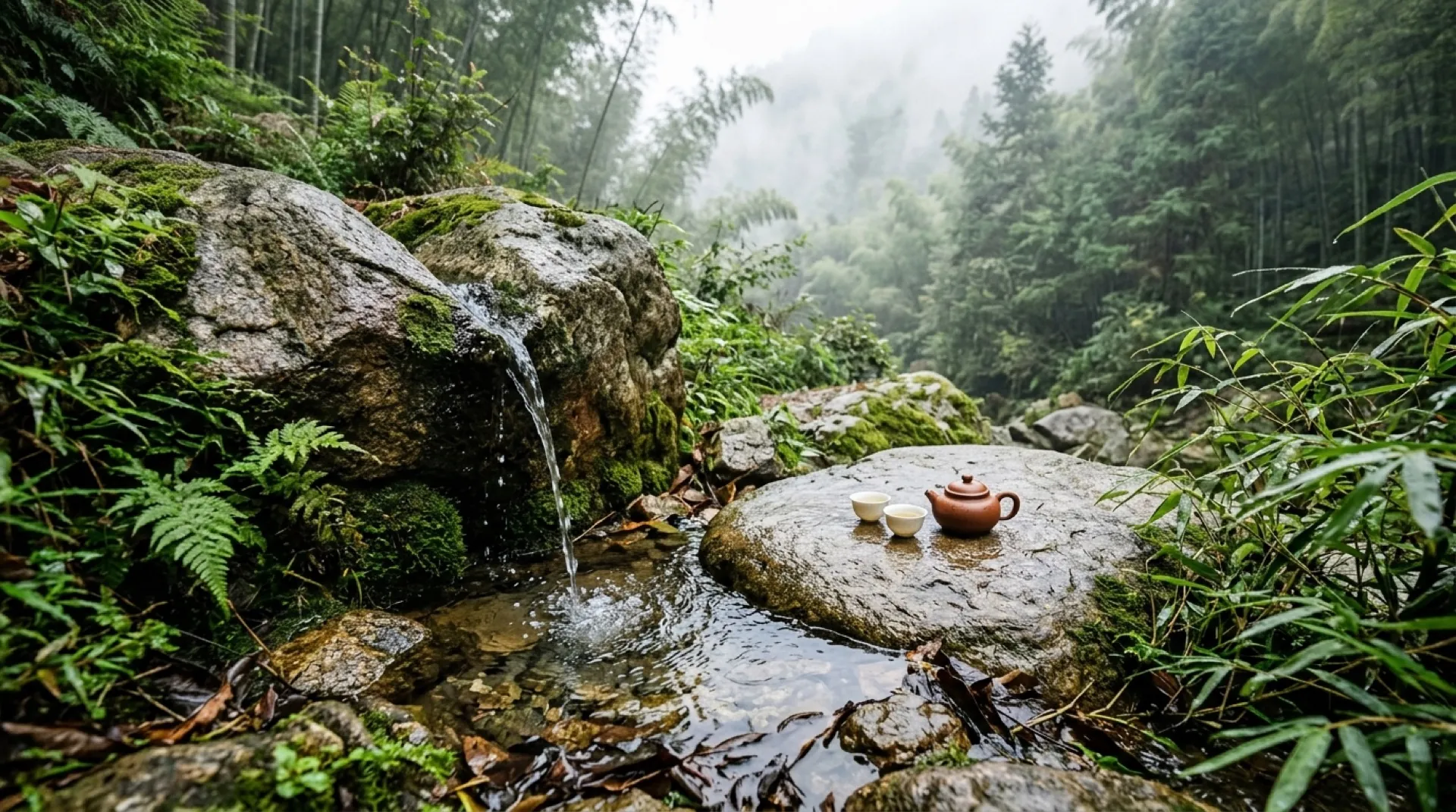
A small clay teapot and two cups on a flat wet stone beside a thin spring trickling from mossy rocks in a bamboo forest.

If the closing lines of Chapter 17 of the Zhuangzi give us the intimate Debate on the Hao River Bridge, the opening of that same chapter—Autumn Floods (《庄子·外篇·秋水》, Qiushui)—unfolds on a vast cosmic canvas. It tells the story of how the Lord of the Yellow River (Hebo 河伯), swollen with pride when the autumn rains filled his banks, traveled down to the sea, gazed across the boundless Northern Ocean, and let out a long sigh of awakening—giving the Chinese language the enduring idiom “gazing at the ocean and sighing” (望洋兴叹, Wangyang Xingtan).

1. From the Swollen River to the Boundless Northern Ocean

The time of the autumn floods came, and the hundred streams poured into the Yellow River. Its rushing current grew so vast that between bank and bank, between island and island, one could not distinguish an ox from a horse. Then the Lord of the River laughed with delight, thinking that all the beauty under Heaven belonged entirely to himself.

Following the current eastward, he finally reached the Northern Ocean. Looking toward the east and seeing no limit to the waters, the Lord of the River turned his face around, gazed toward Ruo of the Northern Ocean (北海若), and sighed…”

Why was the Lord of the River suddenly cured of his arrogance? Because as long as he remained between his own two mud banks, he compared himself only to smaller ditches and creeks. The moment he stepped beyond his familiar channel, his self-satisfaction dissolved. Ruo of the Northern Ocean replies with three famous lines that form the cornerstone of Taoist epistemology.

2. The Three Bounds of Understanding: Space, Time, and Doctrine

“You cannot speak of the ocean to a frog in a well—it is bound by its space (井蛙不可以语于海者,拘于虚也).

You cannot speak of winter ice to a summer insect—it is bound by its season (夏虫不可以语于冰者,笃于时也).

You cannot speak of the Tao to a cramped scholar—he is bound by his doctrine (曲士不可以语于道者,束于教也).”

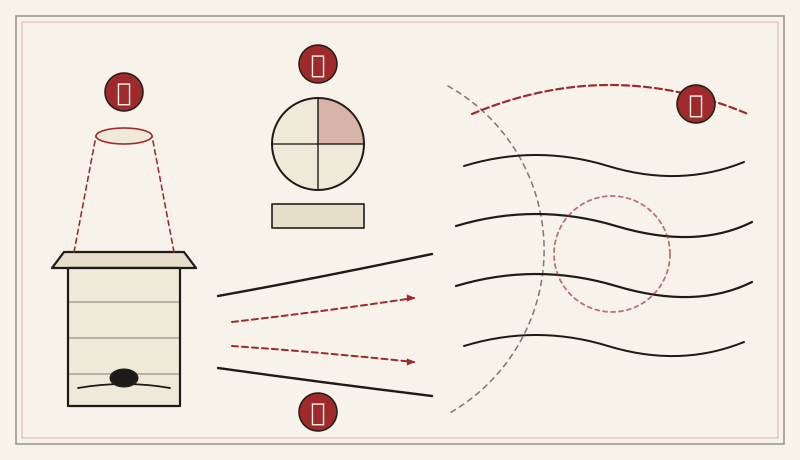
Classical ink-and-cinnabar diagram of Zhuangzi's Autumn Floods (Qiushui) showing the narrow stone well and sky cone on the left, the seasonal wheel and doctrinal scroll at top center, the eastward-flowing river channel below, and the boundless Northern Ocean on the right

The Three Bounds and the Expanding Horizon in Zhuangzi: Autumn Floods (《庄子·秋水》三拘与北海之量).

  1. Bound by Space — The Frog in the Shallow Well (井蛙拘于虚 · 空间之限): mistaking the patch of sky above one’s own courtyard well for the whole cosmos (Xiaoyao You)
  2. Bound by Time & Doctrine — The Summer Insect & Cramped Scholar (夏虫笃于时 · 曲士束于教): assuming that what has not happened in one’s brief season or single textbook cannot exist (Words, Names, and Reality)
  3. Stepping Out of the Banks (顺流东行 · 望洋兴叹): honest self-knowledge begins the moment we let our small stream meet a larger horizon (The Softness of Water)
  4. The Humility of the Northern Ocean (北海若之自省 · 计四海之在天地之间): even the Ocean refuses pride, recognizing that all four seas are merely “a small stone or shrub upon a great mountain” within Heaven and Earth (Tao Te Ching Chapter 66)

3. Why Even the Northern Ocean Refuses Arrogance

The most remarkable twist in Autumn Floods is that Ruo of the Northern Ocean does not look down on the River Spirit. Instead, Ruo immediately turns the same lens of humility upon himself: although he receives the waters of a thousand rivers without overflowing and drains through the cosmic tail-gate (Weilü 尾闾) without running dry, he compares the entire ocean inside Heaven and Earth to “a single grain of tares in a vast granary” (犹稊米之在太仓). Echoing Chapter 66 of the Tao Te Ching (Dao De Jing)—“Why are the rivers and seas able to be king of the hundred valleys? Because they excel at lying below them”—true greatness never boasts of its size (Knowing When to Stop).

4. How “Stepping Out of the Well” Guides Wudang Martial and Contemplative Practice

  • Overcoming plateaus in Wudang Taijiquan and Qigong: After learning a few routines, a student can easily feel like the River Spirit in autumn—satisfied with outward choreography. Only when you test your structure gently in Push Hands or quiet Standing Post do you discover the ocean of subtle internal refinement still ahead.
  • Cultivating an open mind (Qiwu & Xinzhai): Whenever we catch ourselves dismissing an unfamiliar perspective, we can gently ask: Am I speaking from the ocean, or from the bottom of my familiar well?
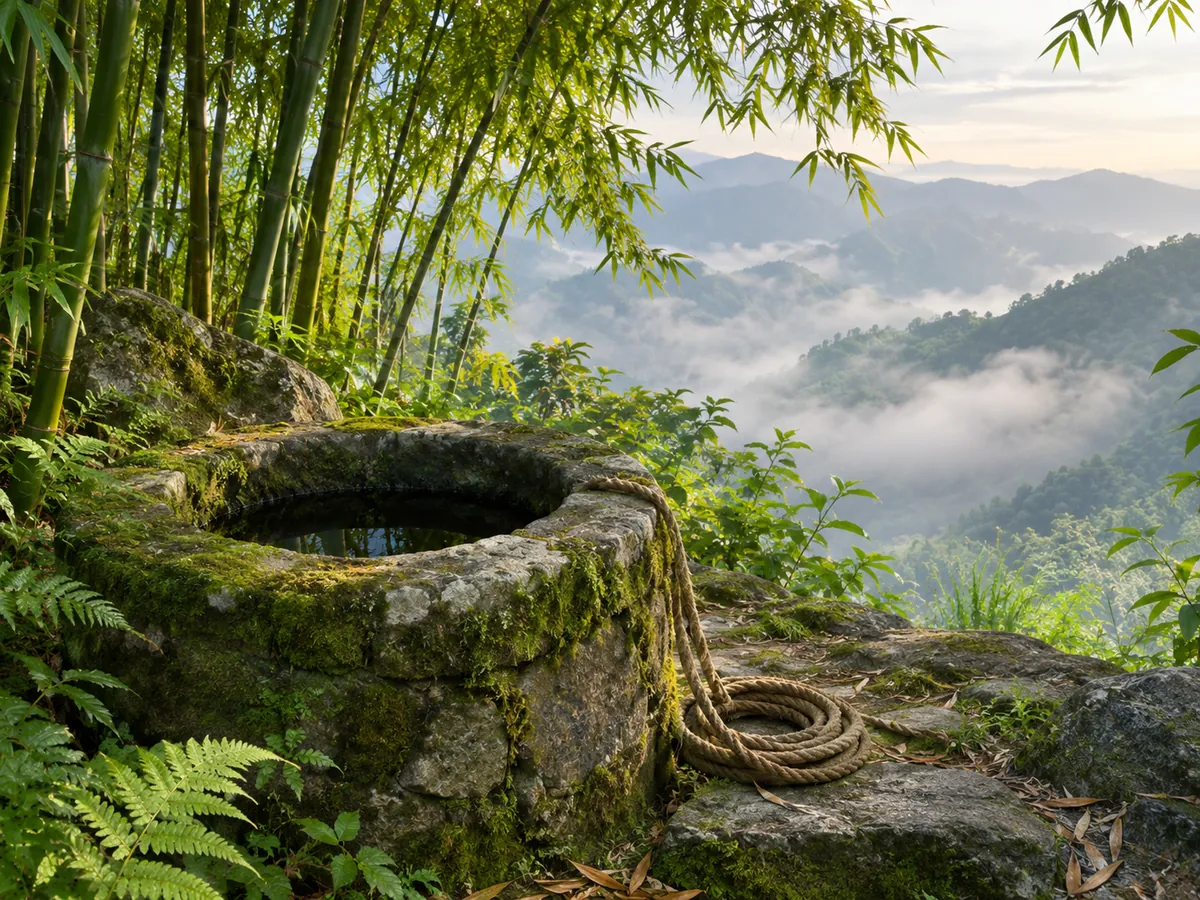
An old moss-covered stone well with a coil of rope among ferns and green bamboo, with a misty valley and distant mountains opening beyond the grove.

Autumn Floods (Zhuangzi Chapter 17): “You cannot talk about the sea to a frog in a well—it is confined to its small space.”

5. Expanding Your Horizon Between Wudang Mountain and Singapore

Connecting the high cloud-sea horizons near Wudang Mountain’s UNESCO World Heritage ancient Taoist temples with our regular classes in Singapore, Wudang.Org welcomes beginners and experienced practitioners alike to study with an open, unhurried heart. Begin on Start Here.

Seeker’s Q&A · Frequently Asked Questions

What are the “Three Bounds” (San Ju 三拘) described by Ruo of the Northern Ocean in Zhuangzi’s Autumn Floods?

They are spatial limitation (the frog in a well, bound by its narrow place), temporal limitation (the summer insect, bound by its single season), and doctrinal limitation (the cramped scholar, bound by rigid schooling).

What is the origin and meaning of the Chinese idiom “Wangyang Xingtan” (望洋兴叹)?

It originates in the opening scene of Zhuangzi Chapter 17 (Qiushui), where the Lord of the Yellow River gazes (“wangyang” 望洋, looking up in awe) across the boundless Northern Ocean and sighs, realizing how small his own swollen river was.

Why does Ruo of the Northern Ocean refuse to consider himself great?

Because measured against the infinite expanse of Heaven and Earth, even all four oceans combined are like a single grain in a vast granary—showing that true Taoist wisdom eliminates every trace of relative pride.
