TAOIST PHILOSOPHY · 道家哲学

The Sage Has No Fixed Mind (Shengren Chang Wuxin): Impartial Goodness, Trust, and Responsive Empathy in Tao Te Ching Chapter 49 圣人常无心,以百姓心为心:《道德经》第四十九章的“德善德信”与无执应物智慧

Explore Tao Te Ching (Dao De Jing) Chapter 49 on what “having no fixed mind” (Chang Wuxin) means in Wang Bi’s commentary, how Virtue’s goodness (De Shan) and trust (De Xin) transform relationships, and how unprejudiced listening guides Wudang practice.

A dark-glazed bowl of frothy whisked tea, a bamboo whisk and a metal ewer on an old wooden table.

1. Classical Text and Wang Bi’s Commentary: What “Having No Fixed Mind” (Chang Wuxin) Means

Chapter 49 of the Tao Te Ching (Dao De Jing) opens with one of the most compassionate and psychologically acute lines in classical philosophy: “The sage constantly has no fixed private mind, taking the heart-mind of the hundred families as his own heart-mind” (Sheng ren chang wu xin, yi bai xing xin wei xin 圣人常无心,以百姓心为心).

In Chinese philosophical usage, “having no mind” (wuxin 无心) never means being unconscious or indifferent like a block of wood. Rather, as Wang Bi (王弼, 226–249 CE) explains, it means holding no rigid personal prejudice, stubborn preconception, or self-centered agenda (wu sixin 无私心、无成心). Just as a clear bronze mirror in Zhuangzi’s Mirror-Like Mind (Yong Xin Ruo Jing) can reflect every face truthfully precisely because it clings to no permanent picture of its own, the sage understands the needs and feelings of others because their own heart is unclouded by bias.

2. “Virtue Is Goodness” (De Shan) and “Virtue Is Trust” (De Xin)

From this unprejudiced center flows the famous ethical teaching of Chapter 49: “Those who are good, I treat with goodness; those who are not yet good, I also treat with goodness—thus Virtue is goodness (de shan 德善). Those who are trustworthy, I trust; those who are not yet trustworthy, I also treat with trust—thus Virtue is trust (de xin 德信).”

Why does Laozi treat even the “not-yet-good” with goodness? Wang Bi points out that if you meet suspicion with suspicion and hostility with hostility, both sides lock into a cycle of defensive artifice. By contrast, when a person abides in authentic Virtue (De) without keeping a petty ledger of grievances (see Chapter 79), their steady sincerity creates a space where others can drop their armor and return to their own natural goodness.

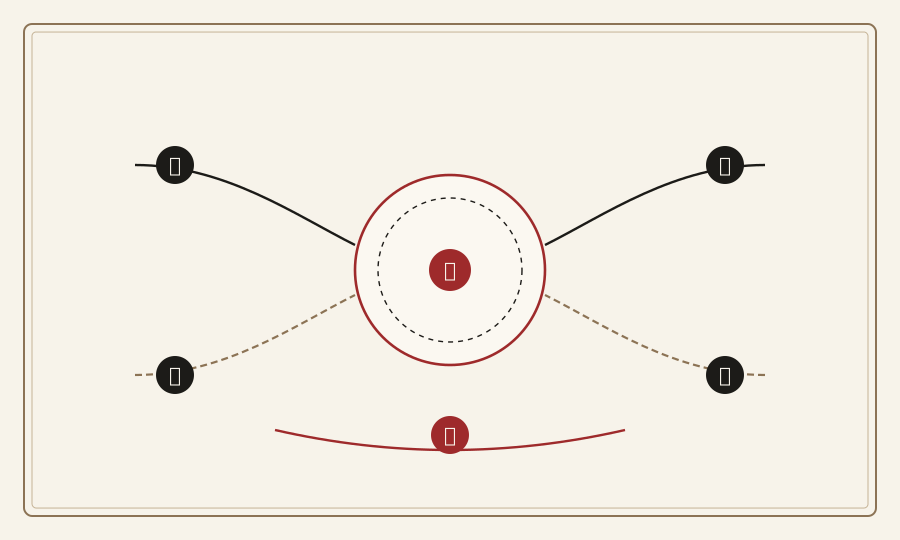
Classical numbers-only diagram of Tao Te Ching Chapter 49 showing the Unfixed Mirror Heart of the Sage at the center (①) welcoming both the good and not-yet-good on the left (②–③) and the trustworthy and not-yet-trustworthy on the right (④–⑤) into uncarved harmony below (⑥).

Tao Te Ching Chapter 49 (numbers-only SVG key): How an unprejudiced heart transforms division into Virtue’s Goodness (De Shan) and Virtue’s Trust (De Xin).

  1. ① No Fixed Private Mind (Shengren Chang Wuxin): A clear, unprejudiced center free of rigid preconceptions.
  2. ② Meeting the Good with Goodness (Shan Zhe Wu Shan Zhi): Natural resonance with upright conduct.
  3. ③ Meeting the Not-Yet-Good with Goodness (De Shan): Holding space without resentment so all may return to integrity.
  4. ④ Meeting the Trustworthy with Trust (Xin Zhe Wu Xin Zhi): Mutual sincerity in everyday dealings.
  5. ⑤ Meeting the Not-Yet-Trustworthy with Trust (De Xin): Steady trustworthiness that dissolves suspicion.
  6. ⑥ Merging the Heart into Uncarved Wholeness (Hun Qi Xin): Restoring childlike simplicity and peace across the community.

3. “Merging the Heart into Wholeness” in Wudang Listening Energy (Tingjin)

The closing lines of Chapter 49 describe the sage’s presence in the world: “In the world, the sage is gently gathered and unassuming, merging the heart-mind of the world into undivided wholeness; the hundred families all fix their ears and eyes upon him, and the sage treats them all as uncarved children” (Sheng ren zai tian xia, xi xi yan, wei tian xia hun qi xin... sheng ren jie hai zhi 圣人在天下,歙歙焉,为天下浑其心……圣人皆孩之).

In Wudang martial arts—practiced on Wudang Mountain and in Singapore—“having no fixed mind, taking the partner’s mind as your own” is the exact definition of advanced Listening Energy (Tingjin) and Push Hands (Tuishou). As the Taijiquan Treatise says, “Give up yourself and follow the other” (she ji cong ren 舍己从人). If you enter a partner drill with a pre-planned trick (“a fixed mind”), you collide immediately; when your mind is empty and receptive, you feel the partner’s intention the instant it arises.

4. One-Minute Practice: Listening Without Pre-Rehearsing Your Reply

In your next conversation today, practice Chapter 49’s “no fixed mind” for one minute. Before the other person finishes speaking, notice the habitual urge to rehearse your counter-argument or judgment.

Exhale softly, drop your shoulders, and listen all the way to the end of their sentence with an open, unprejudiced mind—receiving their words as a clear pond receives a reflection. Safety note: this contemplative interpersonal practice supports calm daily communication and does not replace professional medical or counseling care.

Seeker’s Q&A · Frequently Asked Questions

What does “The sage constantly has no fixed mind” (Shengren Chang Wuxin) mean in Tao Te Ching Chapter 49?

In Wang Bi’s commentary and Taoist cultivation, “having no fixed mind” (Wuxin) means holding no stubborn preconceptions, private prejudices, or self-serving biases—allowing the heart to respond to others as clearly and impartially as an unclouded mirror.