TAOIST PHILOSOPHY · 道家哲学

Holding the Left Tally & The Impartiality of Heaven: Zhi Zuo Qi and Tian Dao Wu Qin in Tao Te Ching Chapter 79 执左契与天道无亲:《道德经》第七十九章的消怨于未萌与太极守中不责之理

An examination of Tao Te Ching (Dao De Jing) Chapter 79, exploring why patching up a great grievance leaves lingering resentment, what it means for the sage to hold the left tally (Zhi Zuo Qi), and the impartial resonance of Tian Dao Wu Qin.

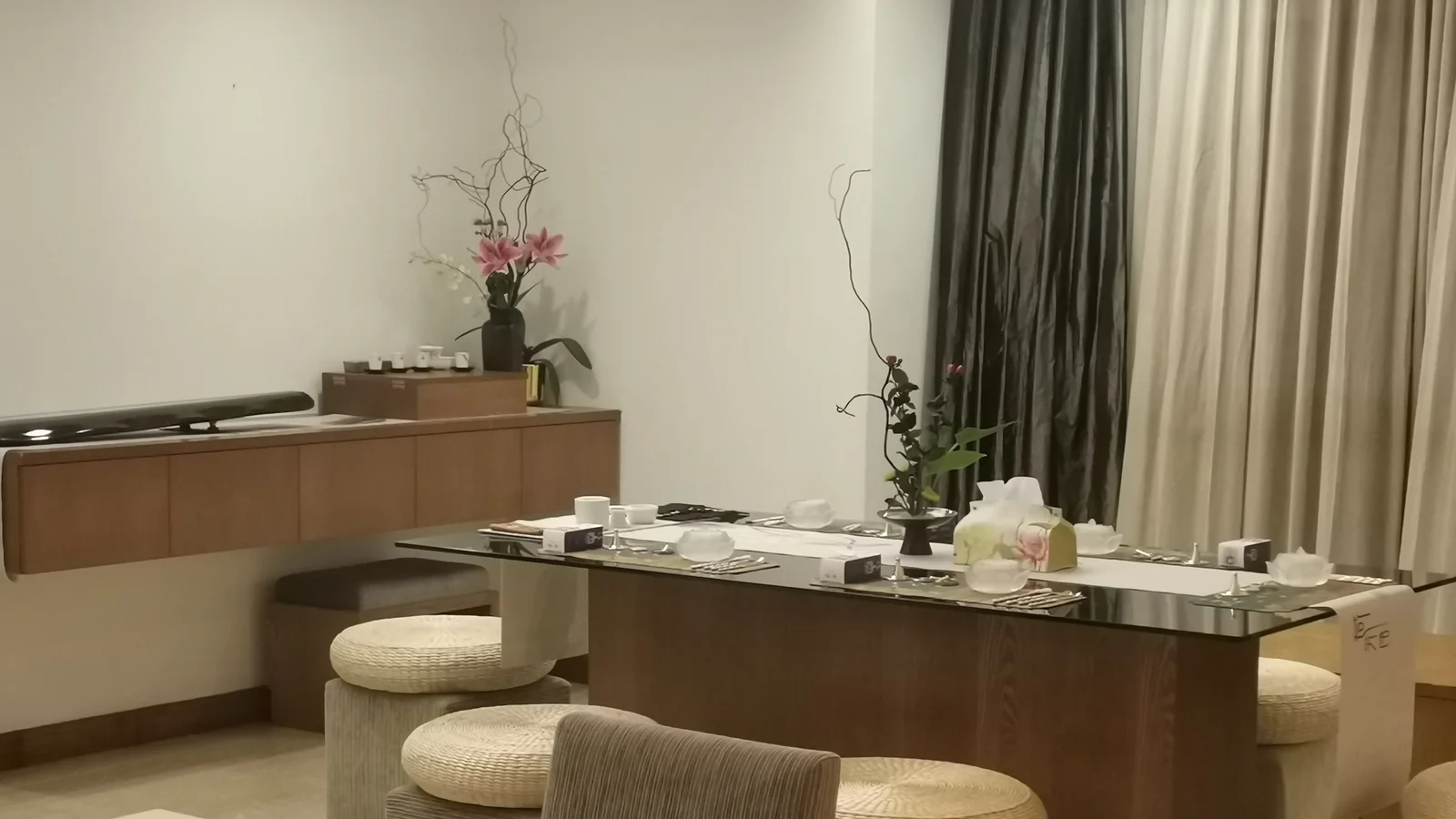
A quiet Taoist study room: a black guqin on a low wooden console beside a pink lily arrangement and tea set, and a dark-glass study table set with white lotus-shaped cups, an incense holder and a floral branch, with straw cushions and a grey curtain.

Why Patching Up a Great Grievance Leaves Residual Resentment: He Da Yuan, Bi You Yu Yuan

Chapter 79 of the Tao Te Ching (Dao De Jing) opens with a sober observation on human conflict and repair: 'When a great grievance is reconciled, some lingering resentment is bound to remain; how can this be considered good?' (和大怨,必有余怨,安可以为善). Once hostility—or physical injury from overstraining—has been allowed to escalate into a 'great grievance' (Da Yuan, 大怨), any belated settlement only bandages the surface while leaving subtle knots of tension underneath. This directly echoes Chapter 63's principle of addressing difficulties while they are still small (Planning the Difficult While It Is Easy in Chapter 63). In both ethical relationships and the somatic practice of Wudang Qigong & Daoyin, true skill lies not in dramatic crisis repair, but in maintaining such continuous openness and non-contention that deep grievances and structural blockages never accumulate in the first place.

Zhi Zuo Qi: The Ancient Bamboo Tally and Non-Coercive Integrity

To show how the sage prevents resentment from arising, Laozi invokes an institution of Warring States and Han material culture: 'Therefore the sage holds the left tally, yet makes no harsh demand upon others. One with Virtue attends to the tally; one without Virtue attends to exaction' (是以圣人执左契,而不责于人。有德司契,无德司彻). In antiquity (as documented in classical commentaries studied under Taoist Classics), contracts were recorded on a strip of bamboo or wood split lengthwise down the middle: the creditor kept the left half (Zuo Qi, 左契) as proof of giving, while the debtor held the right half (You Qi, 右契). To 'hold the left tally without demanding repayment' means the sage fulfills every personal obligation, gives generously like the abundant bow-adjuster of Chapter 77 (The Bow of Heaven in Chapter 77), and keeps inner integrity intact without hounding others like a tax collector (Si Che, 司彻).

Holding the Left Tally & The Impartiality of Heaven: Zhi Zuo Qi and Tian Dao Wu Qin in Tao Te Ching Chapter 79

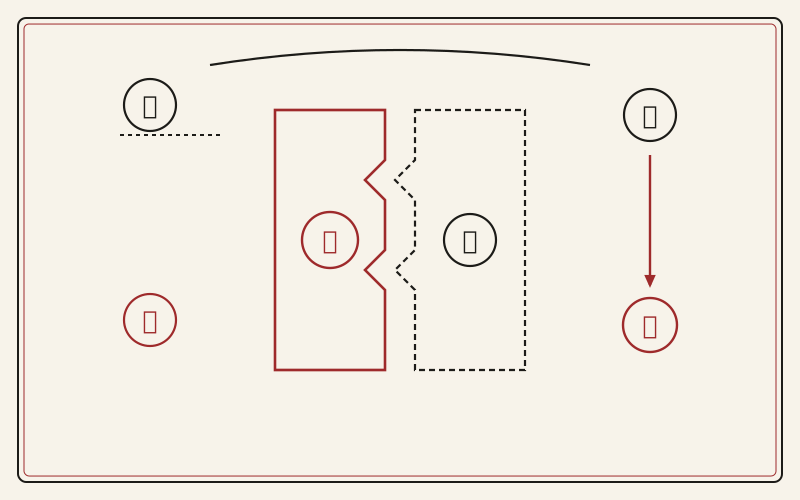
Classical diagram of Tao Te Ching Chapter 79 (Holding the Left Tally & The Impartiality of Heaven): ① Residual Resentment After Patching Up a Great Grievance (He Da Yuan, Bi You Yu Yuan — surface reconciliation leaving internal friction), ② The Left Tally of Virtue (Zhi Zuo Qi, You De Si Qi — holding one's own root commitment without demanding coercive repayment), ③ The Right Tally of Exaction (Wu De Si Che — extractive insistence that multiplies conflict), ④ Dissolving Grievance Before It Forms (preventative harmony in mind and posture), ⑤ The Way of Heaven Has No Favorites (Tian Dao Wu Qin — impartial natural law), and ⑥ Resonating Constantly with the Good (Chang Yu Shan Ren — effortless alignment with generosity and balance).

Holding One's Own Root in Wudang Tuishou and Form Practice

In the training halls of Wudang Mountain and our Wudang Taijiquan curriculum (introduced at Start Here), 'holding the left tally without demanding from others' (执左契而不责于人) has a direct martial application. During Push Hands (Tuishou, 推手), a beginner constantly tries to reach across the boundary to force, grab, or 'collect' on the partner's structure—an anxious exaction that immediately exposes their own center. By contrast, a seasoned practitioner 'holds the left tally': they guard their own central equilibrium (Zhongding, 中定), maintain complete fidelity to their own spinal alignment and relaxed joints, and let the partner's overcommitment reveal itself naturally.

Tian Dao Wu Qin, Chang Yu Shan Ren: Impartial Resonance with the Good

Chapter 79 concludes with an enduring proverb: 'The Way of Heaven has no favorites; it constantly abides with the good person' (天道无亲,常与善人). Here 'the good' (Shan, 善) carries the same sense as in Chapter 8 ('The highest good is like water') and Chapter 78 (Nothing Softer Than Water in Chapter 78): one who is supple, non-contentious, and generous without calculation. Because The Tao itself operates with complete impartiality—like gravity, sunlight, and mountain rain—those who align themselves with fluid, non-demanding virtue naturally receive its support.

Seeker’s Q&A · Frequently Asked Questions

How does Holding the Left Tally & The Impartiality of Heaven guide daily Wudang cultivation?

An examination of Tao Te Ching (Dao De Jing) Chapter 79, exploring why patching up a great grievance leaves lingering resentment, what it means for the sage to hold the left tally (Zhi Zuo Qi), and the impartial resonance of Tian Dao Wu Qin.
