TAOIST PHILOSOPHY · 道家哲学

You and Wu: Presence, Absence and the Usefulness of Empty Space 有无相生:实处成形,空处成用

How Chapter 2 and Chapter 11 of the Tao Te Ching reframe form and emptiness as partners rather than opposites.

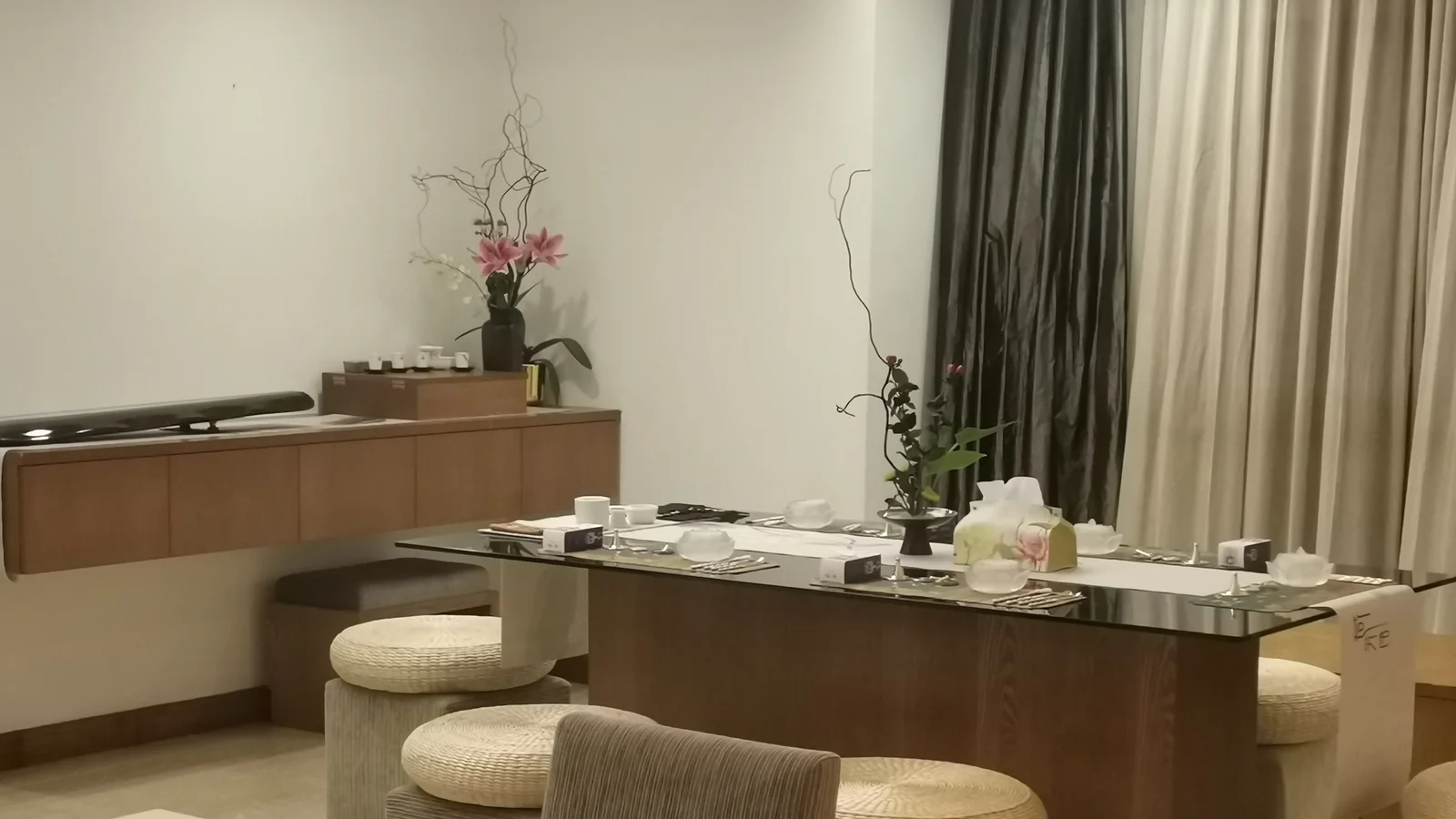
A quiet Taoist study room: a black guqin on a low wooden console beside a pink lily arrangement and tea set, and a dark-glass study table set with white lotus-shaped cups, an incense holder and a floral branch, with straw cushions and a grey curtain.

When we look at a room, a teacup, or a schedule, our attention naturally locks onto what is solid and visible: the walls, the porcelain, the appointments. Taoist philosophy begins by asking us to notice the other half of the picture—the open space inside the cup and the unscheduled margin in the day that make the solid form usable in the first place.

1. Why “Wu” Does Not Mean Nothingness

In early Taoist texts, You (有) and Wu (无) are often translated as “Being” and “Non-being,” which can make them sound like an abstract debate about whether the universe exists. In Classical Chinese, however, their primary sense is much more concrete: You means “having determinate presence or named form,” while Wu means “lacking fixed form—open, uncarved, and undivided potential.”

In Chapter 2 of the Tao Te Ching, Laozi observes that “presence and absence give rise to one another” (有无相生, you wu xiang sheng). Neither is an enemy of the other. Without a bank (You), a river has no channel; without the open trough between the banks (Wu), no water can flow.

2. The Three Everyday Objects of Chapter 11

To keep this insight grounded, Chapter 11 of the Tao Te Ching points to three ordinary pieces of craft:

  • The Wheel Hub (三十辐共一毂): Thirty wooden spokes converge on a single hub, yet the cart can roll only because of the empty axle-hole (Wu) at the centre.
  • The Clay Vessel (埏埴以为器): A potter shapes wet clay into walls, yet the bowl holds tea or rice only where the clay is absent.
  • The Room (凿户牖以为室): Builders raise timber and stone, yet people live and breathe in the open volume cut out by doors, windows, and floor space.

Laozi concludes with a sentence that summarizes the entire relationship: “Therefore, what is present provides the advantage, while what is absent provides the function” (故有之以为利,无之以为用). Structure (You) creates the boundary condition; open space (Wu) allows movement, breath, and adaptation to happen inside it.

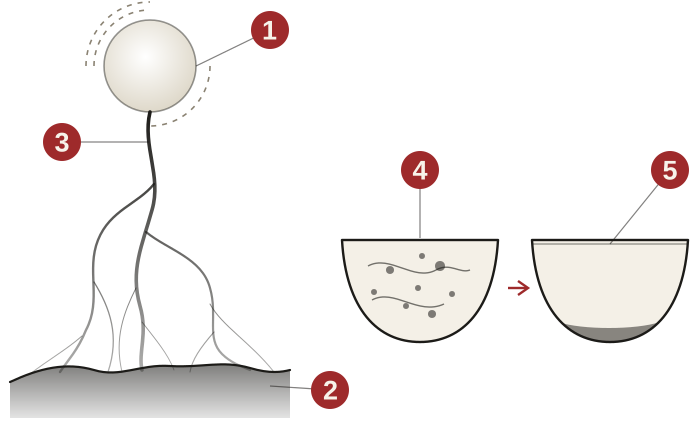
Diagram of clarity and stillness showing how settling agitation reveals open space
When agitation settles, open space (Wu) ceases to feel like a void and becomes the clear ground of responsiveness.

3. Seeing “You” and “Wu” in Classical Art, Movement, and Daily Life

Once you recognize how You and Wu cooperate, you see the same principle across all Wudang and Chinese literati traditions:

  • In Shanshui Landscape Painting (留白): Unpainted silk or paper is not “unfinished background”—it is mist, sky, river water, and breathing room that gives weight to the inked peaks.
  • In Guqin Music: The lingering decay and silent interval after a plucked string carry as much musical meaning as the struck note itself.
  • In Wudang Taijiquan & Qigong: A joint locked tight has only hardness (You) and cannot turn; keeping a slight, relaxed hollow in the armpits, chest, and kua (hip joints) creates the space (Wu) through which whole-body force transfers smoothly.
  • In Daily Work & Attention: A calendar or mind packed to 100% capacity is like a solid clay brick—it has plenty of material (You) but zero capacity to receive anything new. Leaving deliberate margin in your day is not wasted time; it is the axle-hole that lets the wheel turn without grinding.

Seeker’s Q&A · Frequently Asked Questions

What does “You provides the advantage, Wu provides the function” mean in Tao Te Ching Chapter 11?

It means physical structure (You)—such as the clay walls of a cup or the timber of a room—creates the supportive boundary, while the open space within (Wu) is what actually holds water or allows people to live and move.


