TAOIST PHILOSOPHY · 道家哲学

The Hunchbacked Cicada-Catcher (Goulou Chengtiao) in Zhuangzi: “When Intent Is Undivided, It Congeals into Spirit” 《庄子·达生》“佝偻承蜩”详解:用志不分,乃凝于神,天地虽大唯见蝉翼

How an old forester in Zhuangzi Chapter 19 (Dasheng) trained his body like a rooted tree stump, balanced five pellets on the tip of his bamboo pole, and gave Chinese philosophy the maxim “Yongzhi bufen, nai ning yu shen.”

A grove of tall bamboo in soft mist.

Alongside Cook Ding’s effortless blade and Wheelwright Bian’s chisel, Chapter 19 of the Zhuangzi—Mastering Life (《庄子·外篇·达生》, Dasheng)—preserves one of the most vivid accounts of embodied training in all of classical literature: “The Hunchback Catching Cicadas” (佝偻承蜩, Goulou Chengtiao). Its closing line—“When your intent is undivided, it congeals into spirit” (用志不分,乃凝于神)—became the motto of Chinese calligraphers, musicians, physicians, and Wudang internal martial artists for over two millennia.

1. The Classical Story in Zhuangzi: Mastering Life (《达生》)

Confucius was traveling to Chu. Passing through a forest, he saw a hunchbacked old man catching cicadas on a sticky bamboo pole as easily as if he were picking them up from the ground (见佝偻者承蜩,犹掇之也).

Confucius said: “How skillful you are! Do you have a Tao for this (有道邪)?”

The old man replied: “I have a Tao. For five or six months, I practised balancing pellets on the tip of my pole. When I could balance two pellets without dropping them (累二丸而不坠), I lost only a few cicadas; when I could balance three, I missed only one in ten; when I could balance five pellets without dropping them (累五丸而不坠), I caught them as easily as picking them up with my hand!

I stand my body like a rooted tree stump (立吾身若厥株拘), and I hold my arm like the branch of a seasoned dry tree (吾执臂若槁木之枝). Though Heaven and Earth are vast and the ten thousand things are many, I am aware only of the cicada’s wings (虽天地之大,万物之多,而唯蜩翼之知). I neither turn nor lean, and I would not trade the wings of a cicada for all the ten thousand things—how could I fail to succeed?”

Confucius turned to his disciples and said: “When the will is undivided, it congeals into spirit (用志不分,乃凝于神)—that describes this hunchbacked gentleman!”

2. Four Stages of Mastery in the Cicada-Catcher’s Tao

Unlike vague mysticism, the old forester describes a concrete, step-by-step curriculum that mirrors Wudang Standing Post (Zhan Zhuang) and Wudang Sword / Staff training:

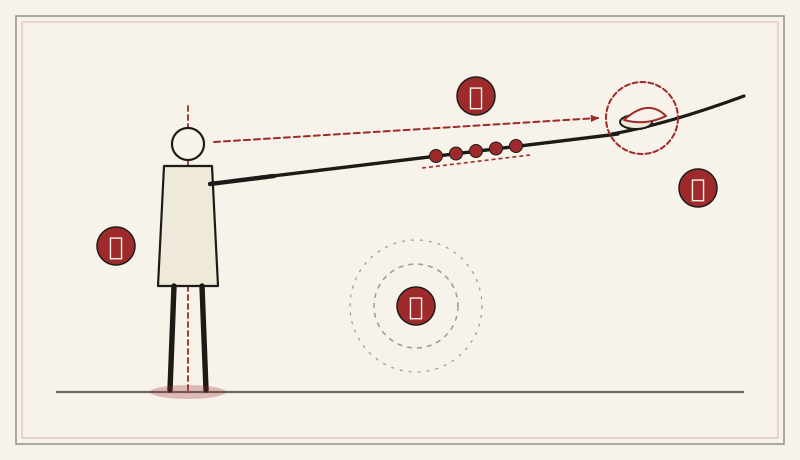
Classical ink-and-cinnabar diagram of Zhuangzi's Cicada-Catcher (Goulou Chengtiao) showing the rooted tree-stump posture on the left, the five balanced pellets along the bamboo pole at top center, the fading noise of the ten thousand things below, and the undivided focus on the cicada's wings on the right

The Four Pillars of Undivided Skill in Zhuangzi: Dasheng (《庄子·达生》“佝偻承蜩·用志不分”四维图解).

  1. Rooted Stump & Seasoned Branch (立身若厥株拘 · 执臂若槁木之枝): just like Nanguo Ziqi’s “body like seasoned wood”, the lower body roots into the earth while the extended arm releases all tremor
  2. Progressive Calibration — Two, Three, Then Five Pellets (累二丸、三丸至五丸而不坠): patient, measurable daily practice refines neuromuscular stillness over five to six months
  3. Letting Outside Distractions Fall Away (不以万物易蜩之翼 · 外重者内拙): refusing to let the clamor of the world scatter inward attention (Yinfu Jing)
  4. Undivided Intent Congeals into Spirit (用志不分,乃凝于神): when scattered thoughts settle into one point (Shouyi), movement becomes effortless

3. Why “Caring Too Much About Outside Rewards” Makes You Clumsy Inside

Later in the same chapter (Dasheng), Zhuangzi adds a crucial warning: “One who archer-shoots for clay tiles displays their full skill; one who shoots for a silver buckle already feels nervous; one who shoots for gold goes blind and sees two targets! Their skill has not changed, yet what they prize outside weights them down—and whoever is weighted by the outside becomes clumsy on the inside” (凡外重者内拙).

The cicada-catcher succeeds precisely because he does not think about applause, profit, or failure (no scheming Jixin); in the moment of practice, the entire universe simplifies into the quiet presence of the cicada’s wing.

4. Training Undivided Presence Between Wudang Mountain and Singapore

Connecting the quiet mountain forests near Wudang Mountain’s UNESCO World Heritage ancient Taoist temples with our regular classes in Singapore, Wudang.Org helps students cultivate patient, step-by-step focus—from “two pellets to five.” Begin on Start Here.

Seeker’s Q&A · Frequently Asked Questions

What does Confucius’s praise “Yongzhi bufen, nai ning yu shen” (用志不分,乃凝于神) mean in Zhuangzi?

It means “When your intent is undivided and free from distraction, it crystallizes into pure spirit”—describing how patient, single-pointed absorption unites body and mind into effortless skill.


Why did the cicada-catcher practise balancing two, three, and five pellets on the tip of his bamboo pole?

Balancing pellets on the end of a long bamboo pole provides immediate physical feedback: any shoulder tension, uneven breathing, or wandering thought causes the pole tip to tremble and drop the pellets.

What does Zhuangzi mean by “Whoever is weighted by the outside becomes clumsy on the inside” (凡外重者内拙)?

When you obsess over external rewards, rankings, or fear of embarrassment (“weighted by the outside”), anxiety splits your attention and makes your physical execution stiff and clumsy (“clumsy on the inside”).
