TAOIST PHILOSOPHY · 道家哲学

The Great Tao Is Very Level, Yet People Love Byways (大道甚夷,而人好径): Walking the Broad Way and Rejecting Clever Shortcuts in Tao Te Ching Chapter 53 使我介然有知,行于大道,唯施是畏:《道德经》第五十三章“大道甚夷,而人好径”的武当守正与戒巧哲学

Why the slightest true awakening inspires reverent caution against crooked shortcuts, and how top-heavy ornament drains the living root in governance and Wudang cultivation.

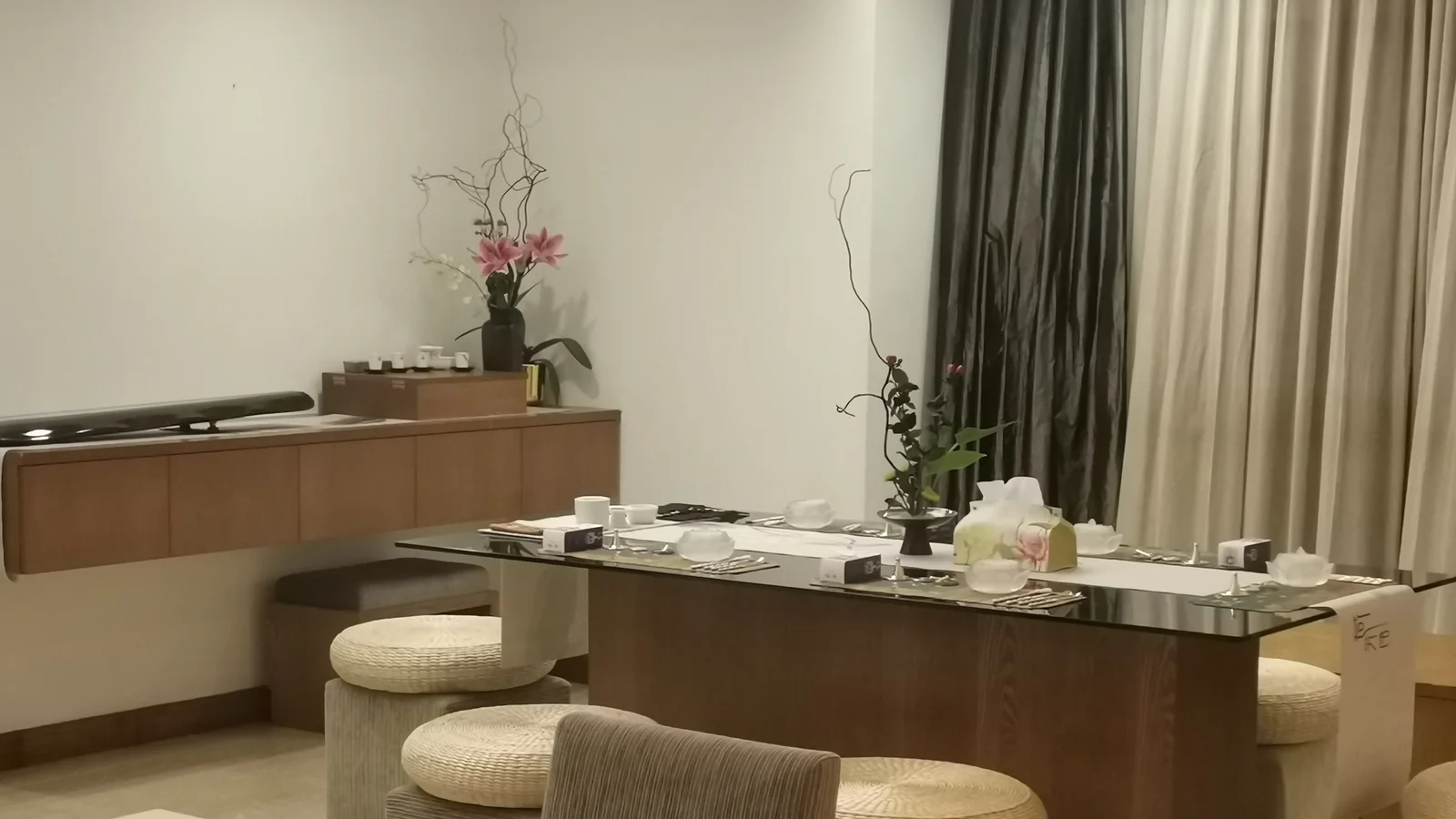
A quiet Taoist study room: a black guqin on a low wooden console beside a pink lily arrangement and tea set, and a dark-glass study table set with white lotus-shaped cups, an incense holder and a floral branch, with straw cushions and a grey curtain.

Chapter 53 of the Tao Te Ching (Dao De Jing) opens with a remarkably candid confession: if we possess even a grain of steadfast understanding (Jieran You Zhi), we walk upon the Great Tao and fear only straying into crooked pretension (Wei Shi Shi Wei). Although the Great Tao is broad and level (Da Dao Shen Yi), people habitually chase narrow, tangled shortcuts (Er Ren Hao Jing). This study examines the classical commentaries of Heshang Gong and Wang Bi alongside Wudang internal martial and contemplative practice, showing why flashy shortcuts drain the foundational granary while patient, level steps sustain lifelong vitality.

1. Classical Text and Philological Structure of Chapter 53

Chapter 53 of the Tao Te Ching (Dao De Jing) bridges the contemplative inward return of Chapter 52 (Returning to the Brightness — Xi Ming) and the unshakeable household and mountain virtue of Chapter 54 (What Is Well Planted Is Not Uprooted — Shan Jian Zhe Bu Ba). Where Chapter 52 teaches us to close the sensory gates and guard the mother of vitality, Chapter 53 diagnoses why practitioners and rulers alike abandon that luminous stillness: the restless temptation of the shortcut (jing 径).

使我介然有知,行于大道,唯施是畏。 大道甚夷,而人好径。 朝甚除,田甚芜,仓甚虚; 服文彩,带利剑,厌饮食,财货有余; 是谓盗夸。非道也哉!

"If I possess even a firm grain of true understanding, walking upon the Great Tao, my only fear is straying into oblique pretension (shi 施 / yi 迤). The Great Tao is exceedingly level and broad, yet people love narrow byways (jing 径). When the court is swept overly sleek, the fields lie choked with weeds, and the granaries stand hollow; Wearing embroidered silks, carrying sharp swords, glutted with food and drink, hoarding surplus wealth— This is called the boasting of brigands (dao kua 盗夸). How far indeed from the Tao itself!"

Three classical terms anchor the philological architecture of this chapter:

  1. Jieran You Zhi (介然有知) and Wei Shi Shi Wei (唯施是畏): Jieran (介然) denotes a focused, resolute, unobstructed speck of clarity. In early textual scholarship—supported by parallels in the Hanfeizi (Jie Lao 解老) and Wang Bi's (王弼, 226–249 CE) commentary—the character shi (施) functions either as "ostentatious imposition / contrived action" (shi wei 施为) or as a loan graph for yi (迤, "to slant, deviate, or wander off course"). The awakened practitioner does not fear slowness; they fear only tilting off the plumb line into contrived display.
  2. Da Dao Shen Yi, Er Ren Hao Jing (大道甚夷,而人好径): Yi (夷) means level, open, unobstructed, and peaceful; jing (径) originally denotes a narrow footpath where cattle cannot pass—a steep shortcut cut across brush. Wang Bi notes that the Great Tao is like a level royal highway (ping yi 平夷), yet people abandon it because they crave rapid, partisan gains (xie jing 邪径).
  3. Chao Shen Chu, Tian Shen Wu, Cang Shen Xu (朝甚除,田甚芜,仓甚虚): Heshang Gong (河上公) reads these three clauses on both the political and the somatic-alchemical plane. Externally, an extractive court polishes its halls while farmers abandon the soil and public granaries empty. Internally, within human cultivation, chao (朝, the court) corresponds to the outward face and competitive ego; tian (田, the field) corresponds to the Dantian (丹田, Elixir Field); and cang (仓, the granary) corresponds to the Five Yin Viscera (Wuzang 五脏) that store essential Jing (精). When a practitioner obsessively polishes outward appearances while neglecting the lower Elixir Field, the internal granaries of vitality grow hollow.
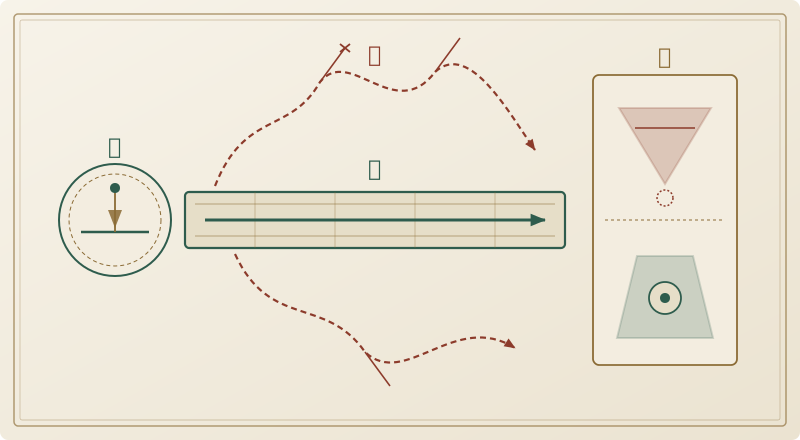
Classical Wudang diagram for Tao Te Ching Chapter 53 contrasting the broad level Great Tao with tangled shortcut byways and top-heavy excess
Figure 1 — Structural Architecture of Chapter 53 (大道甚夷,而人好径): ① Jieran You Zhi & Wei Shi Shi Wei (介然有知,唯施是畏): the plumb line and level horizon of reverent caution; ② Da Dao Shen Yi (大道甚夷): the broad, level flagstone highway of foundational daily cultivation; ③ Er Ren Hao Jing (而人好径): jagged upper and lower shortcut trails ending in cul-de-sacs and structural strain; ④ Top-heavy ornament (Chao Shen Chu 朝甚除, inverted red triangle above empty granary) contrasted with rooted agrarian and Dantian fullness below.

2. Why Human Minds Crave Byways (Ren Hao Jing)

Why do intelligent students of philosophy, contemplation, and internal martial arts repeatedly trade the broad level road for thorny side trails? Three contrasts make the pattern plain:

Attribute The Level Great Way (Da Dao Shen Yi 大道甚夷) The Tangled Byway (Ren Hao Jing 人好径)
Daily Rhythm Quiet, repeatable, unhurried foundational work (Wei Dao Ri Sun — daily subtraction) Episodic bursts of extreme intensity, novelty-seeking, and secret "hacks"
Somatic Signature Released shoulders (Song Jian 松肩), open Mingmen, full lower Dantian (Tian 田), quiet breath Forced breath retention, locked knees, theatrical posture (Chao Shen Chu 朝甚除), depleted core (Cang Shen Xu 仓甚虚)
Martial & Meditative Yield Cumulative structural integrity (Jiu Jue Qi Ying — fullness over time) Rapid superficial mimicry followed by joint fatigue, mental agitation, and plateau

As Chapter 24 (He Who Stands on Tiptoe Cannot Stand Firm — Qi Zhe Bu Li) already warned, rising onto tiptoes or taking frantic giant strides (Kua Zhe Bu Xing 跨者不行) feels fast for three breaths, yet immediately severs the practitioner's root in the earth.

3. Wudang Somatic & Martial Application: Weeding the Elixir Field Before Wearing the Sword

In Wudang Taijiquan, Zhan Zhuang (standing post), and Daoyin longevity practice, Chapter 53 is recited as a mirror against "embroidered form without internal grain" (Fu Wen Cai, Tian Shen Wu 服文彩,田甚芜):

  • Tending the Field (Tian 田) Over Polishing the Court (Chao 朝): A student who chases ornate low-frame acrobatics, rapid palm slaps, or exotic breathing tricks while their lower back arches and their knees collapse inward is sweeping the outer court while leaving the Dantian field overgrown with weeds. Foundational practices such as Wudang Zhan Zhuang and Closing the Gates and Guarding Softness are the level flagstones of the Great Way: unglamorous, wide, and utterly reliable.
  • Carrying the Sharp Sword Without Boasting (Dai Li Jian 带利剑): Even in classical Wudang Taiji Sword (Taijijian), the blade is never worn as an emblem of intimidation (Dao Kua 盗夸). True sword skill grows out of calm waist-axis alignment, clear footwork tracks, and non-contention (Bu Zheng 不争).
  • Reverent Caution at Every Step (Wei Shi Shi Wei 唯施是畏): In slow stepping drills like Cat-Walk Stepping (Mao Bu) or Repulse the Monkey (Daojuanhong), the practitioner monitors the slightest weight leak (Jieran You Zhi) before placing the foot, ensuring the hip and knee remain aligned on the broad, level track.

Seeker’s Q&A · Frequently Asked Questions

What does “the Great Tao is very level, yet people love byways” mean in Tao Te Ching chapter 53?

Yi (夷) means level, open and unobstructed; jing (径) is a narrow footpath, a shortcut cut across rough ground. The line says that the Way itself is broad and easy to walk, yet people leave it for shortcuts that promise quicker gains. The chapter then shows the result: a splendid court beside weed-choked fields and empty granaries. In practice, it asks you to keep to plain, repeatable foundation work rather than chase showy methods.


