TAOIST PHILOSOPHY · 道家哲学

Choosing the Belly Over the Eye (Wei Fu Bu Wei Mu): Sensory Overload and Inner Sufficiency in Tao Te Ching Chapter 12 为腹不为目:《道德经》第十二章的感官节制与内守丹田之道

Why does Tao Te Ching (Dao De Jing) Chapter 12 warn that the five colors blind the eye and the five tones deafen the ear? Explore how Wudang Taoist cultivation turns outward sensory chasing back to the quiet nourishment of the lower abdomen (Fu).


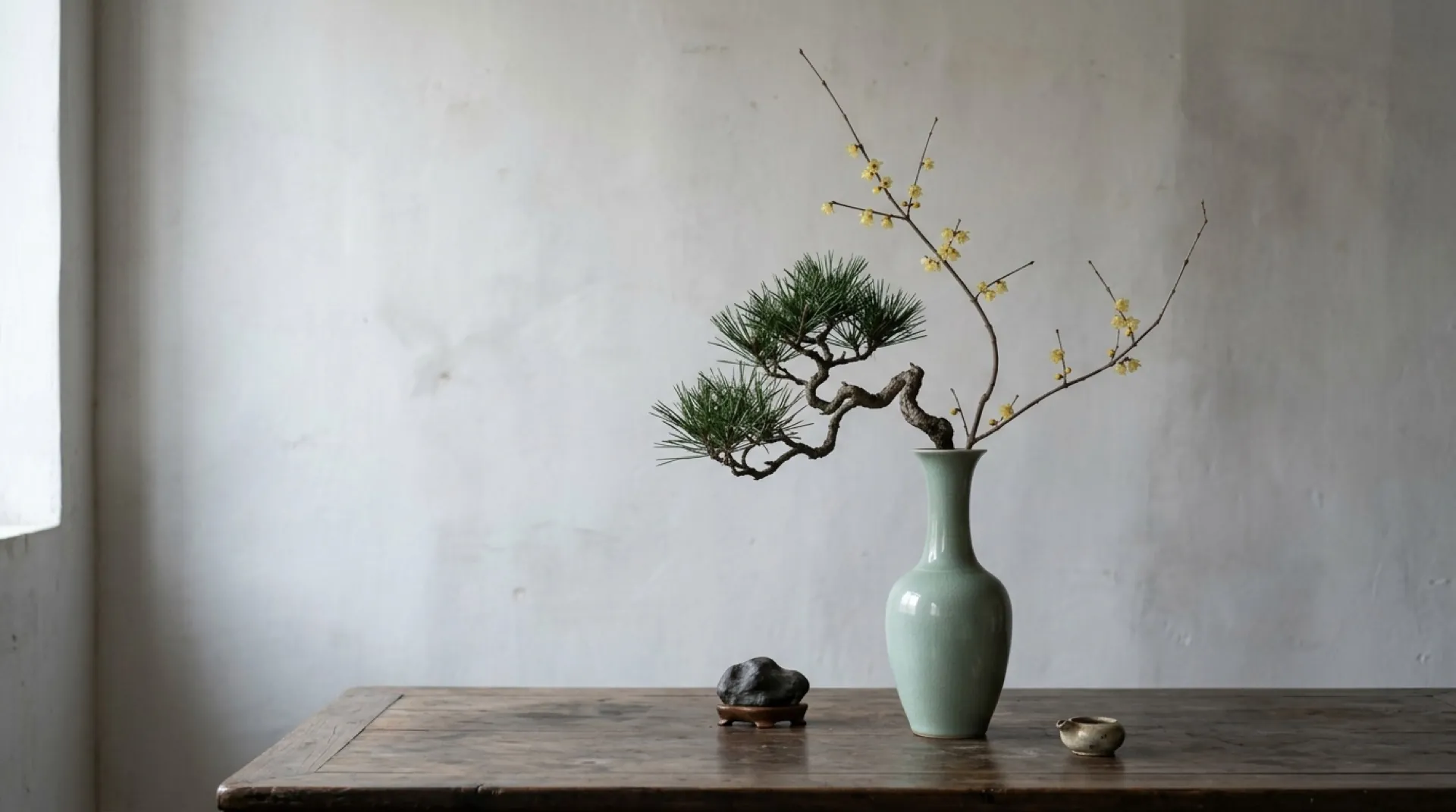
A celadon vase holding a pine branch and a sprig of yellow blossom on a wooden table against a plain plaster wall.

The five colors blind the human eye; the five tones deafen the human ear; the five flavors dull the human palate; galloping and hunting drive the human heart-mind wild; goods hard to obtain impede human conduct. Therefore the sage attends to the belly and not to the eye—letting go of that, and choosing this.

— Tao Te Ching (Dao De Jing), Chapter 12

1. Why Sensory Abundance Can Leave the Heart-Mind Exhausted

When students read Chapter 12 of the Tao Te Ching (Dao De Jing) for the first time, they are often surprised by how contemporary it feels. Written more than two millennia ago, the chapter describes a condition familiar to anyone living surrounded by glowing screens, constant notifications, and endless novelty: 'The five colors blind the human eye; the five tones deafen the human ear; the five flavors dull the human palate; galloping and hunting drive the human heart-mind wild.' Laozi is not condemning the natural beauty of sight, sound, or taste. A mountain pine at dawn, the sound of wind through bamboo, or a bowl of plain warm broth does not blind or deafen us.

What Chapter 12 diagnoses is sensory escalation—when stimulation becomes so intense, rapid, and competitive that the nervous system loses its baseline sensitivity. Just as a palate accustomed only to heavy spices can no longer taste the sweetness of clear spring water, an attention span constantly pulled by outward spectacle ('galloping and hunting') loses the ability to rest in quietness. As the Qingjing Jing later echoes, 'The human spirit naturally loves clarity, yet the heart-mind disturbs it; the heart-mind naturally loves stillness, yet desires pull it outward.' You can compare this directly with the full chapter text on the Tao Te Ching Chapter 12 study page and the quietness teachings in the Qingjing Jing guide.

2. 'Attending to the Belly and Not the Eye' (Wei Fu Bu Wei Mu)

To resolve sensory exhaustion, Laozi offers a concise aphorism: 'Therefore the sage attends to the belly and not to the eye' (shi yi shengren wei fu bu wei mu 是以圣人为腹不为目). In classical Chinese usage, the contrast between the 'belly' (fu 腹) and the 'eye' (mu 目) operates on two levels at once. On an everyday ethical level, the belly knows natural sufficiency: when you are hungry, a simple bowl of rice fills the stomach, and once full, the belly naturally stops asking for more. The eye, by contrast, is insatiable—it compares, covets 'goods hard to obtain,' and chases endlessly after the next horizon.

On an embodied cultivation level preserved in Wudang Taoist practice, the 'eye' represents the outward-facing sensory apertures where spirit (shen 神) easily scatters, while the 'belly' points to the lower abdomen (lower dantian 下丹田)—the physical center of gravity and breath reservoir described in the Huangting Jing and trained in Guarding the One (Shouyi). Attending to the belly means anchoring awareness inside the torso rather than letting consciousness live two feet in front of the eyes.

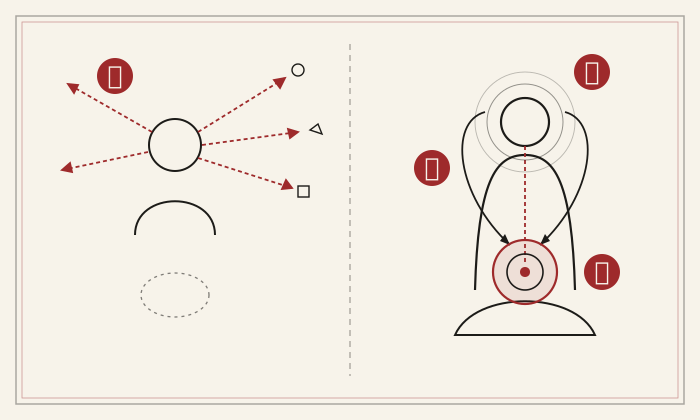
Classical diagram contrasting outward sensory scatter through the five apertures with inward gathering into the lower abdomen reservoir

How Tao Te Ching Chapter 12 contrasts outward sensory chasing with inward rooting in the belly.

  1. ① Outward Scatter (Wei Mu): Attention pulled continuously through the eyes and ears toward novelty, draining central vitality.
  2. ② Turning the Light Inward (Shou Shi Fan Ting): Gently softening the gaze and listening inward so spirit stops leaking through the senses.
  3. ③ Nourishing the Belly (Wei Fu): Settling breath and awareness into the lower abdomen (dantian) where quiet sufficiency resides.
  4. ④ Unforced Clarity (Ming): When the root is full, the senses perceive clearly without agitation or craving.

3. How Wudang Practice Trains 'Letting Go of That and Choosing This'

In both Wudang Qigong and internal martial arts, 'choosing the belly over the eye' is a concrete physical instruction rather than an abstract proverb. When a beginner stands in Zhan Zhuang (Standing Post) or practices natural abdominal breathing, the eyes are neither squeezed shut nor staring intently at objects across the courtyard. Instead, the eyelids rest 'like a hanging bamboo curtain (垂帘),' letting light in softly while 70 percent of listening and feeling turns inward toward the lower abdomen.

In Taijiquan solo form and Push Hands (Tuishou), chasing an opponent's hands with your eyes is a classic mistake known as 'serving the eye.' The eye reacts too late and pulls the upper body forward, uprooting the heels. When you settle breath and weight into the lower abdomen and waist—what Chapter 20 calls 'being nourished by the Mother'—your center stays stable and your hands respond through listening energy (Tingjin) without panic.

4. A Three-Minute Daily Practice: Returning from the Eyes to the Belly

Whenever you notice screen fatigue, mental restlessness, or tightness behind the forehead during the day, try this quiet three-minute reset grounded in Chapter 12. Sit or stand upright with your feet flat on the floor and rest one palm over the other on your lower abdomen below the navel. Let your gaze soften away from near screens toward a neutral point several paces ahead, or gently lower the eyelids halfway.

For six slow breaths, imagine that instead of looking outward with the eyes, the warmth behind your eyes is sinking down through the throat and chest on each exhale to rest beneath your palms in the lower abdomen. Notice how quickly the jaw, temples, and shoulders soften when the 'eye' is relieved of its duty to chase, and the 'belly' is allowed to hold your center. Safety note: this reflective breath and posture practice is educational and supports everyday relaxation; it is not a medical treatment for vision or neurological conditions.

Seeker’s Q&A · Frequently Asked Questions

What is the core takeaway of Choosing the Belly Over the Eye (Wei Fu Bu Wei Mu)?

Why does Tao Te Ching (Dao De Jing) Chapter 12 warn that the five colors blind the eye and the five tones deafen the ear? Explore how Wudang Taoist cultivation turns outward sensory chasing back to the quiet nourishment of the lower abdomen (Fu).
