TAOIST PHILOSOPHY · 道家哲学

Kan-Li Inversion (取坎填离) and 'True Lead in the Water Country' in Zhang Boduan’s Wuzhen Pian (悟真篇): Mending Bamboo With Bamboo and Uniting Water and Fire in Wudang Practice 张伯端《悟真篇》“取坎填离、竹破竹补与水乡铅只一味”精解:由易象坎离颠倒通向武当心肾相交与太极水火既济

How the 11th-century poetic masterpiece of internal alchemy demystifies 'Lead and Mercury' as the innate vitality of Kidneys and Heart, guiding the practitioner from scattered agitation to quiet wholeness.

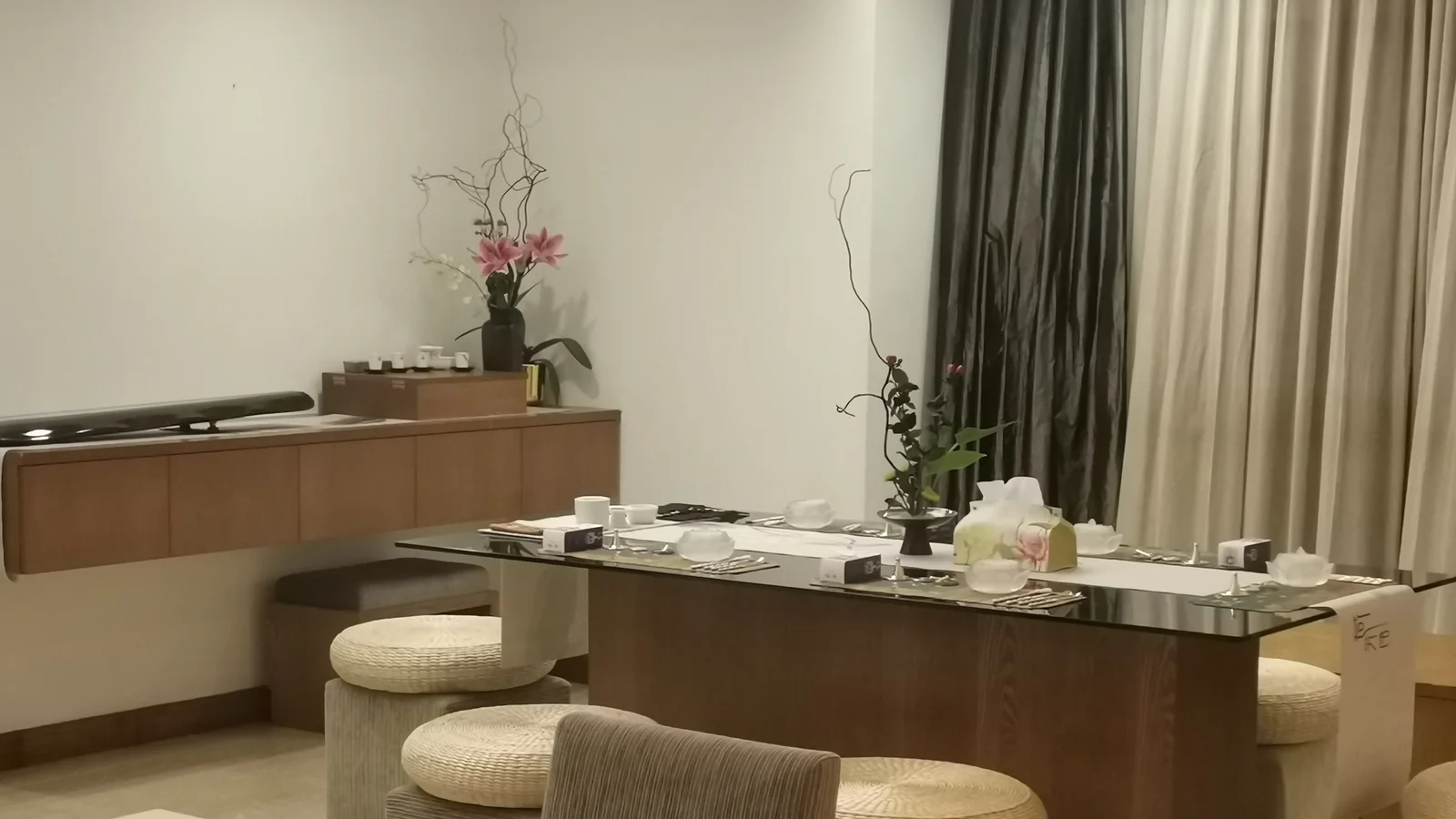
A quiet Taoist study room: a black guqin on a low wooden console beside a pink lily arrangement and tea set, and a dark-glass study table set with white lotus-shaped cups, an incense holder and a floral branch, with straw cushions and a grey curtain.

1. Historical Context of the Wuzhen Pian (1075 CE) and Why "Split Bamboo Must Be Mended With Bamboo"

Within the scriptural canon of Wudang Taoism, two poetic treatises stand side by side as the foundational pillars of internal cultivation (Neidan 内丹): Wei Boyang's Eastern Han Cantong Qi (Seal of the Unity of the Three) and Zhang Boduan's (张伯端, 987–1082 CE, honored as Ziyang Zhenren 紫阳真人) Northern Song masterpiece, the Wuzhen Pian (悟真篇, Awakening to Reality, completed with its author's preface in the eighth year of the Xining reign, 1075 CE). Composed in regulated verse (Lüshi 律诗), quatrains (Jueju 绝句), and twelve Xijiangyue (西江月) lyrics, the Wuzhen Pian synthesized the cosmology of the Tao Te Ching, the timing of the Yinfu Jing, and the inner landscape of the Huangting Jing into a lucid manual of human self-transformation, later commented upon by Weng Baoguang (翁葆光, 1173), Xue Daoguang (薛道光), Lu Xixing (陆西星), and Liu Yiming (刘一明).

Why did Zhang Boduan write the Wuzhen Pian? In his 1075 preface and opening poems, he laments that seekers of his era constantly fell into two opposite traps: either chasing external mineral furnaces (smelting literal lead, mercury, and cinnabar stones) or exhausting their bodies with forced, mechanical breathing tricks. To sweep away these delusions at a single stroke, Zhang Boduan wrote one of the most famous quatrains in Taoist literature:

竹破须将竹补宜,抱鸡当用卵为之。
万般非类徒劳力,争似真铅合圣机。

"When bamboo is split, it is fitting to mend it with bamboo (zhu po xu jiang zhu bu yi 竹破须将竹补宜); to hatch a chick, one must naturally use an egg (bao ji dang yong luan wei zhi 抱鸡当用卵为之).
Ten thousand things of a different kind are all vain labor (wan ban fei lei tu lao li 万般非类徒劳力)—how can they compare to uniting True Lead with the sacred pivot (zheng si zhen qian he sheng ji 争似真铅合圣机)?"

What is the meaning of "mending split bamboo with bamboo"? If a woven bamboo basket or bamboo pipe is cracked, you cannot weave a patch out of iron or clay; only a strip of flexible bamboo shares the exact grain and elasticity needed to restore the vessel. Likewise, human life is formed of innate Essence (Jing 精), Breath (Qi 气), and Spirit (Shen 神). When daily stress and sensory over-extension (the "Five Thieves" of the Yinfu Jing) deplete human vitality, no external stone or artificial stimulant of a "different category" (Fei Lei 非类) can repair the root; one must restore human vitality using the innate Yang vitality hidden within one's own body.

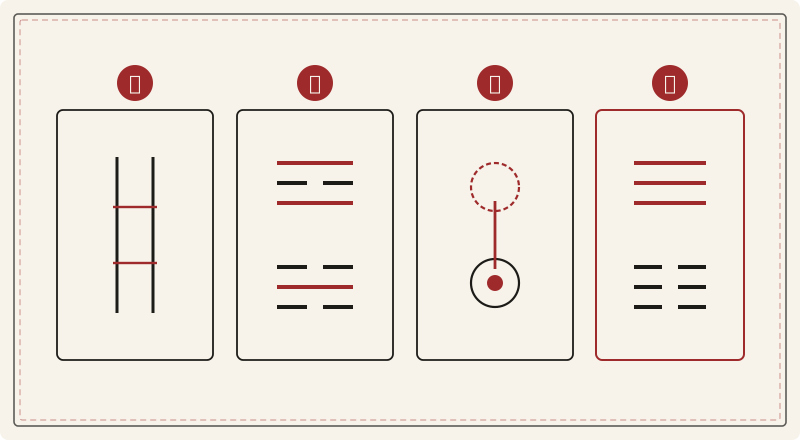
Classical four-panel Wudang diagram for Zhang Boduan's Wuzhen Pian illustrating Mending Bamboo with Bamboo, the Postnatal trigrams Li (Fire hollow inside) and Kan (Water solid inside), Kan-Li Inversion (Qu Kan Tian Li), and restored Qian-Kun harmony
Figure 1 — Internal-Alchemy Architecture of the Wuzhen Pian (悟真篇): ① Zhu Po Zhu Bu (竹破竹补 — Mending Bamboo With Bamboo): restoring human vitality through innate Essence, Qi, and Spirit; ② Postnatal Separation of Li (离 ☲, upper Heart-Fire with a hollow broken line at center) and Kan (坎 ☵, lower Kidney-Water holding a solid True Yang line at center); ③ Qu Kan Tian Li (取坎填离 — Inverting Kan and Li): extracting the solid True Lead (Zhen Qian) from Kan to fill the hollow center of Li; ④ Restored Qian (乾 ☰) and Kun (坤 ☷) Water-Fire Harmony (Shui Huo Ji Ji 水火既济).

2. Demystifying "True Lead" (Zhen Qian 真铅) and "True Mercury" (Zhen Gong 真汞): The Trigrams Kan (☵) and Li (☲)

Readers encountering alchemical poetry for the first time often wonder why the Cantong Qi and Wuzhen Pian speak of "Lead" (Qian 铅) and "Mercury" (Gong 汞), or "Water Tiger" and "Fire Dragon." In one of his Xijiangyue lyrics, Zhang Boduan gives the key away in plain sight:

水乡铅,只一味。

"The Lead of the Water Country (shuixiang qian 水乡铅) is only a single flavor (zhi yi wei 只一味)."

As Weng Baoguang and Liu Yiming explain, "Lead" and "Mercury" in Neidan have nothing whatsoever to do with toxic heavy metals. They are poetic metaphors drawn from the Yijing trigrams Kan (坎 ☵, Water) and Li (离 ☲, Fire) to describe the everyday state of the human mind and body:

  1. Why the Heart-Mind Is Represented by the Fire Trigram Li (离 ☲) and "True Mercury" (Zhen Gong 真汞): Look at the structure of the trigram Li (☲): two solid Yang lines on the outside, and one broken Yin line in the middle (Li Zhong Xu 离中虚, "Li is hollow in the center"). In the body, Li corresponds to the Heart and conscious awareness (Shen 神). Just as liquid mercury darts and scatters at the slightest tilt, human thoughts and emotions flare upward like fire and dart outward through the eyes and senses, leaving the center of the chest feeling hollow and restless.
  2. Why the Kidneys and Lower Dantian Are Represented by the Water Trigram Kan (坎 ☵) and "True Lead" (Zhen Qian 真铅): Look at the structure of the trigram Kan (☵): two broken Yin lines on the outside, and one solid, unbroken Yang line hidden right in the center (Kan Zhong Man 坎中满, "Kan is full in the center"). In the body, Kan corresponds to the Kidneys and the lower Dantian (Qihai and Guanyuan — the "Water Country" Shuixiang 水乡). Hidden inside that quiet dark water is the one undivided spark of Prenatal vitality (True Yang within Yin, symbolized as heavy, sinking "True Lead" Zhen Qian).
  3. What Is "Taking from Kan to Fill Li" (Qu Kan Tian Li 取坎填离)? In an untrained person, Heart-Fire (Li ☲) blazes upward into the head while Kidney-Water (Kan ☵) drains downward—so fire and water never meet (Wei Ji 未济). When the practitioner curtains the eyes, calms the Heart-Fire (aided by warming Laogong PC-8 and Shaofu HT-8 in the palms), and sinks awareness into the lower Dantian, the warm solid Yang line inside Kan (☵) rises gently to fill the hollow center of Li (☲). Once that central broken line is filled, Li (☲) transforms back into the three unbroken lines of pure Qian (乾 ☰), while Kan (☵) settles into receptive Kun (坤 ☷)—uniting Heart and Kidneys (Xinshen Xiangjiao 心肾相交).
Wuzhen Pian Term / VerseClassical Trigram & Neidan MeaningDirect Somatic Experience in Wudang Practice
竹破须将竹补宜 (Zhu po xu jiang zhu bu yi)Mend split bamboo with bamboo: restore human life with innate human vitality, never external stonesRelying on natural posture, breath, and quiet awareness rather than artificial strain
离中虚(火宫真汞) (Li zhong xu — Huogong zhen gong)Trigram Li (☲, Fire/Heart): bright outside, hollow inside; nimble conscious awareness that easily scattersThe upper chest and thinking mind, which must be softened and lowered (Hanxiong)
坎中满(水乡真铅只一味) (Kan zhong man — Shuixiang qian zhi yi wei)Trigram Kan (☵, Water/Kidneys): Yin outside, one solid True Yang line within the lower DantianThe quiet, heavy, warm root felt in the lower abdomen and soles during Zhan Zhuang
取坎填离、水火既济 (Qu kan tian li, shui huo ji ji)Drawing the solid Yang from Kan to fill the hollow center of Li, uniting Water above and Fire belowSinking Heart-Fire down to warm the lower abdomen while cool Jade Fluid (Huangting Jing) rises to moisten the mouth
他家不死方(彼家真铅) (Bi jia zhen qian)Seeking the uncontrived Prenatal stillness that precedes deliberate ego-effortIn Wudang Taijiquan, letting movement arise from quiet central equilibrium (Yi Jing Zhi Dong)

3. How Qu Kan Tian Li (取坎填离) Shapes Wudang Taijiquan and Zhan Zhuang

In physical Wudang training, Qu Kan Tian Li is never an abstract diagram—it is a concrete postural and respiratory law:

  • Upper Body Like Kan Water (Cool, Supple, Uncluttered): When a student's shoulders shrug, jaw clenches, and chest puffs out, Heart-Fire (Li) is trapped in the upper body. Softening the sternum (Hanxiong), relaxing the neck, and releasing the forearms (Neiguan and Waiguan) brings cool clarity to the head.
  • Lower Body Holding True Lead (Heavy, Warm, Rooted): As the upper body empties of tension, weight and breath sink naturally into the hips (Kua), lower abdomen, and heels—giving the lower body the calm, heavy stability of "True Lead in the Water Country."

4. Living Transmission on Wudang Mountain and in Singapore

Across the contemplative halls of the UNESCO World Heritage ancient Taoist temples on Wudang Mountain (No. 72 Jianhe 2nd Road, Wudangshan, Hubei, China; UNESCO World Heritage guide) and the daily classes at Lee Wudang International Pte. Ltd. (58A Smith Street (2nd Floor), Singapore 058962; beginner guide), Zhang Boduan's Wuzhen Pian teaches students that true cultivation is simple, verifiable, and grounded in human physiology: when your head feels clear and cool, your lower abdomen feels warm and full, and your hands move with effortless continuity, Water and Fire have already met.

Practice Reflection for Students

During your next five minutes of standing or seated stillness, apply Qu Kan Tian Li: on each inhalation, imagine cool mountain air clearing your forehead and chest; on each exhalation, let the warmth of your attention settle down into your lower abdomen (Qihai and Guanyuan) like a smooth pebble coming to rest at the bottom of a clear spring.

Seeker’s Q&A · Frequently Asked Questions

What does “taking from Kan to fill Li” (取坎填离) mean in Zhang Boduan’s Wuzhen Pian?

In the Wuzhen Pian (Awakening to Reality, preface dated 1075 CE), “lead” and “mercury” are not metals; they are images taken from the trigrams Kan (☵, Water) and Li (☲, Fire). Li, hollow in the center, stands for the Heart and the easily scattered mind; Kan, with a solid line in the center, stands for the Kidneys and lower Dantian, where “true lead” lies hidden. “Taking from Kan to fill Li” means calming the heart and settling awareness in the lower abdomen so that the two meet (心肾相交), instead of fire flaring up and water draining down. Zhang Boduan’s other image says the same: split bamboo is mended with bamboo, so human vitality is restored from within, by posture, breath and quiet awareness.


How can I apply this in practice?

During your next five minutes of standing or seated stillness, apply Qu Kan Tian Li: on each inhalation, imagine cool mountain air clearing your forehead and chest; on each exhalation, let the warmth of your attention settle down into your lower abdomen (Qihai and Guanyuan) like a smooth pebble coming to rest at the bottom of a clear spring.
