
TAOIST PHILOSOPHY · 道家哲学

Hold Fast to the Great Image (Zhi Da Xiang): Passing Guests, Music and Bait vs. the Unflavored Tao in Tao Te Ching Chapter 35 执大象,天下往:《道德经》第三十五章的“乐与饵”与“淡乎其无味”

Explore Tao Te Ching (Dao De Jing) Chapter 35 on why holding the undivided Great Image brings peace and safety, and why the unflavored, inexhaustible Tao outlasts sensory excitement.

A small clay teapot and two cups on a flat wet stone beside a thin spring trickling from mossy rocks in a bamboo forest.

1. Classical Text and Wang Bi’s Reading of “Holding the Great Image” (Zhi Da Xiang)

Chapter 35 of the Tao Te Ching (Dao De Jing) opens with a serene vision of magnetic stillness: “Hold fast to the Great Image, and all under heaven come to it; they come and suffer no harm, finding peace, evenness, and deep tranquility” (Zhi da xiang, tian xia wang; wang er bu hai, an ping tai 执大象,天下往。往而不害,安平太). Recall from Chapter 41 and our study on Great Sound Has a Subtle Voice (Da Yin Xi Sheng) that the “Great Image has no fixed shape” (Da xiang wu xing 大象无形).

In his commentary, Wang Bi (王弼, 226–249 CE) explains why holding the formless Great Image harms no one: any partial, rigid form (such as excessive heat, cold, or partisan preference) welcomes what matches it while injuring what differs from it. Because the Great Image of the Tao is undivided and impartial, all living beings can settle within it in safety and peace (an ping tai 安平太), just as streams return naturally to the sea in Chapter 32.

2. “Music and Bait Make the Passing Guest Stop” vs. “Bland and Without Flavor”

The second half of Chapter 35 draws a sharp psychological contrast that every practitioner recognizes immediately: “Music and fine food (bait) make the passing traveler stop; yet when the Tao is spoken from the mouth, how bland and without flavor it is! Looking at it, it is not enough to fill the eye; listening to it, it is not enough to fill the ear; yet in use, it can never be exhausted” (Le yu er, guo ke zhi. Dao zhi chu kou, dan hu qi wu wei; shi zhi bu zu jian, ting zhi bu zu wen, yong zhi bu ke ji 乐与饵,过客止。道之出口,淡乎其无味。视之不足见,听之不足闻,用之不可既).

Feasting and music arrest a passerby’s senses for an hour, yet no traveler can live permanently inside a banquet hall; once the stimulation peaks, fatigue sets in, echoing Chapter 12’s warning that the five colors and five tones exhaust the senses. By contrast, clear water, quiet breath, and uncarved principles taste “bland” (dan 淡) at first encounter—precisely why they nourish life day after day without ever wearing out.

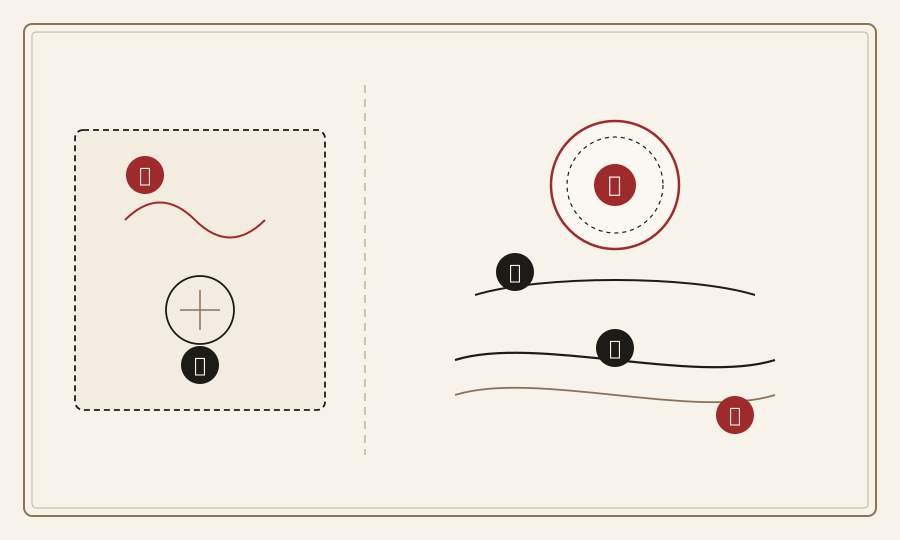
Classical numbers-only diagram of Tao Te Ching Chapter 35 contrasting Music and Bait for the passing guest (①–②) with the Great Image, unharmed peace, and the unflavored inexhaustible Tao (③–⑥).

Tao Te Ching Chapter 35 (numbers-only SVG key): Sensory stimulation that arrests a passing guest versus the unflavored, inexhaustible Great Image.

  1. ① Music and Fine Bait (Le Yu Er): Intense sensory stimulation that excites the eye and ear for a brief moment.
  2. ② The Passing Guest Stops (Guo Ke Zhi): Temporary arrest followed by sensory fatigue; a traveler pauses but cannot dwell there.
  3. ③ Holding the Great Image (Zhi Da Xiang): Abiding in the undivided, impartial center that imposes no rigid bias.
  4. ④ Coming Without Harm in Deep Peace (Wang Er Bu Hai, An Ping Tai): All beings settle naturally without friction or injury.
  5. ⑤ Bland and Without Flavor (Dan Hu Qi Wu Wei): Plain like clear spring water—neither dazzling to the eye nor loud to the ear.
  6. ⑥ Inexhaustible in Daily Use (Yong Zhi Bu Ke Ji): Quiet breath and rooted alignment that nourish cultivation for a lifetime.

3. Why Wudang Internal Cultivation Values the “Unflavored” Foundation

In Wudang internal arts—both within the historic temple complexes on Wudang Mountain and in structured classes in Singapore—new students often look for dramatic external movements or exotic sensations (“music and bait”). Yet the core foundations of the tradition—such as Hunyuan Zhan Zhuang standing meditation, natural abdominal breathing, and quiet sitting (Zuowang)—initially appear plain and unspectacular.

As the Qingjing Jing and Huangting Jing emphasize, true internal stability never comes from chasing theatrical effects. Standing quietly for ten minutes with relaxed shoulders and smooth breath feels as simple as drinking clear mountain water, yet its benefit accumulates steadily across decades (“in use, it cannot be exhausted”).

4. One-Minute Daily Practice: Tasting the Calm of Plain Breath

Whenever your attention feels scattered by constant notifications and sensory noise, pause for one minute and apply Chapter 35. Step away from the “music and bait” of screens, sit or stand with an upright spine, and take six slow, silent breaths through the nose without trying to create any special sensation.

Notice the quiet, “unflavored” stillness at the pause between exhale and inhale—nothing flashy to see or hear, yet immediately restful and steady. Safety note: this gentle mindfulness reflection supports everyday composure and is not a substitute for professional medical care.

Seeker’s Q&A · Frequently Asked Questions

What does “Music and bait make the passing guest stop” mean in Tao Te Ching Chapter 35?

Laozi contrasts intense sensory attractions (“music and fine bait,” which briefly arrest a passing traveler before fatigue sets in) with the unflavored, plain constancy of the Tao, which neither dazzles the eye nor fills the ear yet remains inexhaustible in daily use.


