
TAOIST PHILOSOPHY · 道家哲学

To Yield Is to Be Preserved Whole (Qu Ze Quan): Why Supple Curvature Straightens and Less Gains More in Tao Te Ching Chapter 22 曲则全,洼则盈:《道德经》第二十二章的少则得与抱一修真之道

Explore Tao Te Ching (Dao De Jing) Chapter 22 ('To yield is to be preserved whole; to bend is to become straight; to be hollow is to be filled; less gains, excess confuses') and how Wudang internal arts embody 'Embracing the One' (Bao Yi).

An ancient tree with massive exposed roots beside stone steps and a stone balustrade descending through misty forest, with peaks beyond.

1. An Ancient Proverb Preserved in Chapter 22: 'To Yield Is to Be Preserved Whole'

Chapter 22 of the Tao Te Ching (Dao De Jing) opens by quoting a saying that Laozi himself regarded as an ancient proverb of the sages: 'To yield (or curve) is to be preserved whole (qu ze quan 曲则全); to bend is to become straight (wang ze zhi 枉则直); to be hollow is to be filled (wa ze ying 洼则盈); to be worn out is to be renewed (bi ze xin 敝则新); with little one gains (shao ze de 少则得); with much one is confused (duo ze huo 多则惑).'

Why does a tree branch that bends under heavy winter snow survive the storm intact (qu ze quan), whereas a rigid, unyielding limb cracks and falls? As we saw on our Tao Te Ching Chapter 22 study page and in Reversal and Return (Fan Zhe Dao Zhi Dong), nature never moves in brittle straight lines. Wholeness is preserved through elasticity—knowing how to curve, yield, and create a receptive hollow (wa 洼) where fresh vitality can gather.

2. 'With Little One Gains, With Much One Is Confused' (Shao Ze De, Duo Ze Huo)

The fifth and sixth lines of Chapter 22 speak directly to modern seekers and students of internal cultivation: 'With little one gains; with much one is confused' (shao ze de, duo ze huo). In an age where thousands of books, videos, and techniques are available at a click, beginners frequently collect dozens of Qigong routines and martial forms without ever allowing one practice to sink into their bones.

In the Wudang curriculum, teachers consistently remind students that practicing three foundational postures—such as Standing Post (Zhan Zhuang), the Opening Posture (Qishi), and Cloud Hands (Yunshou)—every day with deep attention yields genuine internal transformation (shao ze de), whereas rushing greedily through twenty forms produces only superficial imitation and mental confusion (duo ze huo).

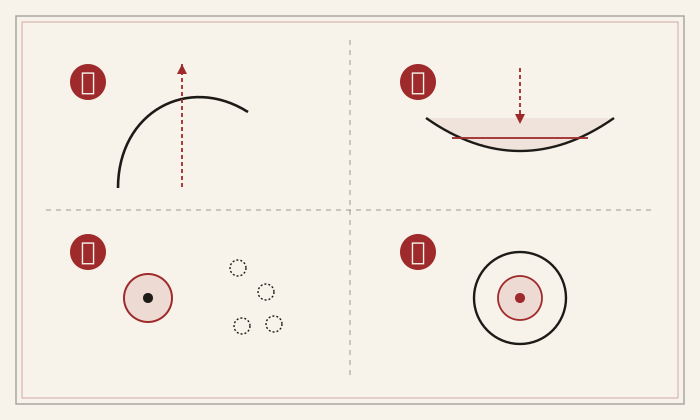
Four-quadrant classical diagram illustrating Tao Te Ching Chapter 22: a curved bough springing upright, a hollow rock basin filling with rain, a single focused center vs scattered fragments, and Embracing the One

The four principles of Tao Te Ching Chapter 22: Qu Ze Quan (yielding preserves wholeness), Wa Ze Ying (hollowness fills), Shao Ze De (less gains), and Bao Yi (embracing the One).

  1. ① To Yield Is to Be Preserved Whole (Qu Ze Quan, Wang Ze Zhi): Supple curvature absorbs load without snapping and rebounds upright.
  2. ② To Be Hollow Is to Be Filled (Wa Ze Ying, Bi Ze Xin): A concave basin naturally gathers fresh rainwater and renews itself.
  3. ③ With Little One Gains, With Much One Is Confused (Shao Ze De, Duo Ze Huo): Deep mastery of essentials versus scattered accumulation.
  4. ④ Embracing the One as the Model of the World (Bao Yi Wei Tian Xia Shi): Uniting breath, mind, and posture in unpretentious wholeness.

3. 'Therefore the Sage Embraces the One' (Bao Yi Wei Tian Xia Shi)

After stating these six laws of transformation, Laozi reveals the unifying practice behind them all: 'Therefore the sage embraces the One and becomes the model of the world' (shi yi shengren bao yi wei tian xia shi 是以圣人抱一为天下式). As explored in our guide to Guarding the One (Shouyi) in Taoist meditation, 'Embracing the One' means keeping mind (Yi), breath (Qi), and bodily center united rather than divided by self-display, self-justification, or boasting.

In Wudang Taijiquan, every circular arc of Silk-Reeling Energy (Chansijin) embodies qu ze quan and wang ze zhi: by allowing the wrist, elbow, and waist to move along a continuous spiral curve rather than a stiff straight line, your structure remains whole (quan) and your issued energy arrives straight at the target (zhi).

4. A Daily Practice: Choosing One Posture and Hollowing the Chest and Palms

Today, apply both halves of Chapter 22 in a five-minute solo session. First, practice shao ze de ('with little one gains') by choosing just one posture rather than an entire routine. Second, practice wa ze ying ('to be hollow is to be filled') by gently hollowing the three small basins of your posture: the arches of the feet (Yongquan), the centers of the palms (Laogong), and the front of the chest (Hanxiong), noticing how warmth and calm breath naturally fill those unbraced spaces.

Safety note: this philosophical and movement study guide is educational and supports mindful daily practice; it does not replace medical diagnosis or clinical care.

Seeker’s Q&A · Frequently Asked Questions

What is the core takeaway of To Yield Is to Be Preserved Whole (Qu Ze Quan)?

Explore Tao Te Ching (Dao De Jing) Chapter 22 ('To yield is to be preserved whole; to bend is to become straight; to be hollow is to be filled; less gains, excess confuses') and how Wudang internal arts embody 'Embracing the One' (Bao Yi).
