
TAOIST PHILOSOPHY · 道家哲学

Knowing the World Without Stepping Out the Door (Bu Chu Hu, Zhi Tian Xia): Inner Principle vs. Far-Flung Searching in Tao Te Ching Chapter 47 不出户,知天下:《道德经》第四十七章的“不窥牖见天道”与内观返照智慧

Explore Tao Te Ching (Dao De Jing) Chapter 47 on why chasing further outward yields less wisdom, how Wang Bi and Han Feizi interpret “knowing without traveling,” and how Neiguan inner observation steadies the mind.

A worn stone stairway with a stone balustrade climbing through twisted pines into the mist.

1. Classical Text and Wang Bi’s Commentary: Grasping the Root Within

Chapter 47 of the Tao Te Ching (Dao De Jing) presents one of Laozi’s most striking epistemological statements: “Without stepping outside the door, one may know all under heaven; without peering through the lattice window, one may see the Way of Heaven. The further one goes outward, the less one truly knows. Therefore the sage knows without traveling, sees clearly without looking outward, and accomplishes without contriving” (Bu chu hu, zhi tian xia; bu kui you, jian tian dao. Qi chu mi yuan, qi zhi mi shao. Shi yi sheng ren bu xing er zhi, bu jian er ming, bu wei er cheng 不出户,知天下;不窥牖,见天道。其出弥远,其知弥少。是以圣人不行而知,不见而明,不为而成).

Does Laozi mean that we should never walk outdoors or observe nature? Not at all. In his commentary, Wang Bi (王弼, 226–249 CE) explains: “Affairs have their governing root (宗), and things have their ruling principle (主); though paths differ, they return to the same root, and though thoughts multiply, they share one order.” If a person understands the law of water, gravity, and seasonal return inside their own courtyard—and understands human nature within their own heart—they already hold the compass that governs ten thousand valleys. Conversely, someone who chases endlessly after fragmented external novelties without an inner compass becomes more bewildered the further they roam (“the further one goes out, the less one knows”).

2. Han Feizi’s Parable of Chariot Driving: Eyes on the Bit vs. Eyes on the Horizon

The earliest recorded commentary on Chapter 47 appears in Han Feizi · Yu Lao (《韩非子·喻老》). When Zhao Xiangzi (赵襄子) learned chariot driving from Master Wang Yuliang (王于期) and competed against his tutor, he changed horses three times and fell behind all three times. When Zhao Xiangzi complained that his teacher had held back the final secret, Wang Yuliang replied: “I have held nothing back, my lord; you used the technique wrongly. In driving a chariot, what matters first is keeping the horses’ bodies aligned with the carriage pole and your own heart aligned with the horses’ rhythm through the bit and reins. Yet today, whenever you fell behind, your mind was anxious to catch me; and whenever you pulled ahead, your mind was terrified of being overtaken. Looking constantly forward and backward at your rival, how could you attend to your horses? That is why Laozi says: ‘The further one goes out, the less one knows.’”

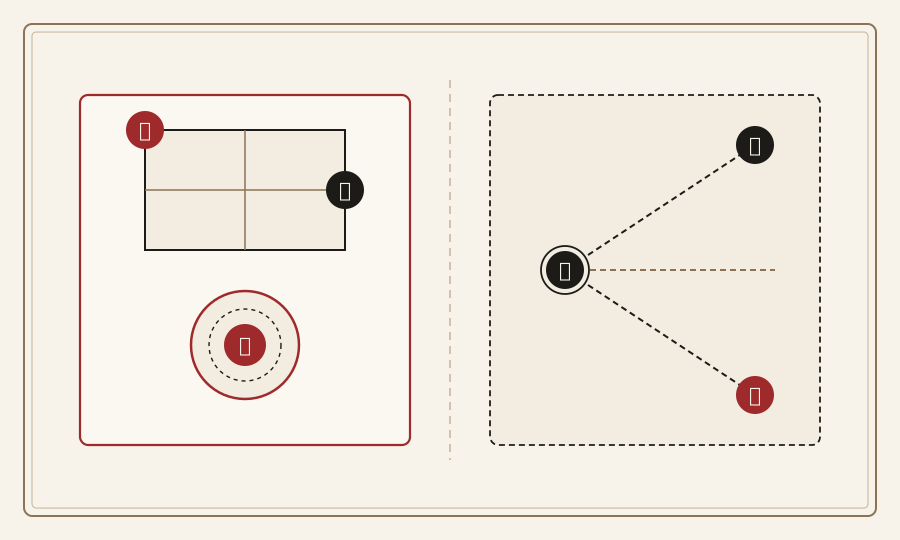
Classical numbers-only diagram of Tao Te Ching Chapter 47 contrasting the Quiet Inner Chamber and Lattice Window (①–③) with Far-Flung Outward Chasing that scatters awareness (④–⑥).

Tao Te Ching Chapter 47 (numbers-only SVG key): Knowing the governing root within the quiet room versus scattering attention outward.

  1. ① Without Stepping Out the Door (Bu Chu Hu): Settling within the quiet chamber of one’s own body and breath.
  2. ② Without Peering Through the Window (Bu Kui You): Observing the constant rhythm of Yin and Yang without restless curiosity.
  3. ③ Seeing Clearly Without Contriving (Bu Jian Er Ming, Bu Wei Er Cheng): Illumination born from an undivided center (Neiguan).
  4. ④ Anxious Outward Projection: Abandoning one’s own center to compare, chase, or worry about external rivals.
  5. ⑤ The Further One Goes Out (Qi Chu Mi Yuan): Sensory attention scattered across countless external fragments.
  6. ⑥ The Less One Truly Knows (Qi Zhi Mi Shao): Exhaustion and confusion when root principle is lost in information noise.

3. “Not Peering Out the Window” as Wudang Neiguan (Inner Observation)

In Wudang contemplative and martial cultivation—practiced across the quiet halls of Wudang Mountain and in classes in Singapore—Chapter 47 is the scriptural foundation of Neiguan (Inner Observation) and Self-Illumination (Zi Zhi Zhe Ming in Chapter 33). In classical internal alchemy and the Huangting Jing, the “door” (hu 户) and “window” (you 牖) are also metaphors for the mouth, eyes, and ears—the sensory apertures through which vital spirit (shen) leaks outward when unguarded.

In Wudang Taijiquan, Wang Yuliang’s chariot lesson applies directly: a student who stares anxiously at a partner’s hands loses their own central equilibrium (Zhongding). When you turn attention inward to your own waist, hip creases, and calm breath, you immediately sense the partner’s force at the point of contact (Tingjin) without “stepping outside your door.”

4. One-Minute Practice: Closing the Outer Window to Brighten the Room

When endless news feeds and comparisons leave your mind feeling scattered (“the further it goes out, the less it knows”), pause for one minute. Gently lower your eyelids so your gaze rests two feet in front of you (“not peering out the window”), and bring your attention inside the quiet room of your own ribcage and lower abdomen.

Follow six slow nasal breaths from beginning to end without letting your mind chase a single external task. Safety note: this traditional mindfulness reflection supports everyday composure and is not a substitute for professional medical care.

Seeker’s Q&A · Frequently Asked Questions

What does “Without stepping outside the door, one may know all under heaven” mean in Tao Te Ching Chapter 47?

As Wang Bi and Han Feizi explain, Laozi means that because all things share the same fundamental principle of Yin-Yang and human nature, one who grasps the root within their own mind and body understands universal order, whereas chasing endlessly after external novelties without an inner center only scatters understanding.


