TAOIST PHILOSOPHY · 道家哲学

Cleansing the Mysterious Mirror (Di Chu Xuan Jian) & Embracing the One: Breath, Spirit, and the Infant's Suppleness in Tao Te Ching Chapter 10 载营魄抱一,涤除玄鉴:《道德经》第十章的专气致柔与道家内修六问

Explore Tao Te Ching (Dao De Jing) Chapter 10's six contemplative questions—Embracing the One (Bao Yi), Concentrating Qi to Reach Suppleness (Zhuan Qi Zhi Rou), and Cleansing the Mysterious Mirror (Di Chu Xuan Jian)—in Wudang inner cultivation.
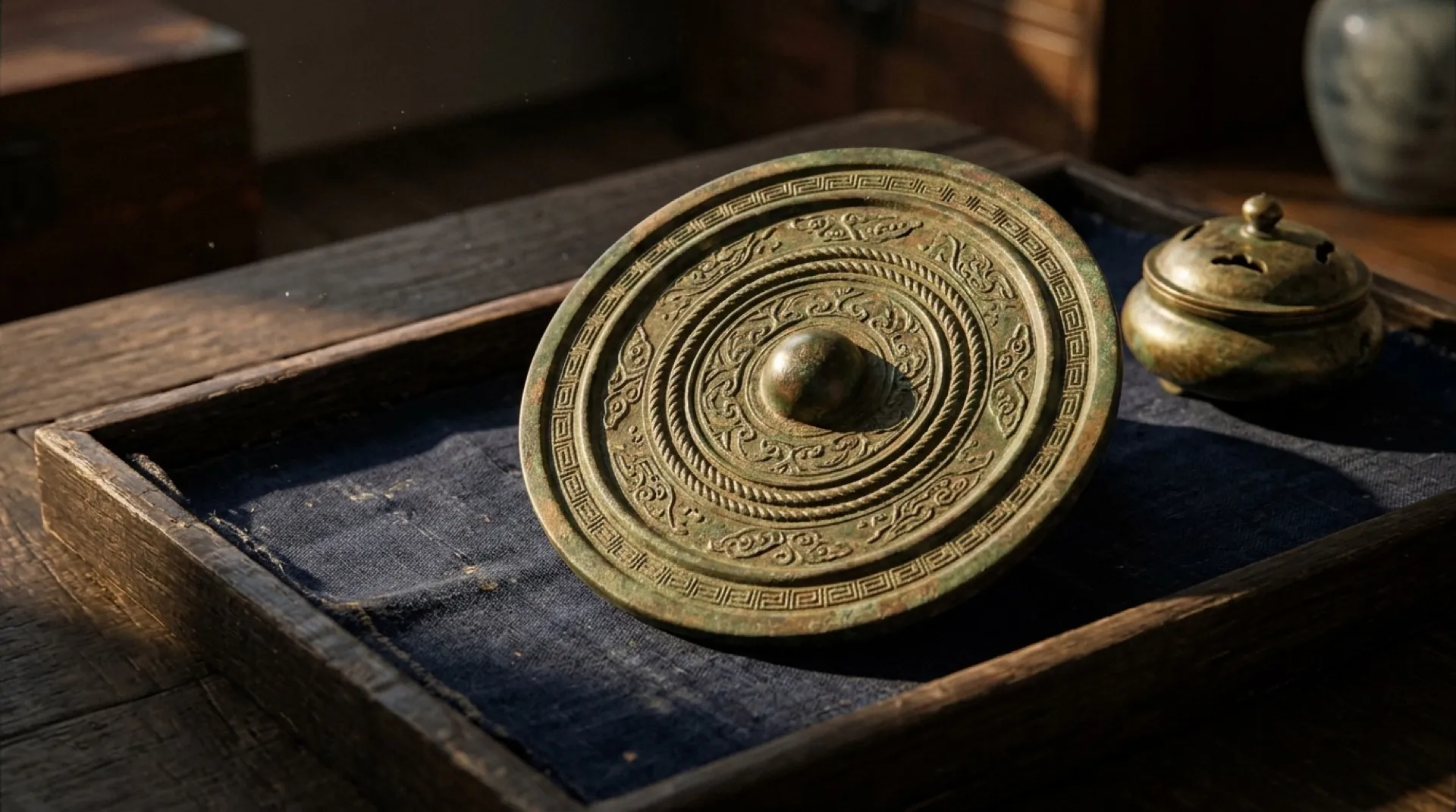
A round bronze mirror with a central knob and bands of cast pattern, lying on indigo cloth in a wooden tray beside a small lidded bronze jar.

1. Why Chapter 10 Is the Earliest Self-Cultivation Manual in the Tao Te Ching

If a student asks which single chapter of the Tao Te Ching (Dao De Jing) speaks most directly to seated meditation, breathing, and Wudang internal alchemy, teachers almost always point to Chapter 10 (see our Tao Te Ching Chapter 10 study page). Rather than issuing dogmatic commands, Laozi poses a series of six quiet, searching questions to the practitioner:

'Carrying the corporeal and animus souls and embracing the One, can you keep them from parting (zai ying po bao yi, neng wu li hu 载营魄抱一,能无离乎)? Concentrating your qi and reaching the utmost suppleness, can you be like an infant (zhuan qi zhi rou, neng ru ying er hu 专气致柔,能如婴儿乎)? Cleansing the mysterious mirror, can you leave it free of blemish (di chu xuan jian, neng wu ci hu 涤除玄鉴,能无疵乎)?'

2. 'Embracing the One' (Bao Yi) and 'Concentrating Qi to Reach Suppleness' (Zhuan Qi Zhi Rou)

In classical Chinese physiology, the Po (魄, corporeal/somatic awareness tied to the senses and breath) easily sinks into habit and distraction, while the Hun (魂, radiant/dreaming spirit, here paired with Ying 营) easily flies outward into planning and anxiety. 'Embracing the One' (Bao Yi 抱一, closely related to Shou Yi 守一, Guarding the One) means bringing bodily sensation and mental attention back home to the same quiet center.

When spirit and body stop pulling in opposite directions, the breath naturally gathers (zhuan qi 专气)—not by holding the breath forcefully, which creates stiffness, but by letting it become continuous, fine, and soft (zhi rou 致柔) like that of a newborn child (a theme deepened in our essay on Softness, Vitality, and Longevity).

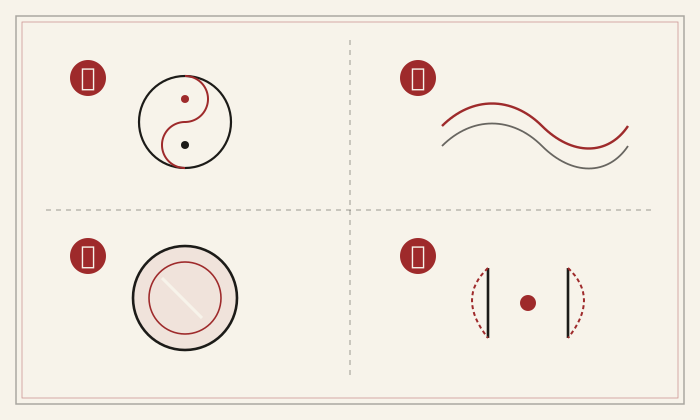
Classical four-quadrant diagram of Tao Te Ching Chapter 10 showing Embracing the One (Zai Ying Po Bao Yi), Concentrating Qi into Infant Suppleness (Zhuan Qi Zhi Rou), Cleansing the Mysterious Mirror (Di Chu Xuan Jian), and Opening and Closing the Gates of Heaven (Tian Men Kai He)

Tao Te Ching Chapter 10's four inner-cultivation pillars: ① Embracing the One, ② Concentrating Qi into Suppleness, ③ Cleansing the Mysterious Mirror, and ④ Opening and Closing the Gates of Heaven.

  1. ① Zai Ying Po Bao Yi (Carrying the Corporeal and Radiant Souls to Embrace the One): Uniting physical awareness and clear spirit without scattering.
  2. ② Zhuan Qi Zhi Rou Ru Ying Er (Concentrating Qi to Reach Suppleness Like an Infant): Gathering the breath into undivided, unbraced softness.
  3. ③ Di Chu Xuan Jian Wu Ci (Cleansing the Mysterious Mirror Without Blemish): Polishing the heart-mind of dust and prejudice.
  4. ④ Tian Men Kai HeWei Ci (Opening and Closing the Gates of Heaven as the Receptive Female): Letting respiration and perception move without forced domination.

3. 'Cleansing the Mysterious Mirror' (Di Chu Xuan Jian) and 'The Gates of Heaven' (Tian Men Kai He)

In antiquity, mirrors (jian 鉴/镜) were cast from bronze; when dust or oxidation filmed the surface, one did not paint a picture onto the bronze—one simply wiped the dust away (di chu 涤除) so the mirror could reflect whatever stood before it. Laozi calls the deep awareness of the heart-mind the 'Mysterious Mirror' (Xuan Jian 玄鉴), anticipating Zhuangzi's teaching that the sage uses the heart-mind like a mirror.

Laozi then asks: 'As the Gates of Heaven open and close, can you play the part of the receptive female (tian men kai he, neng wei ci hu 天门开阖,能为雌乎)?' Whether in the inhalation and exhalation of Natural Abdominal Breathing or in the opening and closing of a Taijiquan posture, remaining receptive (ci 雌, as in Chapter 28's Know the White, Keep to the Black) allows the 'Gates of Heaven' to swing without friction.

4. A Three-Minute Chapter 10 Check-In Before Standing or Meditation

Use Laozi's three opening questions as a gentle self-check before Standing Post (Zhan Zhuang): (1) Bao Yi: Are my eyes, mind, and breath in the same room as my feet? (2) Zhuan Qi Zhi Rou: Has my breathing made my shoulders and ribcage softer, or tighter? (3) Di Chu Xuan Jian: Can I wipe away today's preconceptions like dust from a bronze mirror?

Safety note: this philosophical and breathing reflection is for educational mindfulness study and is not a substitute for medical or psychological care.

Seeker’s Q&A · Frequently Asked Questions

What is the core takeaway of Cleansing the Mysterious Mirror (Di Chu Xuan Jian) & Embracing the One?

Explore Tao Te Ching (Dao De Jing) Chapter 10's six contemplative questions—Embracing the One (Bao Yi), Concentrating Qi to Reach Suppleness (Zhuan Qi Zhi Rou), and Cleansing the Mysterious Mirror (Di Chu Xuan Jian)—in Wudang inner cultivation.
