TAOIST PHILOSOPHY · 道家哲学

Knowing Yourself Is Illumination (Zi Zhi Zhe Ming): Self-Knowledge, Self-Mastery, and Keeping One's Center in Tao Te Ching Chapter 33 自知者明,自胜者强:《道德经》第三十三章的内照与守中之道

Explore Tao Te Ching (Dao De Jing) Chapter 33 ('Knowing others is intelligence; knowing yourself is illumination') alongside Han Feizi's parable of the eyelashes and Wudang internal martial arts training.


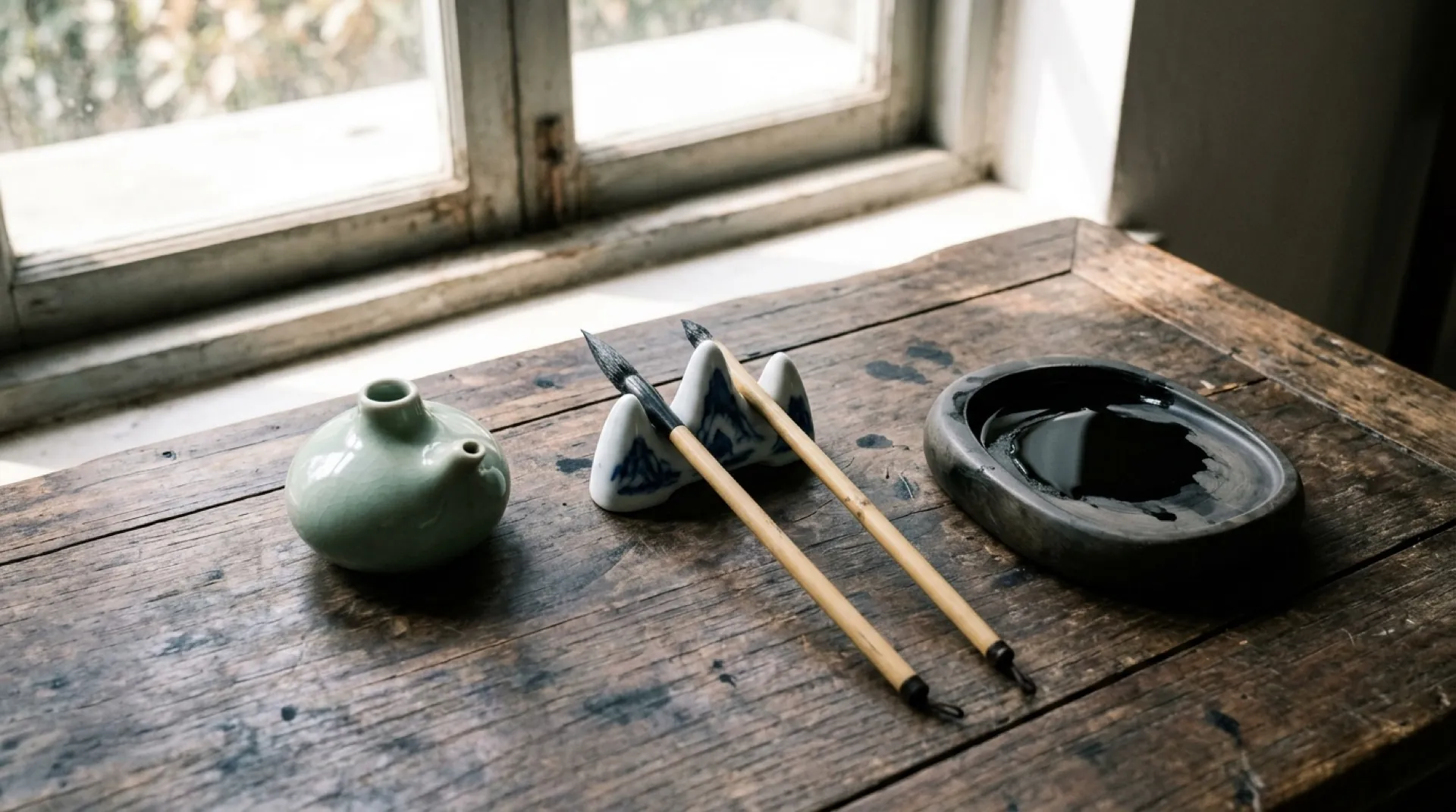
A small celadon water dropper, two brushes on a porcelain rest and an inkstone holding fresh ink on a worn wooden desk beneath a window.

One who knows others is intelligent; one who knows oneself is illuminated. One who overcomes others has force; one who overcomes oneself is truly strong. One who knows sufficiency is rich; one who perseveres has resolve. One who does not lose one's place endures.

— Tao Te Ching (Dao De Jing), Chapter 33

1. The Parable of the Eyelashes: Why Seeing Yourself Is Harder Than Seeing a Hundred Paces

Chapter 33 of the Tao Te Ching (Dao De Jing) opens with two pairs of distinctions that form the backbone of Taoist self-cultivation: 'One who knows others is intelligent (zhi 智); one who knows oneself is illuminated (ming 明). One who overcomes others has force (you li 有力); one who overcomes oneself is truly strong (qiang 强).' Why does Laozi reserve the higher word—Ming (illumination, composed of the characters for sun and moon)—for knowing oneself rather than analyzing the world?

In the Han Feizi (Yulao 喻老, 'Illustrating Laozi'), one of the earliest surviving commentaries on the Tao Te Ching, the philosopher illustrates this line through a dialogue between King Zhuang of Chu and his advisor Duzi. When the king asks why a ruler with a powerful army and keen advisors can still fall into ruin, Duzi replies: 'The human eye can see the tip of an autumn hair at a hundred paces, yet it cannot see its own eyelashes.' Evaluating other people's flaws requires only outward cleverness, because our eyes naturally point outward; perceiving our own habitual blind spots, impatience, and postural tension requires turning the light of awareness around—the practice explored on the Tao Te Ching Chapter 33 study page and in Inner Observation (Neiguan).

2. 'Overcoming Others Has Force; Overcoming Yourself Is Truly Strong'

The second pair in Chapter 33 contrasts outward force (Li 力) with inward strength or resilience (Qiang 强). Outward force is always comparative and conditional: a person who relies on muscular power or aggressive argument to overcome others remains strong only until meeting someone faster, heavier, or louder. Moreover, external contention consumes vitality in every collision.

In Wudang internal martial arts, this distinction is experienced directly on the training floor. When a beginner enters Push Hands (Tuishou), the instinctive habit is to push against the partner—trying to 'overcome others with force.' Yet what defeats a practitioner first is almost never the partner's strength; it is one's own held breath, raised shoulders, and eagerness to win, which uproot the feet before the partner even attacks. 'Overcoming oneself' means conquering the reflex to tense up, panic, or lean out of your own vertical axis.

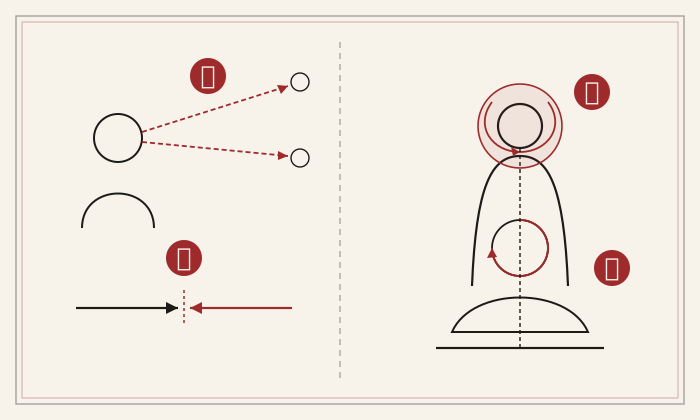
Classical diagram contrasting outward cleverness and contending force with inward illumination, self-mastery, and keeping one's central root

The four contrasts of Tao Te Ching Chapter 33: outward projection versus inward illumination, and external force versus rooted self-mastery.

  1. ① Outward Intelligence (Zhi Ren Zhe Zhi): Sight projected a hundred paces outward while remaining blind to one's own eyelashes.
  2. ② Inward Illumination (Zi Zhi Zhe Ming): Turning awareness back to perceive one's own breath, posture, and mental bias clearly.
  3. ③ Contending Force (Sheng Ren Zhe You Li): Two external forces colliding head-on, exhausting stamina whenever met by greater force.
  4. ④ Self-Mastery & Keeping One's Place (Zi Sheng Zhe Qiang / Bu Shi Qi Suo): Harmonizing internal tension around an unshakeable central pivot.

3. 'One Who Does Not Lose One's Place Endures' (Bu Shi Qi Suo Zhe Jiu)

Later in Chapter 33, Laozi names the practical fruit of self-knowledge and self-mastery: 'One who knows sufficiency is rich; one who perseveres has resolve; one who does not lose one's place endures' (bu shi qi suo zhe jiu 不失其所者久). In classical commentary, 'one's place' (qi suo 其所) refers both to one's natural station free from overreaching and to the central root where life is nourished.

Across Wudang Taijiquan and Qigong, 'not losing one's place' is the exact definition of central equilibrium (Zhongding 中定)—one of the five steps of the Thirteen Postures (Shisanshi). Whether advancing, retreating, looking left, or gazing right, the practitioner who keeps the waist, breath, and spirit anchored in the central pivot cannot be easily pulled into emptiness or double-weightedness.

4. A Daily Self-Observation Practice: Checking the 'Eyelashes' Before Reacting

You can bring Chapter 33 into daily life and solo training with a simple one-minute check before any difficult conversation or practice session. Before focusing on the external task or person in front of you ('a hundred paces away'), pause to check the 'eyelashes' closest to home: Are my molars clenched? Have my shoulders crept up toward my ears? Is my breathing shallow in the upper chest rather than settled in the abdomen?

Take three slow exhales to release those three internal tensions first, re-establishing your own ground ('not losing your place') before speaking or moving. Safety note: this reflective mindfulness and postural practice is educational and supports everyday composure; it is not a substitute for clinical psychological or medical care.

Seeker’s Q&A · Frequently Asked Questions

What is the core takeaway of Knowing Yourself Is Illumination (Zi Zhi Zhe Ming)?

Explore Tao Te Ching (Dao De Jing) Chapter 33 ('Knowing others is intelligence; knowing yourself is illumination') alongside Han Feizi's parable of the eyelashes and Wudang internal martial arts training.
