
TAOIST PHILOSOPHY · 道家哲学

Xinzhai (Fasting of the Heart-Mind) in Zhuangzi: Listening with the Vital Breath and Why Brightness Is Born in an Empty Room 《庄子·人间世》“心斋”详解:无听之以耳,无听之以心,而听之以气

How Zhuangzi Chapter 4 turns ritual fasting inward—from sensory noise and preconceived mental tallies to receptive breath awareness (Ting zhi yi Qi) and luminous stillness (Xushi Shengbai).

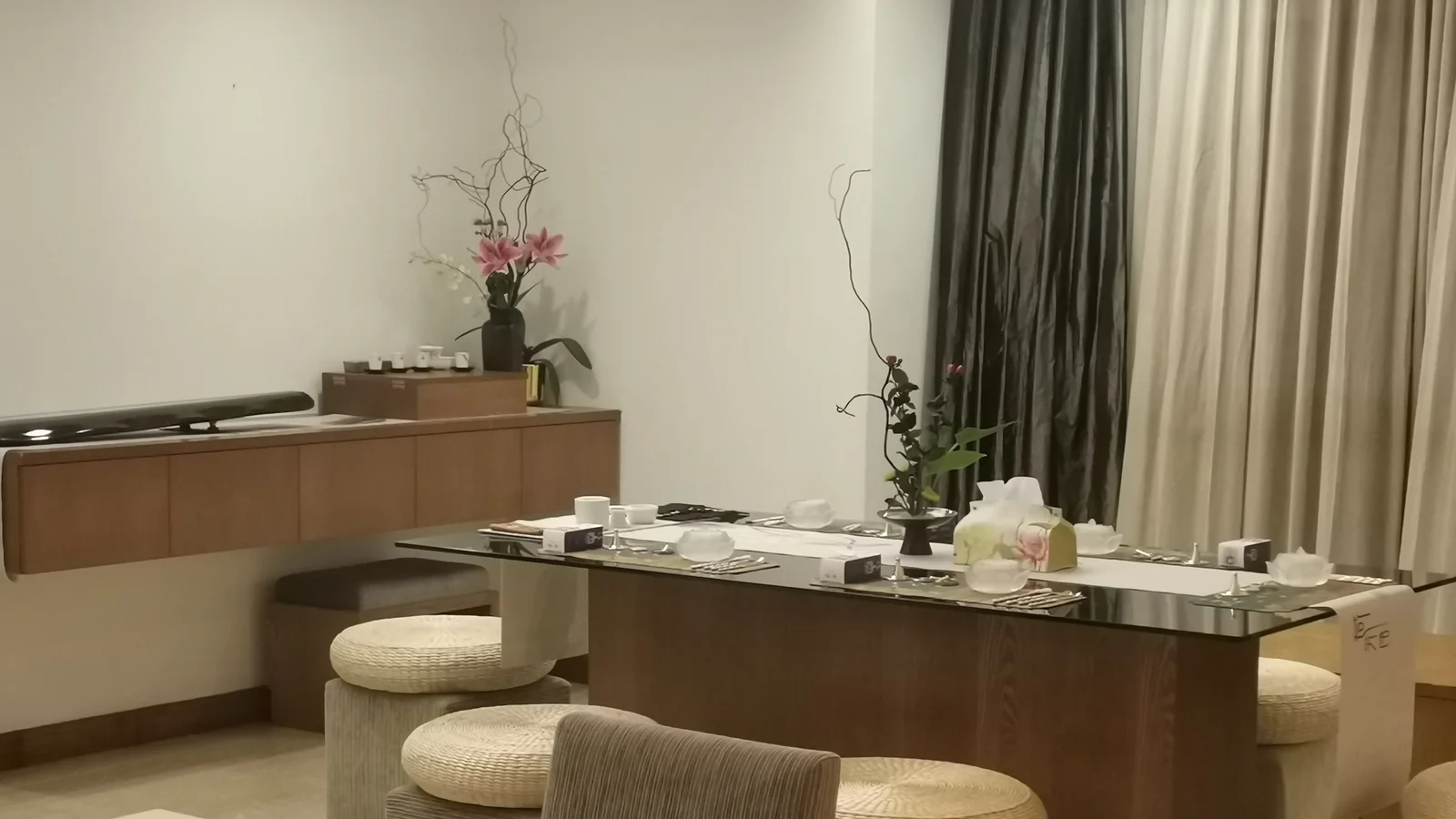
A quiet Taoist study room: a black guqin on a low wooden console beside a pink lily arrangement and tea set, and a dark-glass study table set with white lotus-shaped cups, an incense holder and a floral branch, with straw cushions and a grey curtain.

When most people hear the word “fasting” (斋, zhai), they think of abstaining from rich food or wine before a ceremony. Yet in Chapter 4 of the Zhuangzi—In the World of Men (《庄子·人间世》)—when the eager disciple Yan Hui tells Confucius how his household keeps a simple ritual fast, the teacher replies that dietary abstinence is easy; what truly transforms a person is “the Fasting of the Heart-Mind” (心斋, Xinzhai). Together with Zuowang (“Sitting and Forgetting”) in Chapter 6, Xinzhai stands as one of the two foundational pillars of Taoist contemplative practice and Wudang internal martial sensitivity.

1. The Classical Dialogue in Zhuangzi Chapter 4: Ear, Mind, and Vital Breath (Qi)

When Yan Hui asks, “What is the Fasting of the Heart-Mind?” Confucius gives an instruction that has guided Taoist meditators and martial artists for more than two millennia:

“Unify your intention (若一志)! Do not listen with your ears, listen with your heart-mind; do not listen with your heart-mind, listen with your vital breath (无听之以耳而听之以心,无听之以心而听之以气). Listening stops at the ears (听止于耳); the heart-mind stops at matching tallies (心止于符). As for the vital breath (Qi), it is empty and waits upon all things (气也者,虚而待物者也). Only the Tao gathers in emptiness; emptiness is the Fasting of the Heart-Mind (唯道集虚。虚者,心斋也).”

Why does Zhuangzi distinguish three ways of listening? In ancient China, a fu (符) was a bamboo or bronze tally split in half: to verify a messenger, you checked whether their half matched the pre-cut notches already in your hand (Words, Names and Reality). When you listen only with the conceptual mind (xin), you are constantly comparing what you hear against your existing prejudices, fears, and labels (“Does this match my opinion or threaten my status?”). You never actually meet the person or situation in front of you—you only meet your own notches.

2. The Four Stages of Xinzhai and “Brightness Born in an Empty Room” (虚室生白)

A few lines later in the same chapter, Zhuangzi offers an unforgettable image for what happens when the heart-mind stops cluttering itself with tallies:

“Look into that closed window opening: an empty room gives birth to pure brightness (瞻彼阕者,虚室生白); auspiciousness comes to rest where there is stillness.”

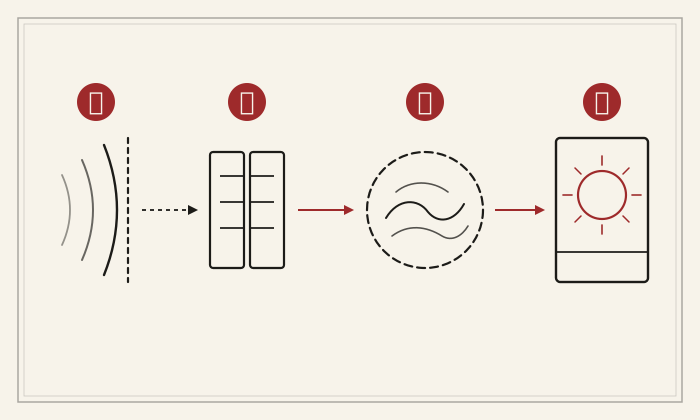
Classical ink-and-cinnabar diagram of Zhuangzi's Fasting of the Heart-Mind (Xinzhai) showing four stages: outer sound waves stopping at the ear gate, rigid bamboo tallies of the conceptual mind, the open receptive circle of vital breath (Qi), and morning brightness filling an empty pavilion window

The four stages of Xinzhai (心斋 · 听之以气) in Zhuangzi Chapter 4: from sensory reactivity and mental tally-matching to receptive breath and clear light.

  1. Listening with the Ears (听止于耳 · Sensory Surface): raw external sounds and stimuli striking the senses without inward composure
  2. Listening with the Tallying Mind (心止于符 · Preconceived Notches): the calculating mind judging every impression against fixed labels and biases (Qiwu Lun)
  3. Listening with Vital Breath (气也者,虚而待物 · Receptive Qi): calm, whole-body respiratory presence that receives change without stiffness (Natural Abdominal Breathing)
  4. Brightness Born in the Empty Chamber (虚室生白 · 唯道集虚): natural clarity appearing once the inner room is cleared of clutter (You and Wu: Empty Space)

Notice that sunlight does not have to be manufactured inside the room: as soon as you clear away the stacked furniture blocking the window, natural light floods the chamber on its own. This echoes Chapter 10 of the Tao Te Ching (Dao De Jing) (“cleansing the inner mirror of view”) and Chapter 16 (“attain the utmost emptiness; guard deep stillness”).

3. How “Listening with Qi” Lives in Wudang Meditation and Taijiquan

In Wudang training, “do not listen with the mind; listen with Qi” is not merely a poetic metaphor—it is a literal technical instruction in both stillness and movement:

  • In Quiet Sitting (Taoist Meditation & Neiguan): If you try to force your thoughts to stop by arguing with them in your head, you are using the tallying mind to fight the tallying mind. Instead, rest your attention on the warm, unhurried rise and fall of the lower abdomen (Guarding the One · Shouyi). Because the breath has no verbal concepts, resting with Qi starves anxious rumination of fuel.
  • In Tingjin (Listening Energy) & Push Hands (Tuishou): When a partner presses toward you, if you “listen with the conceptual mind” (“He is pushing my left wrist; I will try technique #3!”), you are already too slow and stiff. When you relax the shoulders (sinking shoulders and dropping elbows), settle your weight (distinguishing Empty and Full), and “listen with Qi” through the whole frame, your body responds to the slightest change in pressure instantaneously.
Morning sunlight streaming through an open wooden lattice window onto a weathered elm table holding a celadon bowl of clear water and blank dark-blue thread-bound classical books.

“Look into that window opening: an empty room gives birth to pure brightness” (Zhuangzi Chapter 4, Xinzhai).

4. A 5-Minute “Heart-Mind Fast” Between Wudang Mountain and Singapore

Bridging the quiet contemplative heritage near Wudang Mountain’s UNESCO World Heritage ancient Taoist temples with our regular classes in Singapore, Wudang.Org invites you to practise a simple five-minute Xinzhai fast before any meeting, study session, or Qigong routine: set your phone out of reach, sit or stand in Wuji posture, let external sounds pass by the ears without naming them, and follow ten quiet abdominal breaths until the inner room feels spacious again. Explore our full curriculum on Start Here.

Seeker’s Q&A · Frequently Asked Questions

What is Xinzhai (心斋, Fasting of the Heart-Mind) in Zhuangzi Chapter 4?

Unlike dietary fasting before a ritual, Xinzhai means clearing the heart-mind of preconceived biases, ego calculations, and mental noise (“listening with vital breath rather than the ears or conceptual mind”) so awareness becomes open and receptive.


What does Zhuangzi mean by “the heart-mind stops at matching tallies” (心止于符)?

A tally (fu 符) was a notched token split in half for verification. “Stopping at tallies” means our conceptual mind constantly checks new experiences against pre-cut mental categories and prejudices instead of perceiving reality directly.

What does “an empty room gives birth to brightness” (虚室生白) mean in daily practice?

Just as sunlight naturally fills a room once clutter is cleared from the window, mental clarity and calm do not need to be forced—they arise naturally when you relax physical tension and let go of racing thoughts through quiet breathing.
