
TAOIST PHILOSOPHY · 道家哲学

Achieve the Result Without Boasting or Forcing (Guo Er Wu Qiang): Non-Coercive Resolution and 'What Grows Over-Rigid Soon Decays' (Wu Zhuang Ze Lao) in Tao Te Ching Chapter 30 善者果而已,果而勿强:《道德经》第三十章的“不以兵强天下”与“物壮则老”

A primary-source examination of Tao Te Ching (Dao De Jing) Chapter 30, exploring why coercion rebounds upon itself (Qi Shi Hao Huan), the five-fold discipline of 'achieving the result and stopping' (Guo Er Wu Qiang), and the warning that 'whatever becomes over-rigid soon grows old' (Wu Zhuang Ze Lao).
Young bamboo shoots and fallen yellow ginkgo leaves on the mossy edge of a stone terrace, with misty ridges at sunrise beyond.

1. Primary Text & Wang Bi Commentary: 'Its Action Easily Rebounds' (Qi Shi Hao Huan) and the Thorns of Coercion

Chapter 30 of the Tao Te Ching (Dao De Jing) opens with a direct warning against relying on martial or coercive dominance: 'One who assists a ruler by means of the Tao does not use arms to coerce the world; such actions easily rebound upon themselves (以道佐人主者,不以兵强天下,其事好还). Where armies camp, thorns and brambles grow; in the wake of a great campaign, years of dearth are sure to follow (师之所处,荆棘生焉;大军之后,必有凶年).' In classical agrarian life, when farmers were conscripted and fields trampled by war-chariots, fertile soil quickly reverted to wild brambles (荆棘) and disrupted seasonal harvests. Wang Bi (王弼, 226–249 CE) notes that whenever someone attempts to conquer external circumstances through brute force, that very force exhausts vital reserves within and provokes counter-force without—what Laozi tersely calls 'its affair loves to return' (其事好还).

2. The Five-Fold Ethic of Sufficiency: 'Achieve the Result and Stop' (Shan Zhe Guo Er Yi)

Because force always carries a hidden cost, the adept of the Tao treats defensive or corrective action solely as an unavoidable necessity: 'One who is truly skilled achieves the needed resolution and stops, never daring to seize dominance by force (善者果而已,不敢以取强). Achieve the result, yet do not be self-important (果而勿矜); achieve the result, yet do not brag (果而勿伐); achieve the result, yet do not be arrogant (果而勿骄); achieve the result only because there was no alternative (果而不得已); achieve the result, yet never force or dominate (果而勿强).' Here guo (果, literally 'ripened fruit' or 'decisive completion') means resolving an imbalance cleanly—like harvesting grain when ripe—and immediately returning to quietude without lingering in pride, aggression, or triumphalism.

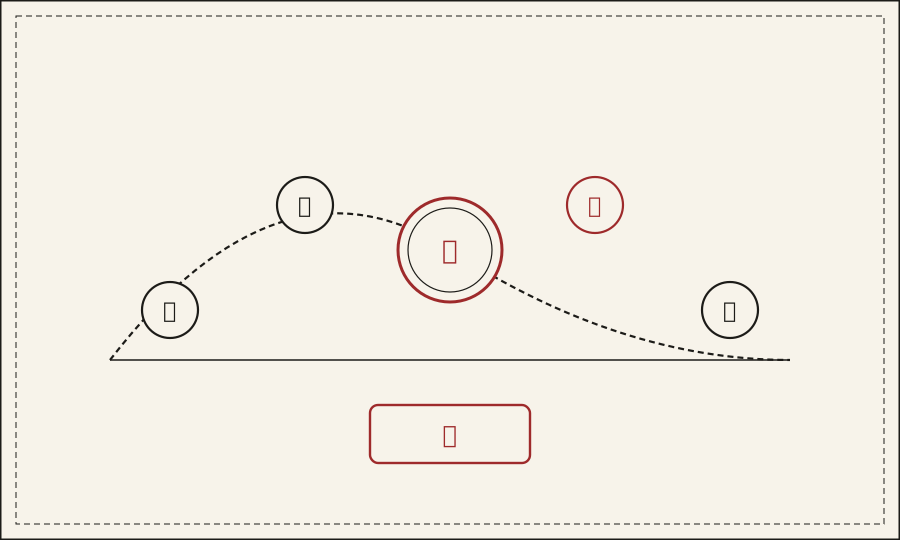
Numbers-only classical Wudang ink-and-cinnabar diagram of Tao Te Ching Chapter 30 showing the arc of non-coercive resolution (①–③), the warning against over-rigid force (④–⑤), and the Five-Fold Restraint of Guo Er Wu Qiang (⑥).

Classical Wudang diagram of Tao Te Ching Chapter 30 (numbers-only SVG key)

  1. ① Assisting with the Tao — Never Coercing by Force (Yi Tao Zuo Renzhu, Bu Yi Bing Qiang Tianxia)
  2. ② Acting Only When Unavoidable (Guo Er Bu De Yi)
  3. ③ The Ripened Resolution — Achieve the Result and Stop (Shan Zhe Guo Er Yi)
  4. ④ Over-Fullness and Rigid Dominance (Wu Zhuang)
  5. ⑤ Premature Decay and Rebound (Ze Lao / Qi Shi Hao Huan)
  6. ⑥ Lower Seal: Five-Fold Restraint (No Self-Importance, No Bragging, No Arrogance, Only When Unavoidable, Never Forcing).

3. 'When Things Grow Over-Rigid They Age' (Wu Zhuang Ze Lao) in Wudang Internal Martial Arts and Neidan

Chapter 30 closes with an axiom central to Wudang longevity and internal martial arts: 'When things reach over-fullness and rigid strength, they immediately begin to age and decay; this is called contrary to the Tao, and what is contrary to the Tao perishes early (物壮则老,是谓不道,不道早已).' In the hexagram cycle of the Book of Changes, Great Strength (大壮, Hexagram 34, four Yang lines surging upward) stands just before the turning point where Yang begins to wane. In the courtyard training traditions associated with Wudang Mountain's UNESCO World Heritage ancient Taoist temples and taught in Singapore, Wu Zhuang Ze Lao explains why Wudang Taijiquan, swordplay, and Qigong never lock a joint at 100% extension or hold the breath at maximum inflation. Issuing energy only to the point of resolution (果而已) and immediately softening back into the waist and Dantian prevents structural over-extension and keeps vital Qi supple.

4. Cross-References & Practice Bridges Across the Wudang Canon

To study how Chapter 30 continues the non-coercive philosophy of Chapters 28 and 29, pair this essay with The World Is a Sacred Vessel: Qu Shen, Qu She, Qu Tai (Tao Te Ching Ch. 29), The Tao Te Ching Overview, and our newcomer orientation at Start Here: Wudang Taoist Culture, Internal Martial Arts & Wellness. To experience 'achieving the result without forcing' in traditional weapon work and morning Daoyin, explore Wudang Eight Immortals Sword Fundamentals (Ba Xian Jian), Dry-Bathing the Face (Mo Mian / Gan Yumian) Daoyin Guide, and our guide to Wudang Mountain.

Seeker’s Q&A · Frequently Asked Questions

What is the core takeaway of Achieve the Result Without Boasting or Forcing (Guo Er Wu Qiang)?

A primary-source examination of Tao Te Ching (Dao De Jing) Chapter 30, exploring why coercion rebounds upon itself (Qi Shi Hao Huan), the five-fold discipline of 'achieving the result and stopping' (Guo Er Wu Qiang), and the warning that 'whatever becomes over-rigid soon grows old' (Wu Zhuang Ze Lao).
