TAOIST PHILOSOPHY · 道家哲学

How Rivers and Seas Become Kings of the Hundred Valleys (Shan Xia Zhi): Taking the Lower Position and Non-Contention in Tao Te Ching Chapter 66 江海善下,百谷称王:《道德经》第六十六章「以言下之、以身后之与不争之德」发微

A practitioner-scholar study of Tao Te Ching (Dao De Jing) Chapter 66 and Zhuangzi's Tianxia—exploring why great rivers and seas receive all mountain streams by taking the lower position (Shan Xia Zhi), how humility and placing oneself behind eliminate friction, and how sinking the root works in Wudang Taijiquan.


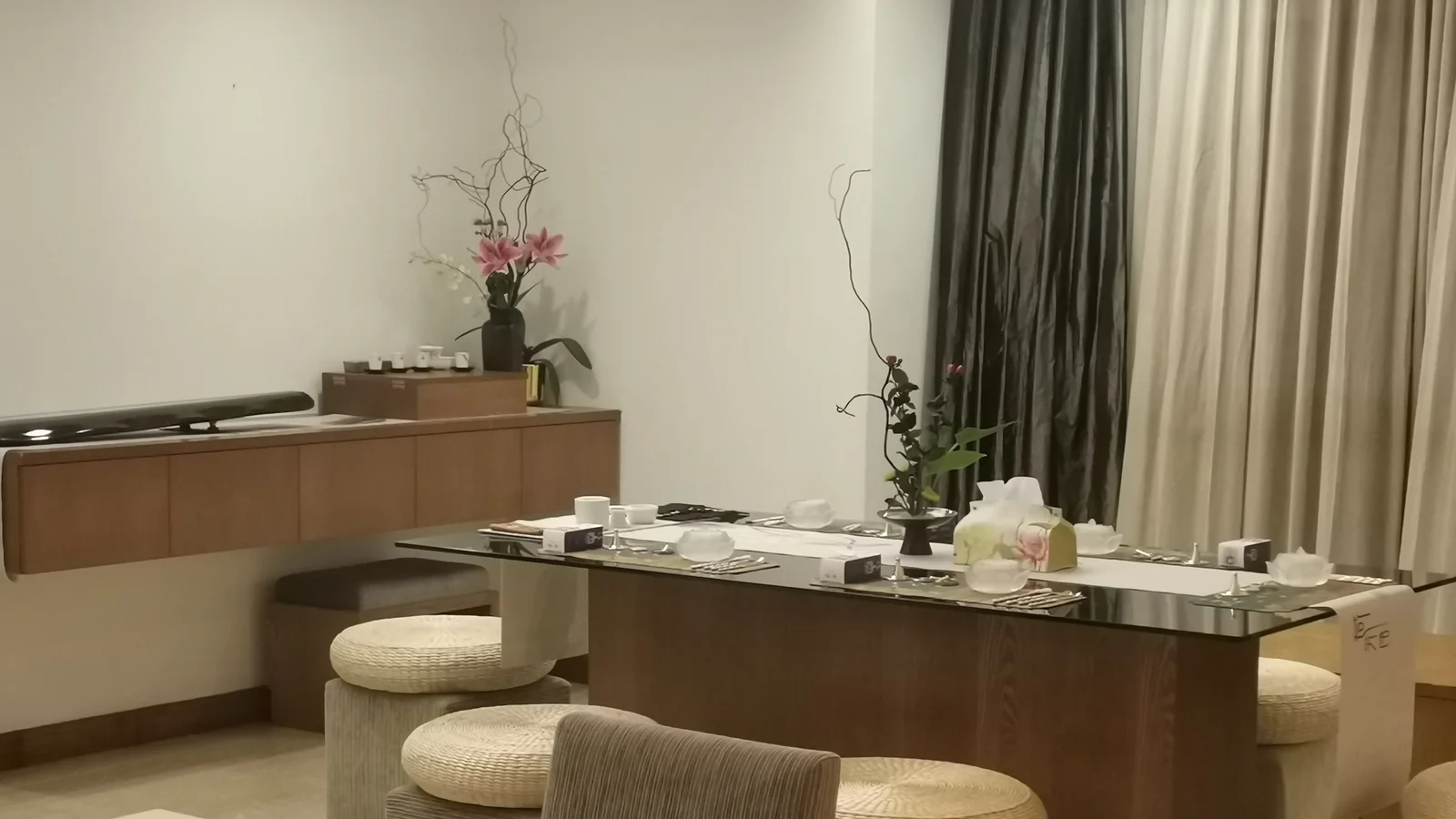
A quiet Taoist study room: a black guqin on a low wooden console beside a pink lily arrangement and tea set, and a dark-glass study table set with white lotus-shaped cups, an incense holder and a floral branch, with straw cushions and a grey curtain.

Why the Hundred Valleys Empty Into the River and Sea: “Excelling at Taking the Lower Position” (Shan Xia Zhi)

Chapter 66 of the Tao Te Ching (Dao De Jing) opens with a hydrological observation that anyone walking the ravines of Wudang Mountain can see after a morning rain: 'The reason great rivers and seas are able to be kings of the hundred mountain valleys is that they excel at taking the lower position (shan xia zhi); therefore they are able to be kings of the hundred valleys' (江海之所以能为百谷王者,以其善下之,故能为百谷王). A high mountain torrent looks dramatic as it crashes over boulders, yet it cannot hold water for long because of its height. The great river and the sea never climb upward to capture the streams; simply by resting at the lowest elevation, they receive every valley's water effortlessly. In Zhuangzi Chapter 33 (Tianxia 庄子·天下), Laozi's entire teaching is summarized around this exact quality: 'Taking soft weakness and humble lowness as its outer expression, and emptiness that injures nothing as its inner substance' (以濡弱谦下为表,以空虚不毁万物为实).

Humble Words and Placing Oneself Behind (Yi Yan Xia Zhi, Yi Shen Hou Zhi)

From the geography of water, Laozi draws a direct lesson for human relationships and leadership: 'Therefore, wishing to be above the people, one must speak humbly below them (yi yan xia zhi); wishing to be ahead of the people, one must place one's person behind them (yi shen hou zhi)' (是以欲上民,必以言下之;欲先民,必以身后之). In Wang Bi's commentary (老子道德经注) and Heshang Gong's Zhangju (老子章句), this is not a clever political trick for seizing power; it describes the natural disposition of someone free from egoic domination. A teacher or leader who speaks modestly, listens first, and takes the hardest burden while leaving credit to others never feels like a crushing weight on those around them: 'Therefore the sage stands above yet the people do not feel weighed down, stands in front yet the people do not feel harmed; thus the whole world gladly supports them without growing weary' (是以圣人处上而民不重,处前而民不害。是以天下乐推而不厌).

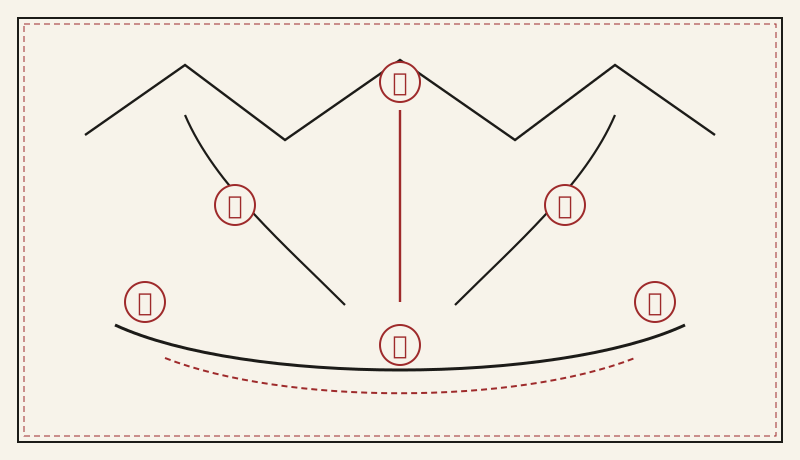
Classical Wudang ink-on-parchment diagram of Tao Te Ching Chapter 66 showing the Hundred Mountain Valleys (①), Downward-Flowing Tributaries (②), Great River and Sea Basin Below (③), Humble Speech and Self-Placement Behind (④), Support Without Burden or Harm (⑤), and Uncontested Capacity Through Non-Contention (⑥).

Key — ① The Hundred Valleys (百谷, high mountain ravines and streams); ② Converging Tributaries (万流归下, water naturally seeking the lower level); ③ Great River and Sea Basin (江海善下之,故能为百谷王); ④ Humble Speech and Stepping Behind (以言下之,以身后之); ⑤ Presence Without Weight or Harm (处上而民不重,处前而民不害); ⑥ Non-Contention That None Can Contest (以其不争,故天下莫能与之争).

Sinking Beneath Incoming Force: How “Shan Xia Zhi” Operates in Wudang Taijiquan

In Wudang Taijiquan and Tuishou (Push Hands), 'excelling at taking the lower position' (shan xia zhi 善下之) is a literal biomechanical law. When a training partner pushes with stiff, high-chested force, the instinct of the untrained body is to rise up and meet force with force—two high torrents colliding head-on. The Wudang practitioner instead softens the hip creases (songkua 松胯), drops the elbows (zhuizhou 坠肘), and lets the center of gravity settle lower than the partner's line of force. Just as valley streams pour into a lower basin, the partner's over-extended momentum flows downward into your rooted emptiness, where it can be guided harmlessly aside.

“Because They Do Not Contend, None Under Heaven Can Contend with Them”

Laozi closes Chapter 66 by echoing Chapters 8 and 22: 'Because they do not contend (bu zheng), none under Heaven can contend with them' (以其不争,故天下莫能与之争). Contention requires two parties pushing against the same point; when one party yields downward like the sea, collision has nowhere to land. Safety note: In your standing or form practice today, whenever your arms rise or a posture feels effortful, ask yourself whether you can 'take the lower position' internally—letting the breath, shoulders, and tailbone settle half an inch deeper toward the earth.

Seeker’s Q&A · Frequently Asked Questions

How does the image of rivers and seas as kings of the hundred valleys (Shan Xia Zhi) guide daily Wudang cultivation?

A practitioner-scholar study of Tao Te Ching (Dao De Jing) Chapter 66 and Zhuangzi's Tianxia—exploring why great rivers and seas receive all mountain streams by taking the lower position (Shan Xia Zhi), how humility and placing oneself behind eliminate friction, and how sinking the root works in Wudang Taijiquan.
