TAOIST PHILOSOPHY · 道家哲学

Emerging into Life, Entering into Death (出生入死,善摄生者): The Thirteen Gates of Vitality and Having No Place for Death in Tao Te Ching Chapter 50 出生入死,善摄生者:《道德经》第五十章“生生之厚”与“以其无死地”的武当摄生与化劲哲学

How Han Feizi’s commentary on the four limbs and nine orifices illuminates Wudang longevity cultivation, and why true suppleness leaves neither horn, claw, nor blade a rigid corner to strike.

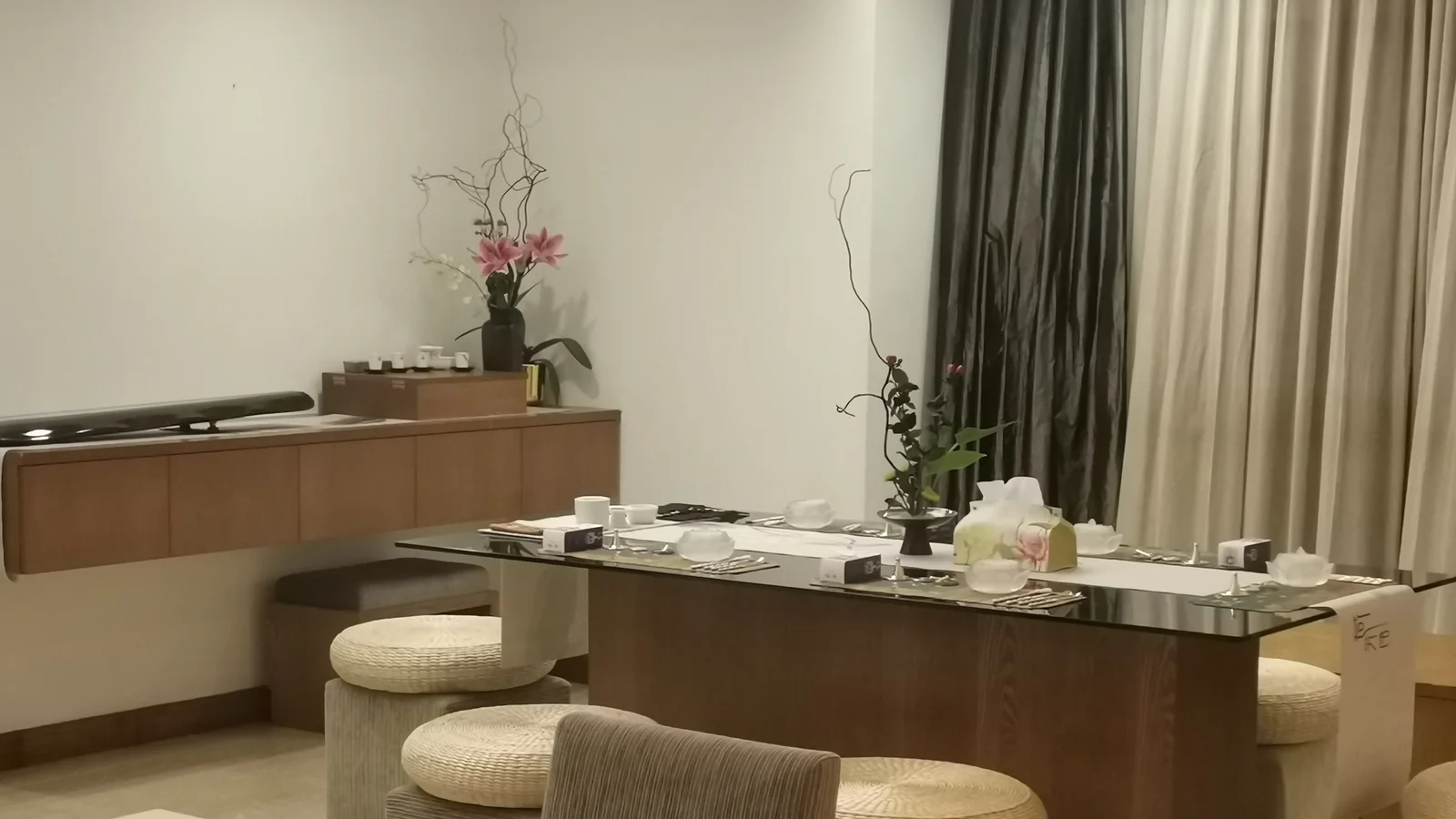
A quiet Taoist study room: a black guqin on a low wooden console beside a pink lily arrangement and tea set, and a dark-glass study table set with white lotus-shaped cups, an incense holder and a floral branch, with straw cushions and a grey curtain.

Chapter 50 of the Tao Te Ching (Dao De Jing) investigates the threshold between vitality and exhaustion: "Emerging into life, entering into death" (Chu Sheng Ru Si). Drawing on the earliest extant philosophical commentary in Han Feizi (Jie Lao) alongside Heshang Gong and Wang Bi, this study unpacks the famous riddle of "thirteen" (Shi You San), warns against the trap of anxious over-nourishment (Sheng Sheng Zhi Hou), and explains how a Wudang practitioner cultivates "no death-ground" (Wu Si Di) in breath and posture.

1. Classical Text and the Two Classical Readings of "Thirteen" (Shi You San 十有三)

Chapter 50 of the Tao Te Ching (Dao De Jing) stands at the heart of the scripture's De Jing (德经) section, directly preceding Chapter 51 (The Tao Gives Them Life, Virtue Nourishes Them — Dao Sheng Zhi, De Xu Zhi) and Chapter 52 (Returning to the Brightness — Xi Ming). It addresses the fundamental question of She Sheng (摄生, stewarding and conserving life):

出生入死。 生之徒,十有三;死之徒,十有三; 人之生,动之于死地,亦十有三。 夫何故?以其生生之厚。 盖闻善摄生者,陆行不遇兕虎,入军不被甲兵; 兕无所投其角,虎无所措其爪,兵无所容其刃。 夫何故?以其无死地。

"Emerging into life, entering into death. The companions of life are thirteen; the companions of death are thirteen; And where humans live, moving themselves into the ground of death, these too are thirteen. Why is this so? Because they make too thick and heavy their attachment to living (sheng sheng zhi hou 生生之厚). I have heard that one who excels at stewarding life (shan she sheng zhe 善摄生者) walks on land without encountering wild buffalo or tiger, and enters a host without bearing armor or weapons; The wild buffalo finds nowhere to thrust its horn, the tiger nowhere to lay its claws, the weapon nowhere to lodge its blade. Why is this so? Because in them there is no death-ground (yi qi wu si di 以其无死地)."

In the history of Chinese textual commentary, two complementary interpretations explain the phrase Shi You San (十有三):

  1. The Somatic Reading in Han Feizi (Jie Lao 解老) — The Four Limbs and Nine Orifices (四肢九窍 = 13 Gates): Writing in the late Warring States period, Han Feizi records the earliest preserved explanation of this line: "A person's body (身) possesses four limbs (四肢, si zhi) and nine orifices (九窍, jiu qiao—the eyes, ears, nostrils, mouth, and two lower excretory gates); four plus nine equals thirteen." When these thirteen bodily gates are governed in quiet alignment with natural rhythm, they act as the "companions of life" (sheng zhi tu 生之徒); when driven by restless sensory craving, forced exertion, and emotional agitation, those exact same thirteen gates become the "companions of death" (si zhi tu 死之徒) that drain the core.
  2. The Proportional Reading in Wang Bi (王弼) — Three Parts in Ten: Later commentators also read shi you san as "three out of ten"—observing that among all living beings, roughly three in ten naturally preserve their allotted span, three in ten perish early through innate fragility or harsh conditions, and another three in ten possess sound vitality yet needlessly destroy it through Sheng Sheng Zhi Hou (生生之厚): over-indulgence in rich food, forced breath-holding, obsessive tonic consumption, and anxious striving for status.
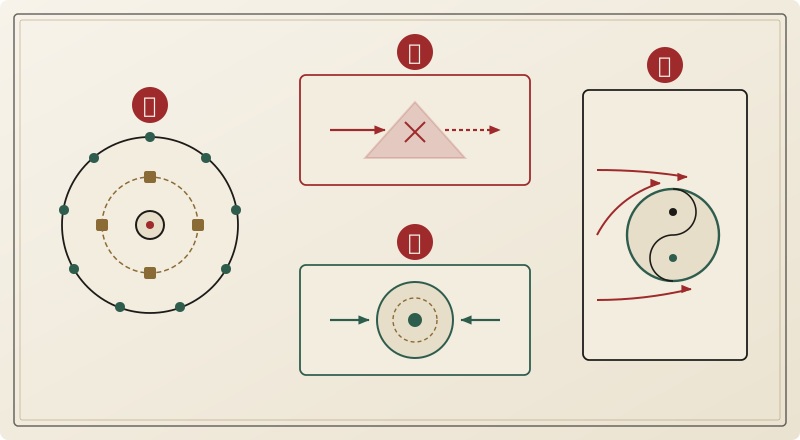
Classical Wudang diagram for Tao Te Ching Chapter 50 showing the Thirteen Gates of Four Limbs and Nine Orifices, the trap of Sheng Sheng Zhi Hou, and the supple sphere of Wu Si Di
Figure 1 — Somatic and Contemplative Architecture of Chapter 50 (出生入死,善摄生者): ① Shi You San (十有三) per Han Feizi · Jie Lao: the outer ring of 9 sensory/visceral orifices (Jiu Qiao 九窍) and inner cross of 4 limbs (Si Zhi 四肢) centered on the calm lower Dantian; ② Sheng Sheng Zhi Hou (生生之厚): anxious over-grasping and rigid outward strain moving vitality into a fracture-prone "death-ground" (Si Di 死地); ③ Shan She Sheng Zhe (善摄生者): inward conservation and guarding the root; ④ Yi Qi Wu Si Di (以其无死地): the supple, rotating Taiji sphere where horn, claw, and blade glance off harmlessly along tangent arcs.

2. Why "Thickening Life" (Sheng Sheng Zhi Hou) Creates a Death-Ground (Si Di)

In Wudang longevity cultivation (Yangsheng 养生) and internal alchemy (Neidan 内丹), Sheng Sheng Zhi Hou (生生之厚) describes the paradox of trying too hard to add to life:

Dimension Over-Thickening Life (Sheng Sheng Zhi Hou 生生之厚) Stewarding Life (Shan She Sheng 善摄生)
Sensory & Mental Gateways (9 Orifices) Outward sensory over-stimulation, late-night screen strain, emotional reactivity (scattering Shen 神) Closing the gates (Se Dui Bi Men) and choosing the belly over the eye
Physical & Breath Practice (4 Limbs) Forcing breath retention (Bie Qi), locking joints to feel "strong," chasing extreme flexibility or sweat Natural abdominal breathing and unhurried standing post (Zhan Zhuang)
Structural Consequence Creates a rigid "corner" (Si Di 死地) where stress, injury, or opposing force concentrates Preserves Wu Si Di (无死地)—elastic fullness with zero brittle edges

3. Wudang Martial & Contemplative Application: Embodying Wu Si Di (无死地)

When Laozi writes that the buffalo finds nowhere to thrust its horn and the blade finds nowhere to lodge its edge, the commentaries read this not as magical invulnerability; rather, one who stewards life well never enters the place of contention and never exposes a rigid target. In Wudang Taijiquan and Tuishou (Push Hands), Wu Si Di has an exact biomechanical meaning:

  • Zero Locked Joints in Solo Form and Tuishou: A locked elbow, a hyperextended knee, or a stiffly braced shoulder creates a Si Di (死地, dead angle). When an incoming push meets a locked joint, the force goes straight into the bone and uproots the stance. By maintaining silk-reeling spiral force (Chansijin) and folding the waist to borrow force (Zhedie Jieli), the practitioner's frame acts like a rotating sphere in water: incoming pressure ("the horn or blade") slides off along a tangent.
  • Stewarding the Four Limbs and Nine Orifices Daily: Before stepping into martial training, a Wudang student harmonizes the nine orifices through gentle cranial and facial Daoyin—such as pressing Baihui and Sishencong and warming Laogong and Hegu—so the thirteen gates remain companions of life rather than leaks of vitality.

Practice Reflection for Students

During your next ten minutes of quiet standing or slow walking, notice whether you are tightening your jaw (one of the nine orifices) or bracing your shoulders and knees (the four limbs) out of an anxious desire to "perform correctly." Soften those thirteen gates by 20 percent, let the breath settle naturally into the lower abdomen, and experience how releasing excess effort immediately restores stability.

Seeker’s Q&A · Frequently Asked Questions

What does “thirteen” (十有三) mean in Tao Te Ching chapter 50?

There are two classical readings. The “Jie Lao” chapter of the Han Feizi counts the four limbs and the nine orifices of the body, thirteen in all: used quietly they are companions of life, driven by craving they become companions of death. Wang Bi reads the phrase as “three parts in ten”. Either way the chapter makes the same point: people move themselves toward death by clinging too heavily to life.


