TAOIST PHILOSOPHY · 道家哲学

Thick Virtue Is Like a Newborn Child (Han De Zhi Hou, Bi Yu Chizi): Supple Sinews, Supreme Harmony, and Why Forcing the Breath Exhausts Vitality in Tao Te Ching Chapter 55 含德之厚,比于赤子:《道德经》第五十五章「骨弱筋柔、知和曰常与心使气曰强」发微

A practitioner-scholar reading of Tao Te Ching (Dao De Jing) Chapter 55 and Zhuangzi's Gengsang Chu—examining why thick inner virtue resembles an infant (Chizi), how supple sinews yield a firm grasp (Gu Ruo Jin Rou Er Wo Gu), and why forcing the breath with the willful mind (Xin Shi Qi Yue Qiang) hastens fatigue.


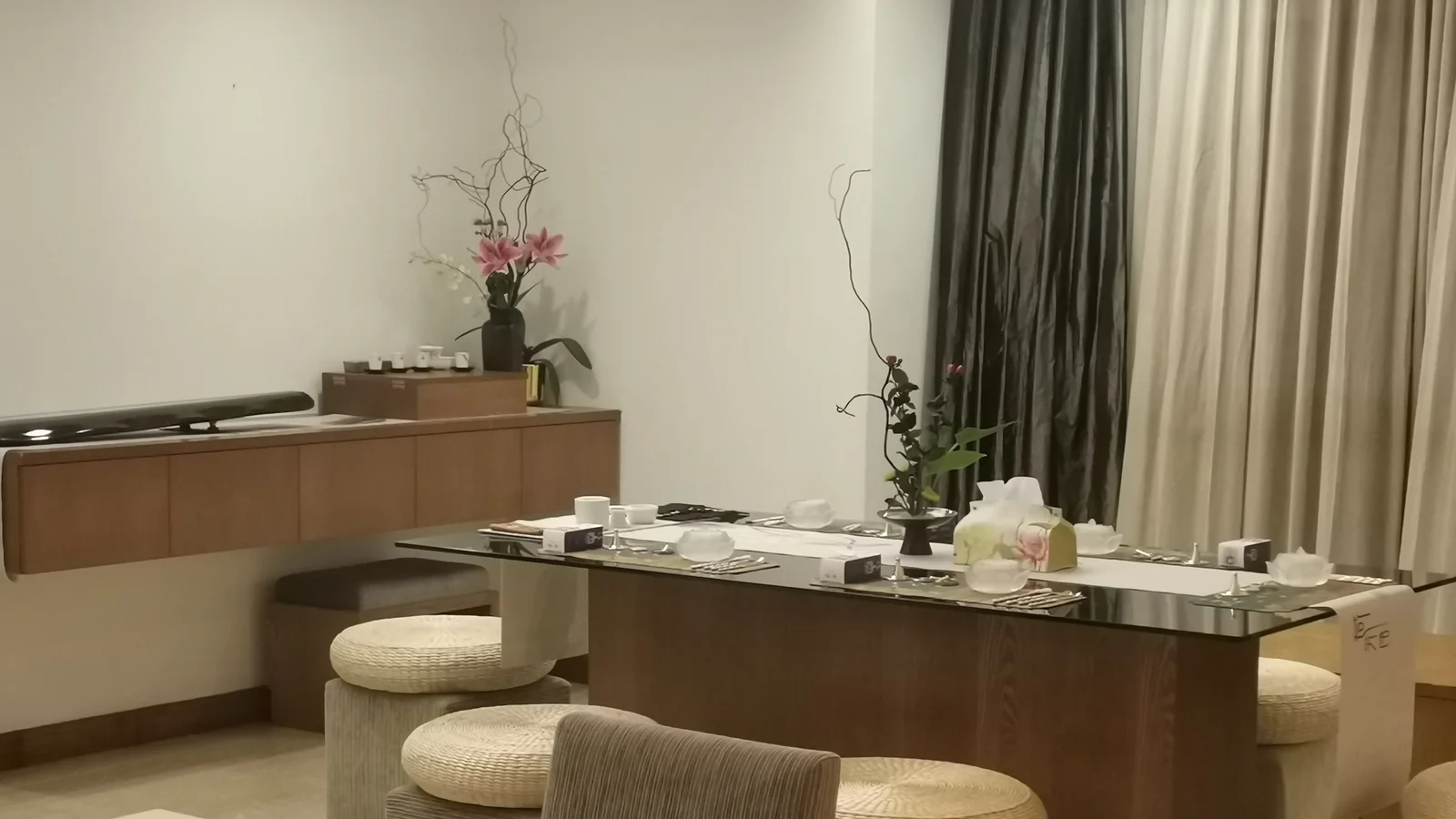
A quiet Taoist study room: a black guqin on a low wooden console beside a pink lily arrangement and tea set, and a dark-glass study table set with white lotus-shaped cups, an incense holder and a floral branch, with straw cushions and a grey curtain.

Why Laozi Compares Thick Virtue to a Newborn Child (Han De Zhi Hou, Bi Yu Chizi)

Chapter 55 of the Tao Te Ching (Dao De Jing) opens with one of classical Taoism's signature paradoxes: 'One who holds thick Virtue within may be compared to a newborn child' (含德之厚,比于赤子). To an ordinary observer looking for outward displays of power, an infant appears fragile and defenseless. Yet Laozi points to three physical qualities of the newborn that seasoned Wudang martial artists and meditators spend years recovering: 'Its bones are soft, its sinews are supple, yet its grasp is firm. It does not yet know the union of male and female, yet its vitality stirs—this is the culmination of Essence (jing). It cries all day, yet its voice never turns hoarse—this is the culmination of Harmony (he)' (骨弱筋柔而握固。未知牝牡之合而朘作,精之至也。终日号而不嗄,和之至也). A parallel passage in Zhuangzi Chapter 23 (Gengsang Chu 庄子·庚桑楚) repeats these exact observations as the core of Laozi's teaching on preserving life (weisheng zhi jing 卫生之经).

Supple Sinews and a Firm Grasp (Gu Ruo Jin Rou Er Wo Gu): Structural Integrity Without Stiffness

Why is an infant's grip surprisingly unified despite having soft bones and unhardened tendons? In Heshang Gong's commentary (老子章句) and Wudang internal martial arts, the answer lies in the absence of antagonistic muscular tension. When an adult clenches a fist through sheer willpower, the biceps, shoulders, and chest often brace against the flexors, trapping force in the upper body and stiffening the wrist. An infant's hand closes around a finger with quiet, whole-body elasticity (终日握而手不掹,共其德也, as Zhuangzi notes). Similarly, an infant cries for hours without losing its voice because the sound rises freely from the lower abdomen without constriction in the throat or agitated pride in the heart-mind. In Wudang Taijiquan and Liuzijue (Six Healing Sounds), this union of relaxed sinews (筋柔) and unobstructed breath (和之至) is the exact standard for issuing movement and sound.

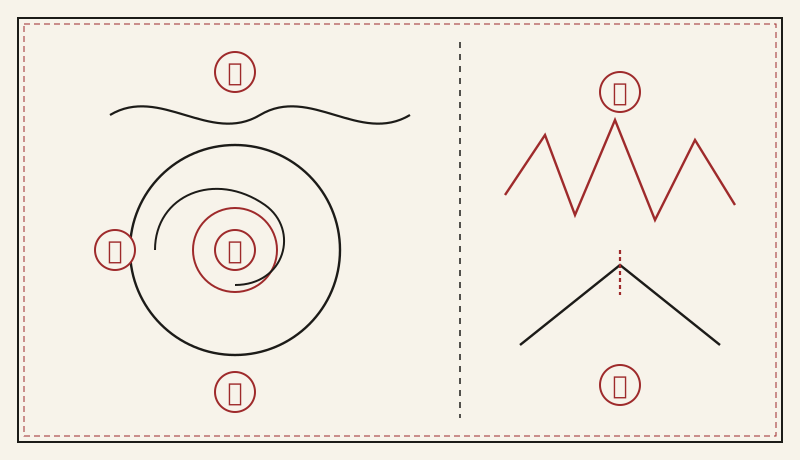
Classical Wudang ink-on-parchment diagram of Tao Te Ching Chapter 55 showing Supple Sinews and Firm Grasp (①), Undivided Essence (②), Unstrained Voice and Harmony (③), Knowing Harmony as the Constant (④), Mind Forcing Breath as Over-Rigidity (⑤), and Premature Exhaustion after Over-Maturity (⑥).

Key — ① Supple Bones and Sinews with Firm Grasp (骨弱筋柔而握固, relaxed structure uniting the whole hand); ② Undivided Essence (精之至也, unspent vital reserve); ③ Unstrained Breath and Harmony (终日号而不嗄,和之至也, breath emerging from the center without throat tension); ④ Knowing Harmony as Illumination (知和曰常,知常曰明); ⑤ Mind Forcing the Breath (心使气曰强, willful straining and muscular bracing); ⑥ Over-Rigidity Hastening Decline (物壮则老,谓之不道).

Knowing Harmony Is the Constant, Whereas the Mind Forcing the Breath Is Rigidity (Xin Shi Qi Yue Qiang)

The second half of Chapter 55 draws a sharp boundary between natural cultivation and willful straining: 'To know Harmony is called the Constant; to know the Constant is called Illumination. To artificially heap up life is called an ominous sign; for the willful mind to force the breath is called rigidity' (知和曰常,知常曰明,益生曰祥,心使气曰强). The four characters xin shi qi yue qiang (心使气曰强)—literally 'the mind commanding or forcing the qi is called stiffness/coercion'—serve as a foundational caution across Wudang Qigong and quiet sitting. Whenever a student tries to push the breath violently down into the abdomen, hold the breath until the face flushes, or force qi through a pathway by mental effort, the willful mind (xin 心) overrides natural harmony (he 和) and produces internal rigidity (qiang 强).

When Things Reach Their Prime They Grow Old (Wu Zhuang Ze Lao): Cultivating Sustainable Practice

Laozi concludes Chapter 55 by linking Chapter 30 and Chapter 55 with the same warning: 'When things become over-full and rigid, they grow old; this is called contrary to the Tao, and what is contrary to the Tao soon ends' (物壮则老,谓之不道,不道早已). In Wang Bi's reading (老子道德经注), zhuang (壮) denotes the peak of rigid inflation—like a bow drawn past its elastic limit or a practitioner training to exhaustion out of competitiveness. True longevity in practice comes from staying slightly on the side of suppleness and unspent reserve. Safety note: During your standing or Taijiquan session today, check your jaw, throat, and fingers; if you notice your mind pushing the breath or clenching the hands, exhale softly, let your fingers curl lightly without squeezing, and allow the breath to settle at its own pace.

Seeker’s Q&A · Frequently Asked Questions

How does Thick Virtue Is Like a Newborn Child (Han De Zhi Hou, Bi Yu Chizi) guide daily Wudang cultivation?

A practitioner-scholar reading of Tao Te Ching (Dao De Jing) Chapter 55 and Zhuangzi's Gengsang Chu—examining why thick inner virtue resembles an infant (Chizi), how supple sinews yield a firm grasp (Gu Ruo Jin Rou Er Wo Gu), and why forcing the breath with the willful mind (Xin Shi Qi Yue Qiang) hastens fatigue.
