
TAOIST PHILOSOPHY · 道家哲学

Mysterious Virtue & Reaching Great Accord: Xuan De and Da Shun in Tao Te Ching Chapter 65 常知稽式是谓玄德与乃至大顺:《道德经》第六十五章的去智守朴与内家大顺之理

An in-depth study of Tao Te Ching (Dao De Jing) Chapter 65, clarifying the classical meaning of Yu (uncontrived simplicity versus scheming cleverness), the constant standard (Ji Shi), and how Mysterious Virtue (Xuande) leads to Great Accord (Dashun).


A quiet Taoist study room: a black guqin on a low wooden console beside a pink lily arrangement and tea set, and a dark-glass study table set with white lotus-shaped cups, an incense holder and a floral branch, with straw cushions and a grey curtain.

Clarifying 'Yu' (愚) in Classical Taoism: Uncontrived Simplicity Versus Scheming Cleverness

Bridging Chapter 64's gradual foundation (A Journey of a Thousand Li in Chapter 64) and Chapter 66's rivers and seas (Why Rivers and Seas Lead the Hundred Valleys in Chapter 66), Chapter 65 of the Tao Te Ching (Dao De Jing) opens with a passage that requires careful philological reading: 'Those of old who excelled in practicing the Tao did not use it to make the people shrewdly calculating, but used it to keep them in uncontrived simplicity. The people are difficult to govern because they have too much scheming cleverness' (古之善为道者,非以明民,将以愚之。民之难治,以其智多). As Wang Bi (王弼) and Heshanggong (河上公) explicitly gloss in their commentaries (studied under Taoist Classics), the character Yu (愚) in Laozi never means ignorance or obscurantism; rather, just as Laozi describes his own mind in Chapter 20 as 'the heart of a simpleton—unadorned and whole' (我愚人之心也哉,沌沌兮), Yu denotes sincere, uncarved simplicity (Pu, 朴) free from duplicitous scheming (Zhi, 智—cunning artifice).

Governing the Body-State Without Cunning Artifice: Ji Shi (稽式)

Laozi continues: 'Therefore, governing a state through scheming cleverness is the ruin of the state; governing a state without scheming cleverness is the blessing of the state. To know these two is also a constant standard; constantly knowing this standard is called Mysterious Virtue' (故以智治国,国之贼;不以智治国,国之福。知此两者亦稽式。常知稽式,是谓玄德). In classical Taoist inner cultivation (Wudang Qigong & Daoyin)—where governing the body and governing the state follow the same structural model—'scheming cleverness' corresponds to an overactive, micromanaging mind (Jixin, 机心) that tries to force breath or manipulate joints through mechanical tricks. When a student beginning at Start Here drops clever shortcuts and trusts the natural standard (Ji Shi, 稽式) of quiet standing and even breathing, the body settles into genuine order.

Mysterious Virtue & Reaching Great Accord: Xuan De and Da Shun in Tao Te Ching Chapter 65

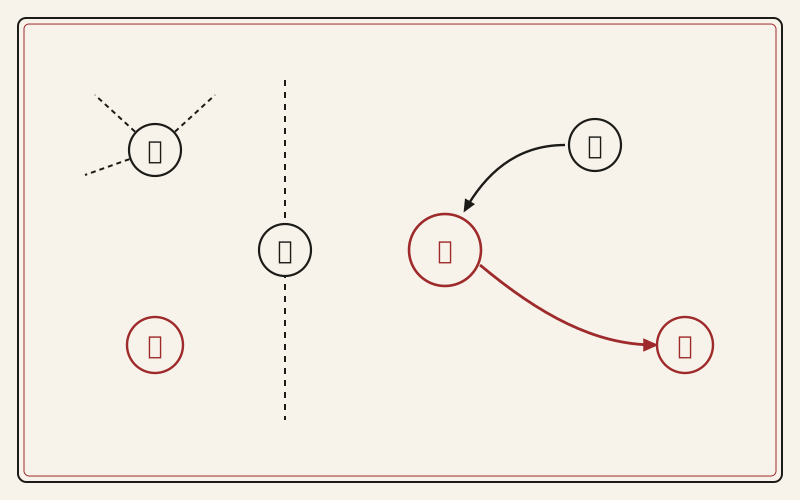
Classical diagram of Tao Te Ching Chapter 65 (Mysterious Virtue & Great Accord — Xuande and Dashun): ① Over-Clever Contrivance (Zhi Duo — fragmented calculation that scatters spirit), ② Uncarved Simplicity (Yu / Pu — genuine, uncalculating wholeness cultivated by ancient masters of the Tao), ③ The Constant Standard (Ji Shi — discerning the difference between contrivance and simplicity), ④ Mysterious Virtue (Xuan De — deep and far-reaching inner integrity), ⑤ Returning Together with the Myriad Things (Yu Wu Fan Yi — turning away from artificiality back to the root), and ⑥ Reaching Great Accord (Ran Hou Nai Zhi Da Shun — effortless harmony with The Tao itself).

Xuan De Shen Yi, Yuan Yi, Yu Wu Fan Yi: Turning Back Toward the Root

Why is this fidelity to uncontrived simplicity called 'Mysterious Virtue' (Xuan De, 玄德)? Laozi explains: 'Mysterious Virtue is deep indeed, far-reaching indeed! It turns back together with all things, and only then reaches Great Accord' (玄德深矣,远矣,与物反矣,然后乃至大顺). Whereas ordinary ambition races outward toward complexity, competition, and display, Xuan De moves in the opposite direction (Yu Wu Fan Yi, 与物反矣)—turning inward and backward toward the quiet origin of The Tao itself. In the martial lineage of Wudang Mountain and Wudang Taijiquan, this 'turning back' is experienced whenever a practitioner resists the impulse to lunge forward and instead settles into Central Equilibrium (The Five Phases of Stepping: Wuxingbu).

Da Shun (大顺): Effortless Flow in Practice and Conduct

The culminating phrase of Chapter 65—Ran Hou Nai Zhi Da Shun (然后乃至大顺, 'and only then does it reach Great Accord')—describes the state where internal movement and external circumstance flow together without friction. By pairing the uncontrived simplicity of Chapter 65 with the Three Treasures of Chapter 67, the practitioner discovers that letting go of clever contrivance is the shortest path to natural mastery.

Seeker’s Q&A · Frequently Asked Questions

How does Mysterious Virtue & Reaching Great Accord guide daily Wudang cultivation?

An in-depth study of Tao Te Ching (Dao De Jing) Chapter 65, clarifying the classical meaning of Yu (uncontrived simplicity versus scheming cleverness), the constant standard (Ji Shi), and how Mysterious Virtue (Xuande) leads to Great Accord (Dashun).
