TAOIST PHILOSOPHY · 道家哲学

Observing the Way of Heaven and Holding Its Operation (观天之道,执天之行,尽矣): The Hidden Tally (Yinfu Jing), the Five Thieves, and Timely Action in Wudang Cultivation 观天之道,执天之行,尽矣:《黄帝阴符经》“暗合天机、转五贼为五德、机在目”的武当内丹与太极心法

How a three-hundred-word Taoist classic defines the exact tally between inner awareness and natural rhythm, transforming sensory dispersion into unified vitality.

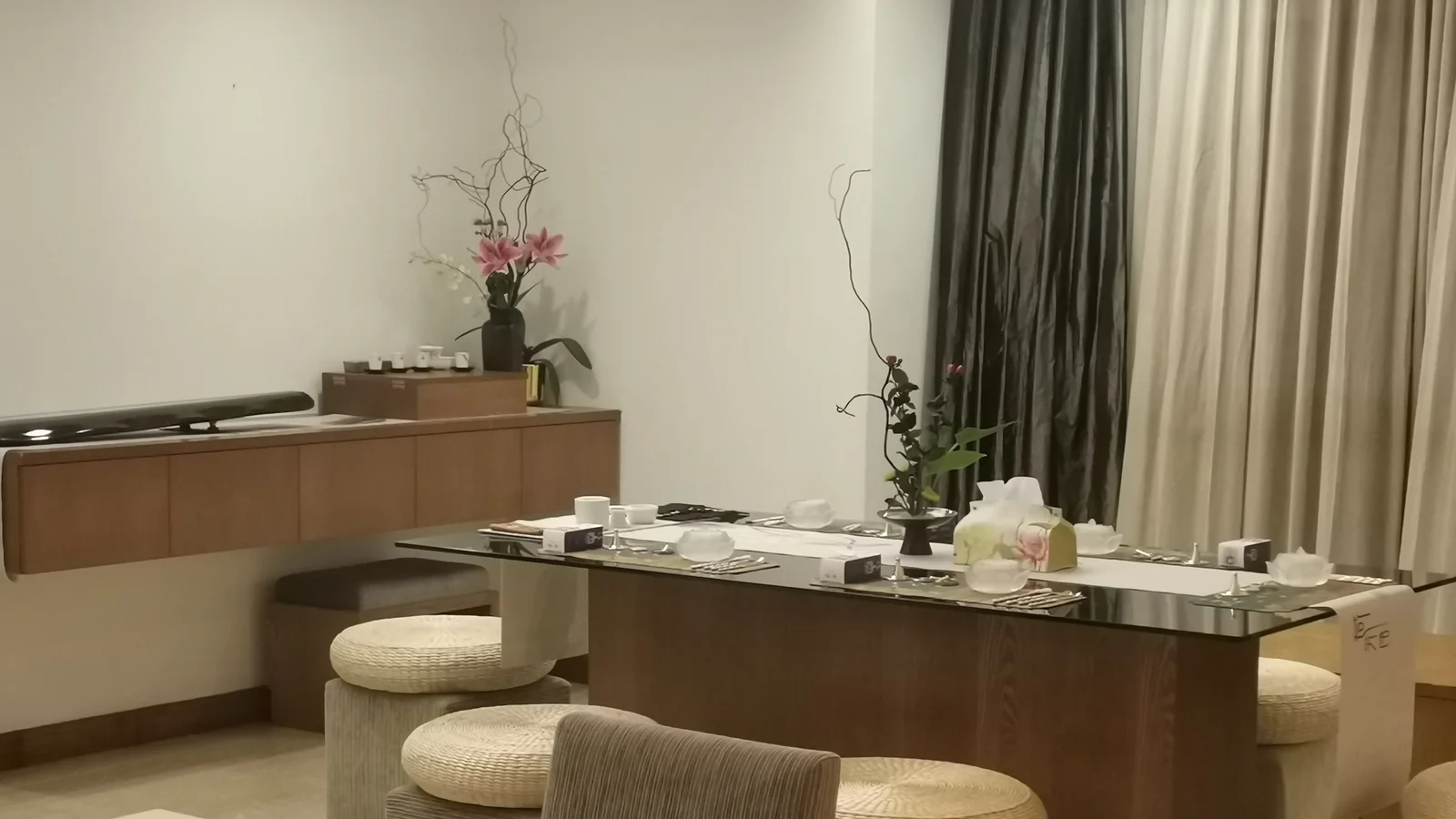
A quiet Taoist study room: a black guqin on a low wooden console beside a pink lily arrangement and tea set, and a dark-glass study table set with white lotus-shaped cups, an incense holder and a floral branch, with straw cushions and a grey curtain.

1. What Does Yin Fu (阴符, "The Hidden Tally") Mean? Textual History and the Opening Eleven-Character Seal

Within the scriptural curriculum of Wudang Taoism, if the Tao Te Ching sets forth the vast ontology of the Tao itself and the Qingjing Jing teaches how to settle mental turbidity into clarity, the Huangdi Yinfu Jing (黄帝阴符经, Yellow Emperor's Scripture of the Hidden Tally) is the supreme manual of timing, energetic economy, and seasonal alignment. Although pious tradition attributes the scripture to the legendary Yellow Emperor (Huangdi) receiving instruction from Guangchengzi (广成子, whose dialogue on guarding the One also appears in Chapter 11 of the Zhuangzi), historical scholarship traces its wide circulation to the Northern Dynasty and Tang periods, notably through the commentary of the Tang scholar-adept Li Quan (李筌, fl. 8th century), and later internal-alchemy (Neidan) commentaries by Song, Yuan, and Qing masters including Zhu Xi (朱熹, 1130–1200), Yu Yan (俞琰, 1253–1314), and Liu Yiming (刘一明, 1734–1821).

Before reading a single verse, the title Yin Fu (阴符) itself contains a complete contemplative method. In ancient China, a Fu (符) was a tally made of bamboo, wood, bronze, or jade split cleanly down the middle into two halves: one half remained at the central court, while the other was carried by an envoy or commander in the field. Decisions were verified only when the two halves were placed together and their natural wood-grain notches matched without a hair's gap (Ru Fu Ru Qi 如符如契, echoing Chapter 79 of the Tao Te Ching). Yin (阴) here means "inward, silent, unseen." Thus, Yu Yan and Liu Yiming explain that Yin Fu means silently matching the inner movement of one's own heart, breath, and spirit (the inner half of the tally) with the objective operation of Heaven and Earth (the outer half of the tally). That entire principle is compressed into the scripture's famous opening eleven characters:

观天之道,执天之行,尽矣。
故天有五贼,见之者昌。
五贼在心,施行于天。
宇宙在乎手,万化生乎身。

"Observe the Way of Heaven (guan tian zhi dao 观天之道), hold fast to the operation of Heaven (zhi tian zhi xing 执天之行)—that is all (jin yi 尽矣).
Therefore Heaven has Five Thieves (tian you wu zei 天有五贼); whoever perceives them flourishes (jian zhi zhe chang 见之者昌).
The Five Thieves reside in the Heart (wu zei zai xin 五贼在心) and carry out their operation across Heaven (shi xing yu tian 施行于天).
Space and time lie within the hand (yuzhou zai hu shou 宇宙在乎手); the ten thousand transformations arise within the body (wan hua sheng hu shen 万化生乎身)."

Why does the scripture declare Jin Yi (尽矣—"that is all; nothing remains outside this") after only eight words? Commentators point out that two errors plague human cultivation:

  1. Blind Action Without Observation (Zhi Er Bu Guan 执而不观): Forcing the body through rigid breathing drills, extreme postures, or aggressive martial collisions while ignoring natural biomechanics, circadian rhythms (Wudang Twelve Two-Hour Periods), and the actual state of one's joints.
  2. Passive Observation WithoutCommitted Execution (Guan Er Bu Zhi 观而不执): Admiring philosophical theories of the Tao from afar while never anchoring them in daily standing posture, breath regulation, and ethical self-restraint. When lucid observation (Guan 观) and steady, unhurried execution (Zhi 执) fit together like the two halves of a bamboo tally, the entire art of cultivation is complete.
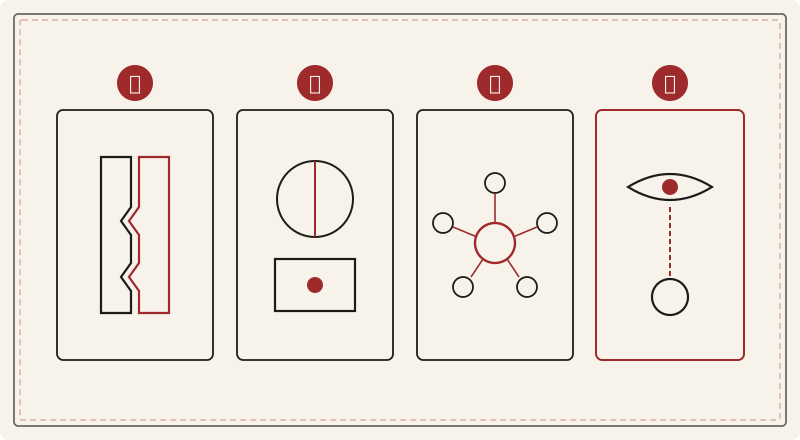
Classical four-panel Wudang diagram for the Yinfu Jing illustrating the split bamboo Hidden Tally (Yin Fu), Observing Heaven and Holding Its Operation, transforming the Five Thieves in the Heart, and gathering the pivot at the Eye
Figure 1 — Contemplative and Biomechanical Architecture of the Yinfu Jing (黄帝阴符经): ① Yin Fu (阴符 — The Hidden Tally): the outer half of Heaven’s seasonal cycle matching seamlessly with the inner half of human breath and intention; ② Guan Tian Zhi Dao, Zhi Tian Zhi Xing (观天之道,执天之行): receptive observation paired with grounded execution; ③ Wu Zei Zai Xin, Jian Zhi Zhe Chang (五贼在心,见之者昌): the five sensory-elemental vectors governed by the central Heart rather than leaking outward; ④ Xin Sheng Yu Wu, Si Yu Wu, Ji Zai Mu (机在目): turning the visual pivot inward to guard the lower Dantian.

2. "Heaven Has Five Thieves; Whoever Perceives Them Flourishes" (Tian You Wu Zei, Jian Zhi Zhe Chang)

No phrase in the Yinfu Jing is more striking than Tian You Wu Zei, Jian Zhi Zhe Chang (天有五贼,见之者昌)—"Heaven has Five Thieves; whoever sees them flourishes." In ordinary language, a "thief" (Zei 贼) is something that steals one's treasure and must be fled or destroyed. Why, then, does simply perceiving (Jian 见) the Five Thieves cause a practitioner to flourish, and why does the very next line state that "the Five Thieves reside in the Heart and operate across Heaven"?

In the classical Wudang Neidan tradition—reading the Yinfu Jing alongside the Cantong Qi and Wuzhen Pian—the "Five Thieves" refer to the Five Phases (Wu Xing 五行: Metal, Wood, Water, Fire, Earth) in nature and their microcosmic counterparts in the human body: the Five Viscera (Wu Zang 五脏), Five Emotions (Wu Zhi 五志), and Five Sensory Apertures (Wu Guan 五官: ears, eyes, mouth, nose, tongue/touch):

  • How the Five Become "Thieves" (Shun Ze Cheng Zei): When a person is unaware (Bu Jian 不见) of how sensory stimuli hook the mind, the eyes chase external colors and drain Liver blood/essence, the ears chase flattery and drain Kidney water, the tongue chases rich flavors and burdens Spleen earth (compare Tao Te Ching Chapter 12 and Chapter 80 Gan Qi Shi), anger scatters rising Qi, and worry knots the middle burner. Unwatched, the five senses quietly steal away one's Three Treasures (Jing, Qi, Shen 精气神) day by day.
  • How Seeing Them Turns Thieves into Household Guardians (Jian Zhi Zhe Chang): A thief can steal only in the dark when the homeowner is asleep. The instant the master of the house wakes up and shines a lamp directly upon them (Jian Zhi 见之), the five sensory and elemental energies cease their pilfering and return to their rightful stations under the command of the central Heart-Mind (Wu Zei Zai Xin 五贼在心). Instead of five leaks, they become the five harmonized powers supporting vitality within the body (Wan Hua Sheng Hu Shen 万化生乎身).
Opening Yinfu Jing MaximClassical Philological & Neidan MeaningWudang Daoyin & Taijiquan Embodiment
观天之道,执天之行,尽矣 (Guan tian zhi dao, zhi tian zhi xing, jin yi)Observe the objective patterns of waxing and waning in nature, and pace one's own actions in exact accordIn Tuishou and solo form, observe where weight and force are full or empty before moving; never act against joint geometry
天有五贼,见之者昌 (Tian you wu zei, jian zhi zhe chang)The Five Phases and five sensory gates drain life when unconscious, yet nourish life as soon as awareness illuminates themDetecting shoulder shrugging, breath-holding, or knee-locking the instant it begins converts a habit into structural power
五贼在心,施行于天 (Wu zei zai xin, shi xing yu tian)The command center of all five elemental forces is the practitioner's own Heart-Mind (Xin 心)Echoing the Taijiquan Lun: "The Mind (Xin) is the sovereign, and the body is its envoy"
宇宙在乎手,万化生乎身 (Yuzhou zai hu shou, wan hua sheng hu shen)Spatial direction (Yu 宇) and temporal rhythm (Zhou 宙) are embodied directly in the hands and torsoEvery circular ward-off and weight transfer in Wudang Taijiquan contains the full cycle of Yin and Yang
心生于物,死于物,机在目 (Xin sheng yu wu, si yu wu, ji zai mu)The mind is stirred to life by external things and exhausted by chasing them; the controlling trigger is the Eye (Mu 目)Softening and gathering the gaze (Shou Shen Yu Mu 收神于目) immediately quiets the heart and roots the stance

3. "The Pivot Lies in the Eye" (Ji Zai Mu 机在目): Visual Gathering in Meditation and Martial Arts

Later in its opening movement, the Yinfu Jing delivers one of the most practical instructions in all of Taoist literature:

心生于物,死于物,机在目。

"The heart-mind arises in response to things and perishes through entanglement with things; the trigger-pivot (ji 机) lies in the eye (mu 目)."

Why does the scripture single out the eye (Mu 目) as the Ji (机—the crossbow trigger or door hinge) of the entire heart-mind? In both classical Chinese physiology and everyday experience, among all five senses, vision is the fastest to project outward. When the eyes dart restlessly around a room or stare fixedly at an opponent's hand, the spirit (Shen 神) pours out through the pupils, the cervical spine stiffens, and breath rises into the throat. Conversely, when a practitioner curtains the eyelids (Chui Lian 垂帘) in seated meditation or maintains a calm, level, panoramic gaze (Ping Shi 平视) during standing post Zhan Zhuang, the outward leak stops at the switch. Turning the light of the eyes softly inward to illuminate the space between the eyebrows and down into Zhongwan, Qihai, and Guanyuan gathers the spirit back into its dwelling.

4. Living Practice on Wudang Mountain and in Singapore: Matching the Tally in Daily Training

Across the stone courtyards of the UNESCO World Heritage ancient Taoist temples on Wudang Mountain (No. 72 Jianhe 2nd Road, Wudangshan, Hubei, China; UNESCO World Heritage guide) and the structured training sessions at Lee Wudang International Pte. Ltd. (58A Smith Street (2nd Floor), Singapore 058962; beginner guide), students apply the opening chapter of the Yinfu Jing through three concrete habits:

  1. Pacing Practice With the Sky (Guan Tian Zhi Dao): At dawn or dusk, begin with gentle joint and meridian loosening—such as warming Houxi (SI-3) and Wangu (SI-4) along the ulnar palm edge—before moving into deeper stances, respecting the body's gradual warming cycle.
  2. Guarding the Visual Trigger (Ji Zai Mu): During Taijiquan and Wudang straight sword (Jianfa), let the eyes lead the intention calmly toward the horizon without glaring or blinking anxiously.
  3. Catching the "Thieves" Early: Whenever you notice your breath growing shallow or your shoulders creeping upward during a busy workday, simply see that tension (Jian Zhi) and exhale softly—turning wasted nervous effort back into settled poise.

Practice Reflection for Students

Stand or sit quietly for two minutes today and test the maxim Ji Zai Mu (机在目): first, let your eyes dart rapidly to four objects around the room and notice how your breathing and neck react; next, soften your eyelids halfway, rest your gaze softly two meters ahead on the floor, and feel how instantaneously your breath drops back into your lower abdomen.

Seeker’s Q&A · Frequently Asked Questions

What do the opening lines of the Yinfu Jing mean, and who are the “Five Thieves”?

The Yinfu Jing (Scripture of the Hidden Tally) opens: “Observe the Way of Heaven, hold to the operation of Heaven: that is all.” Observation and steady action must fit together like the two halves of a tally (fu 符), the inner movement of heart and breath matching the pattern of Heaven and Earth. In the inner-alchemy reading, the Five Thieves are the Five Phases and, in the body, the five senses: unnoticed, they drain essence, breath and spirit; once you see them, they return to the command of the heart and support vitality. The scripture adds that “the pivot lies in the eye”, which is why you soften and gather the gaze in meditation and standing practice.


How can I apply this in practice?

Stand or sit quietly for two minutes today and test the maxim Ji Zai Mu (机在目): first, let your eyes dart rapidly to four objects around the room and notice how your breathing and neck react; next, soften your eyelids halfway, rest your gaze softly two meters ahead on the floor, and feel how instantaneously your breath drops back into your lower abdomen.
