TAOIST PHILOSOPHY · 道家哲学

Qian and Kun as the Furnace and Vessel, Kan and Li as the Ingredients (乾坤为鼎器,坎离为药物): Wei Boyang’s Cantong Qi and Setting Up the Tripod (Li Ding) in Wudang Cultivation 魏伯阳《周易参同契》“乾坤为鼎器、坎离匡廓运毂正轴”精解:由万古丹经王通向武当站桩“安炉立鼎”与太极修持

How the 2nd-century 'Ancestor of All Elixir Scriptures' unites the Book of Changes, the Tao Te Ching, and the human body's vertical alignment into a single verifiable practice.

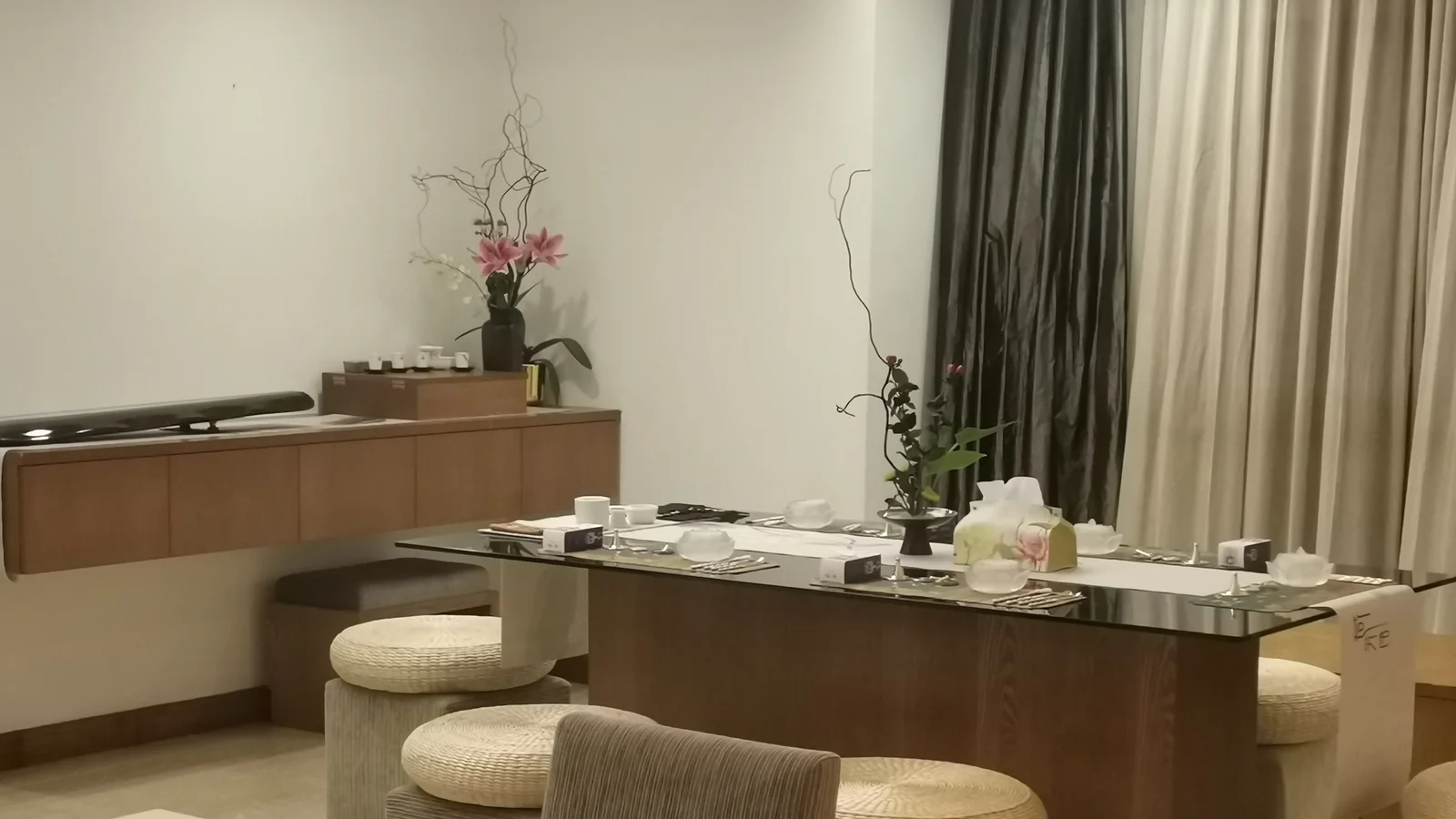
A quiet Taoist study room: a black guqin on a low wooden console beside a pink lily arrangement and tea set, and a dark-glass study table set with white lotus-shaped cups, an incense holder and a floral branch, with straw cushions and a grey curtain.

1. What Does Zhouyi Cantong Qi (周易参同契) Mean? The "King of Elixir Scriptures" and the Unity of the Three

In the previous study of this series, we examined how Northern Song master Zhang Boduan's Wuzhen Pian (1075 CE) uses the trigrams Kan (☵) and Li (☲) to explain Water-Fire inversion (Qu Kan Tian Li). Where did Zhang Boduan's trigram alchemy originate? Directly from the earliest systematic treatise of Chinese alchemical philosophy: the Zhouyi Cantong Qi (周易参同契, Seal of the Unity of the Three in Accordance with the Book of Changes), attributed to the Eastern Han scholar-adept Wei Boyang (魏伯阳, fl. mid-2nd century CE, native of Kuaiji in modern Zhejiang) and honored across all Taoist lineages as the "King of Elixir Scriptures Across Ten Thousand Ages" (Wangu Danjing Wang 万古丹经王).

Commented upon not only by eminent Taoist masters such as Peng Xiao (彭晓, 947 CE, Zhouyi Cantong Qi Fenzhang Tongzhen Yi), Chen Xianwei (陈显微, 1234 CE), Yu Yan (俞琰, 1284 CE, Zhouyi Cantong Qi Fahui), and Liu Yiming (刘一明), the Cantong Qi was also admired for its classical four- and five-character prose-poetry by the great Neo-Confucian philosopher Zhu Xi (朱熹, 1130–1200 CE), who published his own textual collation Zhouyi Cantong Qi Kaoyi (周易参同契考异) in 1197 under the pseudonym "Zou Xin" (空同道士邹訢).

What do the three characters Can Tong Qi (参同契) mean? As Peng Xiao and Yu Yan explain:

  1. Can (参 — Threefold Participation): Refers to three great streams of classical Chinese wisdom—the Zhouyi (Book of Changes), which maps the waxing and waning of Yin and Yang across space and time; Huang-Lao Taoism (Tao Te Ching and Zhuangzi), which teaches non-contrivance (Wuwei), emptiness, and guarding the One; and Furnace-Fire Cultivation (Luhuo 炉火 / Neidan), which regulates the practical rhythm (Huohou 火候) of breath and spirit.
  2. Tong (同 — Fundamental Identity): Although these three streams use different vocabularies, their underlying principle is identical (San Jia Gui Yi 三家归一).
  3. Qi (契 — The Matching Tally): Just like the split bamboo tally of the Yinfu Jing and Chapter 79 of the Tao Te Ching, when a practitioner's bodily posture, breath rhythm, and quiet mind match the natural laws of the Yijing, the tally fits together without a hair's gap.
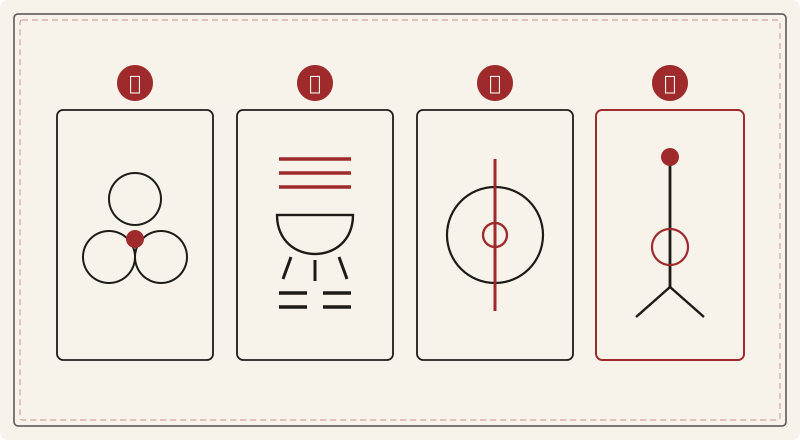
Classical four-panel Wudang diagram for Wei Boyang's Zhouyi Cantong Qi illustrating the Threefold Tally of Yijing, Taoism, and Alchemy, Qian and Kun as the Upper and Lower Furnace-Vessel, Kan and Li revolving on the central wheel axle, and Wudang Zhan Zhuang Setting Up the Tripod
Figure 1 — Cosmological and Somatic Architecture of the Zhouyi Cantong Qi (周易参同契): ① Can Tong Qi (参同契 — The Threefold Tally): Zhouyi cosmology, Huang-Lao quietude, and internal cultivation uniting as one seal; ② Qian Kun Wei Dingqi (乾坤为鼎器): Heaven/Crown (Qian ☰) above and Earth/Abdomen-Perineum (Kun ☷) below forming the stable tripod vessel; ③ Kan Li Kuangkuo, Yun Gu Zheng Zhou (坎离匡廓,运毂正轴): Heart-Spirit (Li ☲) and Kidney-Essence (Kan ☵) revolving around the upright central axle; ④ An Lu Li Ding (安炉立鼎) in Wudang Zhan Zhuang and Taijiquan.

2. "Qian and Kun Are the Gateway of Change; Kan and Li Turn the Wheel on a True Axle"

The entire edifice of the Cantong Qi rests upon its famous opening lines in Chapter 1:

乾坤者,易之门户,众卦之父母。
坎离匡廓,运毂正轴。
牝牡四卦,以为橐籥。
覆冒阴阳之道,犹工御者准绳墨,执衔辔,正规矩,随轨辙,处中以制外,数在律历纪。

"Qian (☰) and Kun (☷) are the gateway of Change (yi zhi menhu 易之门户), the father and mother of all hexagrams (zhong gua zhi fumu 众卦之父母).
Kan (☵) and Li (☲) form the outer rim and protective frame (kuangkuo 匡廓), revolving the wheel-hub upon a true axle (yun gu zheng zhou 运毂正轴).
These four receptive-and-creative trigrams serve as the bellows and flue (yi wei tuoyue 以为橐籥, echoing Chapter 5 of the Tao Te Ching).
Embracing the Way of Yin and Yang, it is like a skilled charioteer who aligns with the carpenter's ink-line, holds the bit and reins, squares the compass and T-square, follows the wheel-ruts, and abides at the center to govern the exterior (chu zhong yi zhi wai 处中以制外)..."

Why does Wei Boyang single out four cardinal trigrams (Si Zheng Gua 四正卦)—Qian (☰), Kun (☷), Kan (☵), and Li (☲)—out of all sixty-four hexagrams, and how do they map directly onto the human body in Wudang cultivation? Later internal-alchemy masters summarized Wei Boyang's opening verse in an eight-character golden rule: "Qian and Kun are the Furnace and Vessel; Kan and Li are the Ingredients" (Qian-Kun Wei Dingqi, Kan-Li Wei Yaowu 乾坤为鼎器,坎离为药物):

  1. Qian (乾 ☰) and Kun (坤 ☷) Form the Stable "Furnace and Vessel" (Dingqi 鼎器): You cannot cook soup or refine medicine without a sturdy, level pot (Ding 鼎, cauldron/vessel) and a stable hearth (Lu 炉, furnace). If the pot tips over or leaks, everything inside is spilled. In the human body, Qian (☰, Heaven) corresponds to the upper skull and crown (Niwan / Baihui GV-20), while Kun (☷, Earth) corresponds to the lower abdomen (Qihai and Guanyuan), pelvic floor (Huiyin), and rooted feet. When your crown is gently suspended (Xuling Dingjin) and your pelvis and soles are level and rooted, your physical frame becomes an unshakeable bronze tripod vessel (Dingqi).
  2. Kan (坎 ☵) and Li (☲) Revolve Inside as the "Living Ingredients" (Yaowu 药物): Inside that stable frame between Heaven (Crown) and Earth (Abdomen/Feet), what moves and transforms? Li (☲, Heart-Mind awareness and breath descending) and Kan (☵, Kidney-Water vitality and Jade Fluid ascending, as in the Huangting Jing). Notice Wei Boyang's mechanical metaphor: "Kan and Li form the wheel-frame, revolving the hub upon a true axle" (Yun Gu Zheng Zhou 运毂正轴)—which directly parallels Zhuangzi's "Pivot at the Center of the Ring" (Daoshu Huanzhong)!
Opening Cantong Qi VerseClassical Neidan Commentary (Peng Xiao, Zhu Xi, Yu Yan)Wudang Zhan Zhuang & Taijiquan Embodiment
乾坤者,易之门户,众卦之父母Qian (Heaven) and Kun (Earth) establish the vertical container within which all changes occurSetting up the postural frame (An Lu Li Ding 安炉立鼎): crown suspended above, pelvis and feet rooted below
坎离匡廓,运毂正轴Kan (Water/Kidneys) and Li (Fire/Heart) circulate like a carriage wheel turning around an upright axleKeeping the spine vertical (Zheng Zhou 正轴) while breath and forearm spirals revolve smoothly
牝牡四卦,以为橐籥The four cardinal trigrams act as the hollow bellows (Tuoyue, Tao Te Ching Ch. 5)—empty yet inexhaustibleBreathing naturally through the nose into the lower abdomen without forceful chest heaving
犹工御者准绳墨,执衔辔,正规矩Like a master charioteer holding the reins and following the plumb lineObeying exact joint geometry—sunk elbows, settled wrists (Yangchi and Daling), knees aligned with toes
处中以制外 (Chu zhong yi zhi wai)Abiding at the quiet center to govern all outward movementsFulfilling Huang Zongxi's 1669 Yi Jing Zhi Dong: the waist and Dantian lead the hands

3. "Setting Up the Furnace and Tripod" (An Lu Li Ding 安炉立鼎) in Wudang Zhan Zhuang and Taijiquan

Why do traditional Wudang teachers call the opening alignment of standing post meditation (Zhan Zhuang) and solo Taijiquan "Setting Up the Furnace and Tripod" (An Lu Li Ding 安炉立鼎)? Because Wei Boyang's warning in the Cantong Qi is unmistakable: if the Tripod Vessel (Qian–Kun postural alignment) is tilted, swayed, or stiffened, the Elixir Ingredients (Kan–Li breath and spirit) cannot circulate:

  • If the Chin Pokes Out or the Lower Back Arches: The upper lid (Qian ☰) and lower base (Kun ☷) of the vessel are knocked off their vertical plumb line (Bu Zheng Zhou 不正轴), causing breath to stick in the throat.
  • Like a Skilled Charioteer (Gong Yuzhe 工御者): Notice how Wei Boyang compares the practitioner to a skilled charioteer who holds the silken reins (Zhi Xianpei 执衔辔) with calm precision while "abiding at the center to govern the exterior" (Chu Zhong Yi Zhi Wai 处中以制外). Whether you are shifting weight in barehand form, guiding a Wudang straight sword (Jian), or sweeping a Taoist horsetail whisk (Fuchen), your hands at the periphery are governed entirely by the quiet central axle.

4. Living Transmission on Wudang Mountain and in Singapore

Across the courtyards of the UNESCO World Heritage ancient Taoist temples on Wudang Mountain (No. 72 Jianhe 2nd Road, Wudangshan, Hubei, China; UNESCO World Heritage guide)—where bronze tripod ding vessels stand along the central axis of every major hall—and in daily training at Lee Wudang International Pte. Ltd. (58A Smith Street (2nd Floor), Singapore 058962; beginner guide), the Cantong Qi reminds every student to check the vessel first: before worrying about advanced techniques, establish a level, upright, relaxed posture from crown to soles.

Practice Reflection for Students

Before beginning your form or standing practice today, spend sixty seconds "Setting Up the Tripod" (An Lu Li Ding): feel your two feet and tailbone form the three stable legs of a bronze ding on the earth (Kun ☷), feel the crown of your head rise lightly toward the sky (Qian ☰), and let your breath turn smoothly between chest and abdomen around that upright central axle (Yun Gu Zheng Zhou).

Seeker’s Q&A · Frequently Asked Questions

Where does the trigram language of Taoist inner alchemy come from?

It goes back to Wei Boyang’s Zhouyi Cantong Qi (周易参同契, Seal of the Unity of the Three), composed in the Eastern Han dynasty and honoured in the Taoist tradition as the “king of alchemical classics”. Its opening sets the frame that Zhang Boduan’s Wuzhen Pian (1075 CE) later builds on: Qian and Kun are the furnace and vessel, which stay still, while Kan (☵) and Li (☲) are the ingredients that circulate within them. In Wudang standing practice the same picture is called setting up the tripod (Li Ding).
How can I apply this in practice?

Before beginning your form or standing practice today, spend sixty seconds "Setting Up the Tripod" (An Lu Li Ding): feel your two feet and tailbone form the three stable legs of a bronze ding on the earth (Kun ☷), feel the crown of your head rise lightly toward the sky (Qian ☰), and let your breath turn smoothly between chest and abdomen around that upright central axle (Yun Gu Zheng Zhou).
