TAOIST PHILOSOPHY · 道家哲学

Knowing That You Do Not Know Is Highest (Zhi Bu Zhi Shang): Epistemic Humility and Receptive Learning in Tao Te Ching Chapter 71 知不知,尚矣:《道德经》第七十一章的谦冲虚受与空杯修真之道

Explore Tao Te Ching (Dao De Jing) Chapter 71 ('Knowing that one does not know is highest; not knowing yet thinking one knows is a flaw'), the Huainanzi parable of Duke Mu of Qin, and why an unassuming mind is essential in Wudang internal arts.
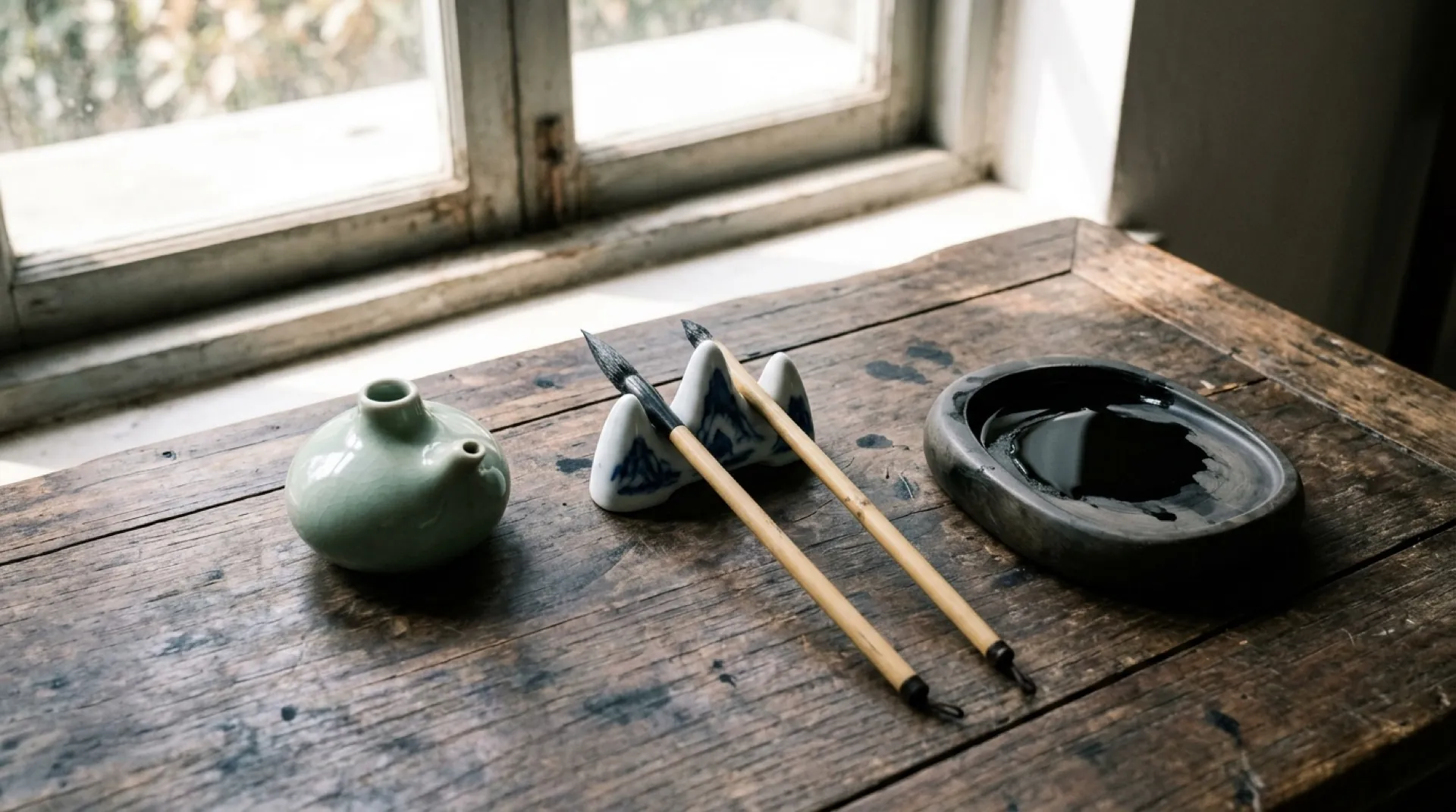
A small celadon water dropper, two brushes on a porcelain rest and an inkstone holding fresh ink on a worn wooden desk beneath a window.

1. The Compact Diagnosis of Chapter 71: 'Knowing That One Does Not Know'

At only thirty-one Chinese characters in the received Wang Bi edition, Chapter 71 of the Tao Te Ching (Dao De Jing) is one of the shortest chapters in the entire scripture, yet it delivers one of Laozi's sharpest lessons on learning and self-awareness: 'Knowing that one does not know is highest (zhi bu zhi, shang yi 知不知,尚矣); not knowing yet presuming that one knows is a flaw (bu zhi zhi, bing ye 不知知,病也). Only by recognizing this flaw as a flaw does one become free of the flaw.'

Notice that Laozi does not praise ignorance, nor does he claim that study and skill are useless. Instead, he distinguishes between two attitudes toward the boundary of our knowledge. In the Huainanzi (Daoying Xun 道应训, 'Responses of the Tao'), this chapter is illustrated through Duke Mu of Qin ignoring the seasoned counsel of Jian Shu before the disastrous campaign at Xiao—only to admit afterward that his defeat came from presuming certainty where he lacked understanding (explored on our Tao Te Ching Chapter 71 study page).

2. Why 'Presuming One Knows' Blocks Embodied Learning

In Wudang martial arts, Qigong, and classical study, the greatest obstacle for an intermediate student is rarely a lack of intelligence—it is premature certainty. Once a practitioner memorizes the external choreography of a form or reads a handful of classical terms, the conceptual mind quickly announces, 'I already know this.' From that moment on, the student stops feeling what the joints, breath, and ground are actually doing.

This echoes our earlier study of Wheelwright Bian and 'True Knowledge' in Zhuangzi as well as words, names, and reality: verbal labels are pointers, not the living skill itself. Treating a memorized movement name as mastery seals the top of the teacup so no deeper refinement can enter.

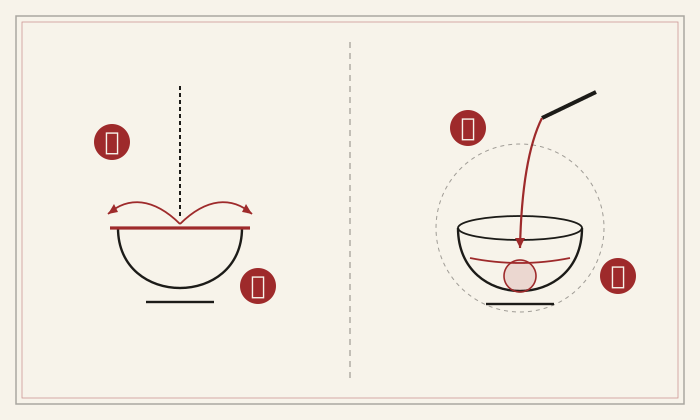
Classical diagram contrasting a sealed vessel of premature certainty splashing water away with an open vessel of receptive humility receiving clear spring water

How Tao Te Ching Chapter 71 contrasts closed self-certainty (Bu Zhi Zhi Bing) with open receptivity (Zhi Bu Zhi Shang).

  1. ① Sealed Vessel of Premature Certainty (Bu Zhi Zhi Bing): Assuming one already knows blocks fresh perception and feedback.
  2. ② Open Vessel of Receptive Humility (Zhi Bu Zhi Shang): Recognizing what remains unknown keeps the heart-mind open like an empty cup.
  3. ③ Recognizing the Flaw as a Flaw (Yi Bing Bing Zhi): Catching one's own rigid assumptions before they harden into habit.
  4. ④ Unclouded Responsiveness (Shengren Bu Bing): Listening accurately to reality and to one's training partner without preconception.

3. Listening Without Preconception on the Training Floor

How does 'knowing that one does not know' feel inside the body during Wudang Taijiquan? In cooperative Push Hands (Tuishou) and listening energy (Tingjin), 'not knowing yet presuming one knows' takes the form of guessing or anticipating a partner's move before contact occurs. When you guess that your partner will push left and pre-stiffen your right shoulder, you become blind to what the partner actually does.

By contrast, when you cross wrists with the quiet humility of zhi bu zhi—admitting 'I do not yet know which way this force will turn until I listen'—your skin, wrists, and waist remain empty and responsive, ready to follow the true vector of force in real time.

4. A Daily Practice: Approaching One Familiar Posture as If for the First Time

Choose one movement you have practiced hundreds of times—such as the first two minutes of Standing Post (Zhan Zhuang) or the Opening Posture (Qishi) of Taijiquan—and deliberately set aside everything you think you know about it. Ask three open questions through physical sensation rather than memory: Which foot is actually carrying more weight right now? Which rib is still slightly held? Where does the inhale naturally stop?

By treating autopilot familiarity as the 'flaw' Chapter 71 warns against, even the simplest daily posture becomes fresh again. Safety note: this reflective philosophy and movement study guide is educational and supports mindful learning; it is not a medical or clinical treatment.

Seeker’s Q&A · Frequently Asked Questions

What is the core takeaway of Knowing That You Do Not Know Is Highest (Zhi Bu Zhi Shang)?

Explore Tao Te Ching (Dao De Jing) Chapter 71 ('Knowing that one does not know is highest; not knowing yet thinking one knows is a flaw'), the Huainanzi parable of Duke Mu of Qin, and why an unassuming mind is essential in Wudang internal arts.
