TAOIST PHILOSOPHY · 道家哲学

The Tao Is Eternally Nameless (Tao Chang Wu Ming): Knowing When to Stop (Zhi Zhi) and Streams Returning to the Sea in Tao Te Ching Chapter 32 道常无名,朴虽小:《道德经》第三十二章的“知止不殆”与“川谷于江海”

A primary-source study of Tao Te Ching (Dao De Jing) Chapter 32, examining the untamable subtle power of the Nameless Uncarved Block (Pu Sui Xiao), the spontaneous equilibrium of 'Sweet Dew' (Gan Lu), the safeguard of 'Knowing When to Stop' (Zhi Zhi), and the concluding simile of mountain streams returning to the river and sea.


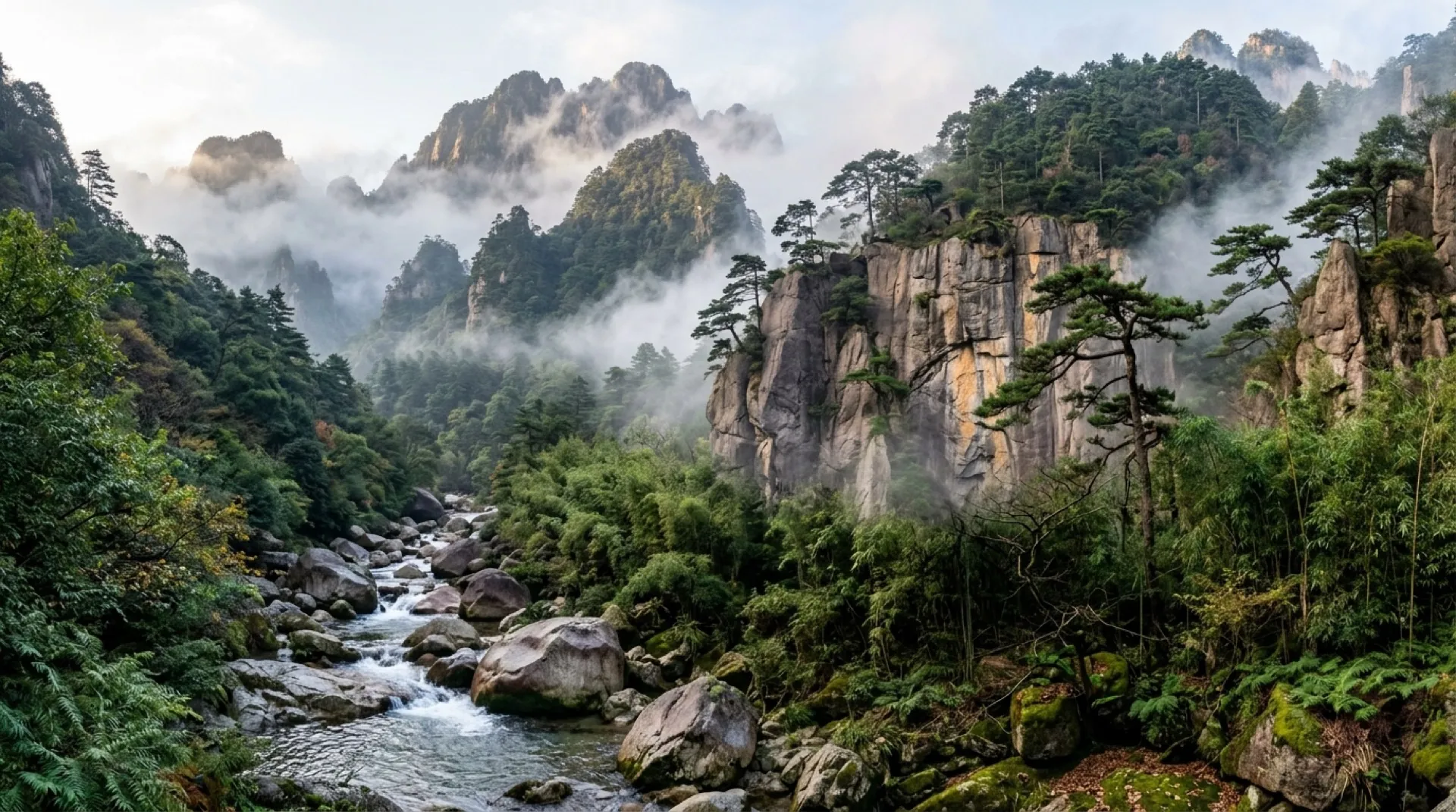
A stream tumbling over boulders below pine-topped granite cliffs and misty peaks.

1. Primary Text & Wang Bi Commentary: 'Though the Uncarved Block Is Small, None Under Heaven Can Subordinate It'

Chapter 32 of the Tao Te Ching (Dao De Jing) opens by linking the namelessness of the Tao directly to the Uncarved Block (朴, Pu): 'The Tao is eternally nameless. Though the uncarved block is subtle and small, nothing under heaven can make it a vassal or subordinate it (道常无名,朴虽小,天下莫能臣也). If lords and kings could guard and keep it, the ten thousand things would come as guests of their own accord (侯王若能守之,万物将自宾).' As Wang Bi (王弼, 226–249 CE) explains in his commentary, any fixed form, title, or instrument—however vast—is circumscribed by its own boundaries and can therefore be measured, captured, or subordinated by something else. By contrast, the nameless Uncarved Block seems 'small' (小) only because it has no visible edge or boastful display; yet because it precedes all differentiation, no external power can command or exhaust it.

2. 'Heaven and Earth Unite to Send Down Sweet Dew' (Gan Lu) and 'Knowing When to Stop' (Zhi Zhi)

When human governance and self-cultivation abide in this nameless simplicity, natural harmony arises without decrees: 'Heaven and earth unite to send down sweet dew, and the people, without being commanded, share it evenly of themselves (天地相合,以降甘露,民莫之令而自均).' Once human institutions and conceptual distinctions begin to carve the block into names and ranks, Laozi issues a vital safeguard: 'As soon as institutions begin, names arise; and once names exist, one must know when to stop. Knowing when to stop, one is free from peril (始制有名,名亦既有,夫亦将知止,知止可以不殆).' Language, titles, and technical classifications are useful tools, but if a scholar or practitioner mistakes conceptual labels for the living Tao itself—pursuing endless distinctions without knowing where to halt (知止, zhi zhi)—they lose their root.

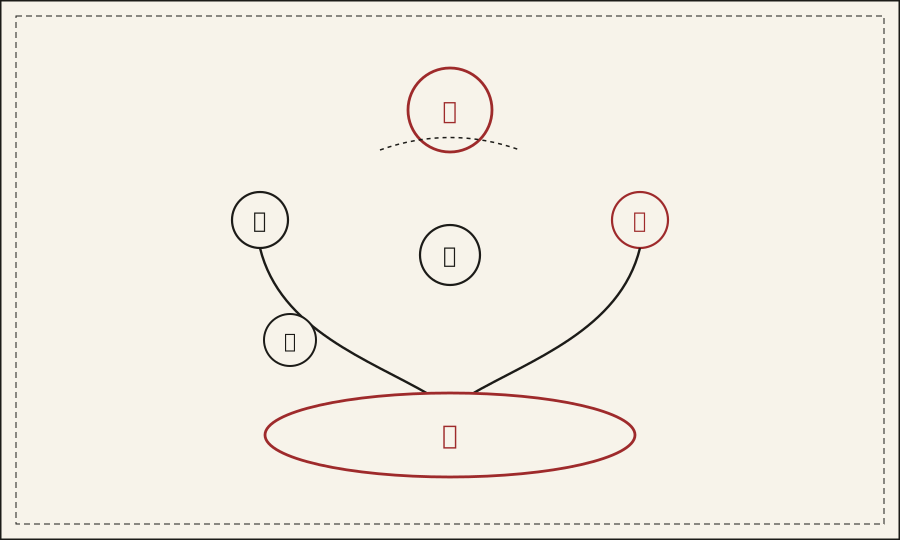
Numbers-only classical Wudang ink-and-cinnabar diagram of Tao Te Ching Chapter 32 showing the Nameless Uncarved Block (①), Heaven-Earth Union and Sweet Dew (②–④), Knowing When to Stop (⑤), and Streams Returning to the Great Sea (⑥).

Classical Wudang diagram of Tao Te Ching Chapter 32 (numbers-only SVG key)

  1. ① The Nameless Uncarved Block Above All Subordination (Tao Chang Wu Ming, Pu Sui Xiao)
  2. ② Heaven and Earth Unite (Tian Di Xiang He)
  3. ③ Sweet Dew Descending Evenly Without Command (Yi Jiang Gan Lu, Zi Jun)
  4. ④ Names Arise with Differentiation — Knowing When to Stop Prevents Peril (Shi Zhi You Ming, Zhi Zhi Bu Dai)
  5. ⑤ Mountain Streams and Valley Brooks (Chuan Gu)
  6. ⑥ Lower Reservoir: The Great Rivers and Sea Receiving All Waters (Jiang Hai / Lower Dantian Qi Sea).

3. Wudang Neidan & Taijiquan Embodiment: Sweet Dew (Gan Lu) and Streams Returning to the Sea

Chapter 32 concludes with one of the most celebrated hydrological images in the Taoist canon: 'To compare the presence of the Tao in the world: it is like mountain streams and valley brooks flowing into the great rivers and seas (譬道之在天下,犹川谷之于江海).' Within the cultivation traditions preserved at Wudang Mountain's UNESCO World Heritage ancient Taoist architectural complex and practiced daily in Singapore at Lee Wudang International Pte. Ltd., both 'Sweet Dew' (甘露) and 'Streams Returning to the Sea' (川谷归海) carry direct somatic meaning. During quiet seated meditation or standing posture practice, when Heart-Fire descends and Kidney-Water ascends in harmony ('Heaven and Earth unite', 天地相合), clear, sweet saliva naturally wells up beneath the tongue—traditionally called 'Sweet Dew Descending' (甘露降). Likewise, in Wudang Taijiquan and Qigong, all peripheral movements of the fingers, wrists, and limbs (the mountain streams, 川谷) continuously drain their tension downward and inward into the Lower Dantian and Yongquan soles (the great sea, 江海), while 'knowing when to stop' (知止) ensures every posture stops precisely at structural equilibrium.

4. Cross-References & Practice Bridges Across the Wudang Curriculum

To trace how Chapter 32 completes the cycle on the Uncarved Block and non-coercive restraint begun in Chapters 28–31, read Know the Male, Keep to the Female: Returning to the Uncarved Block (Tao Te Ching Ch. 28), Weapons Are Instruments of Ill Omen: Tian Dan Wei Shang (Tao Te Ching Ch. 31), The Tao Te Ching Overview, and our newcomer guide at Start Here: Wudang Taoist Culture, Internal Martial Arts & Wellness. For embodied practice of undulating spinal mechanics and Kidney-Mingmen warming, explore Wudang Longhua Quan Fundamentals (Dragon-Splendor Fist), Warming the Kidney Court (Mo Shentang / Ca Yaoyan) Daoyin Guide, and our heritage guide to Wudang Mountain.

Seeker’s Q&A · Frequently Asked Questions

What is the core takeaway of The Tao Is Eternally Nameless (Tao Chang Wu Ming)?

A primary-source study of Tao Te Ching (Dao De Jing) Chapter 32, examining the untamable subtle power of the Nameless Uncarved Block (Pu Sui Xiao), the spontaneous equilibrium of 'Sweet Dew' (Gan Lu), the safeguard of 'Knowing When to Stop' (Zhi Zhi), and the concluding simile of mountain streams returning to the river and sea.
